An exploration
A Field Held in Common
Why the valley was rebuilt but could not thrive
These explorations weave memory and present thinking — not records of what happened, but attempts to learn by holding the past and the present in the same frame. Why it reads this way →
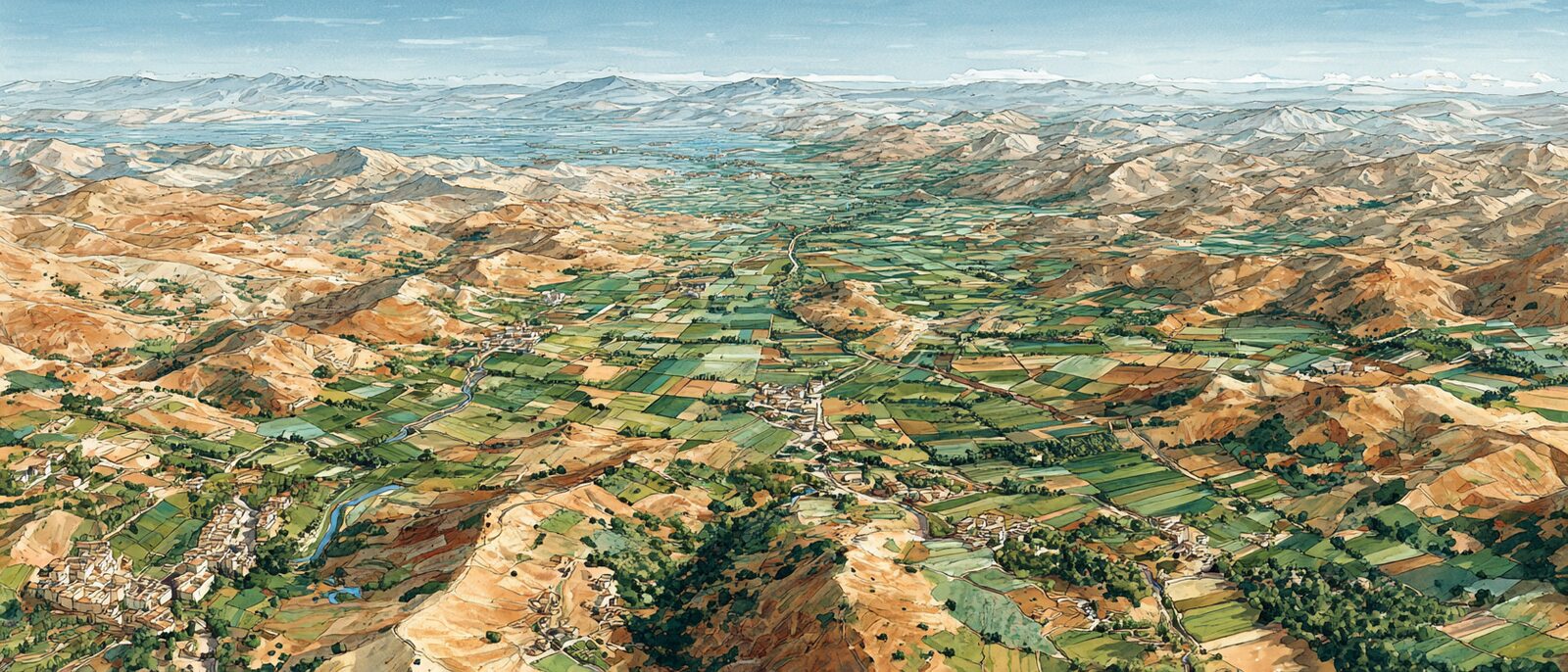
After 1967, Jordan's East Ghor emptied. Israel had taken the West Bank, on the far side of the river; on the near side, cross-border raids and the conflict of 1970 and 1971 turned the valley floor into a front line. People left. The canal that fed the fields was struck again and again. A place that had been farmed for thousands of years fell quiet.
Then the United States stepped in to help rebuild, and the model it brought was the one it knew: the Tennessee Valley Authority — integrated development, water and land and livelihood planned together. The East Ghor Canal was repaired and once more carried fresh Yarmouk water, under the water-sharing agreements for the Jordan River. Land was redistributed in modest holdings. People came back. The valley was, in the most literal sense, rebuilt.
But it was rebuilt on subsidy. And subsidy, it turned out, could restore a valley without ever quite letting it thrive.
What subsidy built
What grew back was a particular kind of farming. Small family plots, run on subsidised credit — loans for seed and inputs, rescheduled or written down when the harvest failed. The hard, hot work went increasingly to migrant labour at the lowest cost: Egyptian, for many years, and Syrian more recently. There was little capital, and little capacity to invest.
And the farms themselves were shrinking. Divided and subdivided through inheritance, generation by generation, until many holdings were simply too small to be worth investing in. The irrigated plots had even been made, on paper, hard to subdivide — an early recognition of exactly this danger — but the pressure of inheritance is patient, and it won.
Beneath it all, the ground itself was tiring. The aquifers were pumped beyond their safe yield, and across the valley more than half of the wells that have been tested carry nitrate above the safe drinking limit — a recognised hazard to infants — as fertiliser and reused water seep down. A valley surviving on subsidy above and depletion below.
You cannot subsidise capability
This is the trap, and it is not unique to Jordan. Subsidy can keep a valley alive. It cannot make it thrive — because it does nothing about the structure underneath. Thousands of tiny, fragmented, individually owned plots, each too small to justify the investment, the technology or the skill that thriving would require. Money arrives every season and nothing compounds.
The obvious fix — buy people out and consolidate into large farms — was neither acceptable nor wise. It would dissolve the very thing that made the valley a community: ownership, belonging, a stake in the land worth coming back to. So the question had to be put more carefully. How do you farm at scale without taking the land from the people who hold it?
To farm together, you must first own together.
Hold the field in common
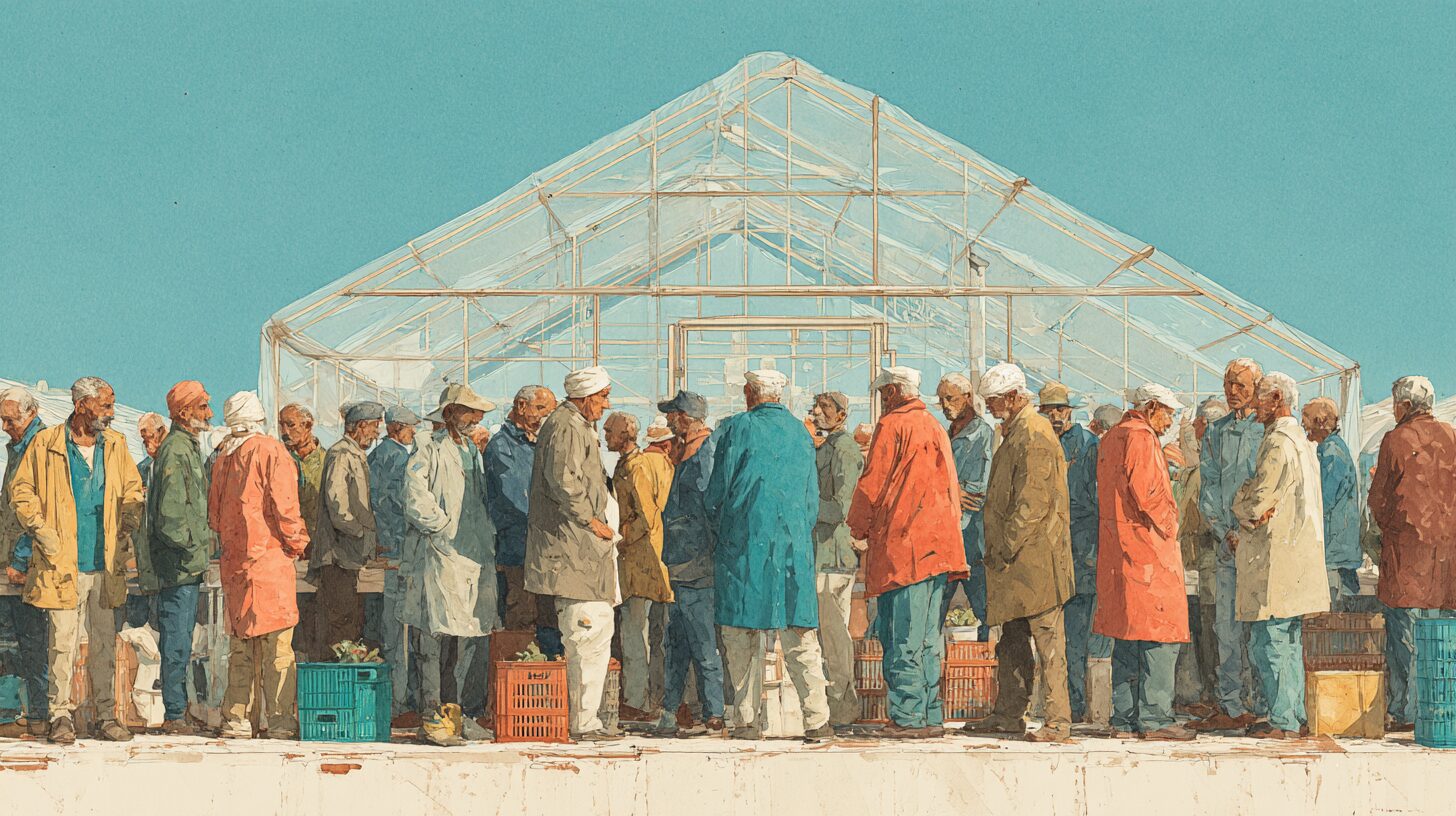
The answer was to hold the field in common — not to merge the titles, but to pool the work. Keep your land. Share the function. We did not have to invent this; it already existed, in several mature forms, and we studied all of them.
Different layers pooled in each — machinery, management, processing, marketing, investment, expertise — but the same underlying move every time. Separate the layers. Keep the title with the family. Share everything else.
What sharing unlocks
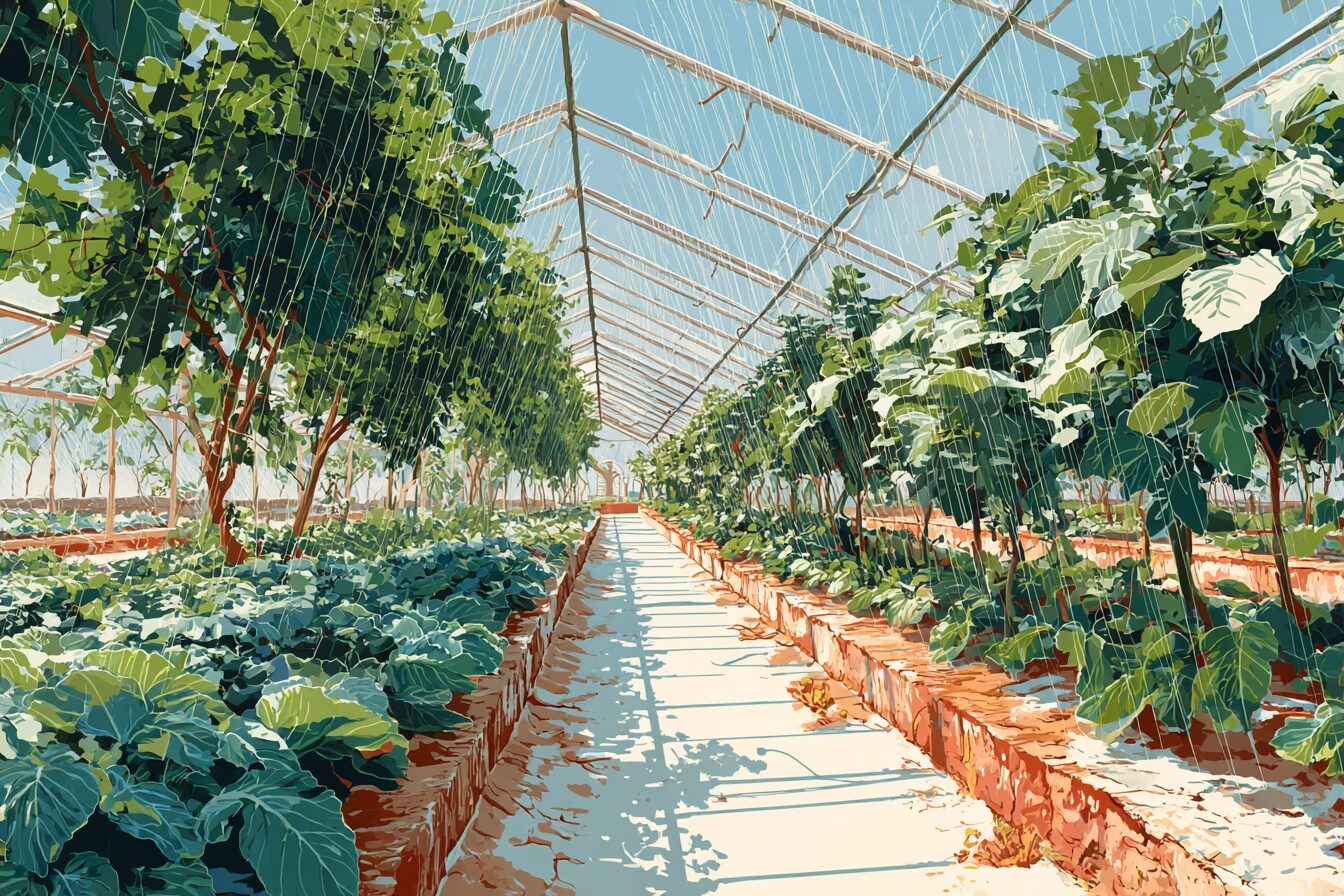
Once the land is held in common, the things a two-and-a-half-hectare inherited plot could never carry become possible. Climate-controlled net houses that grow more on less ground and a fraction of the water — and in a valley where water is the binding constraint, water saved is the most valuable harvest of all. Shared cold stores and packing. Investment that arrives at the cooperative rather than by selling fields. And training: the chance to upskill a workforce on the job, so the value stays in the valley instead of leaving with the lowest bidder.
And it works with the grain of how people there already live, not against it. No one is asked to surrender their land. They are asked to farm it together — which, in a place where land is identity, is the difference between a proposal that might happen and one that never could.
What remains
Subsidy rebuilt the valley. It could not make it thrive, because thriving is a matter of capability, and capability cannot be granted from outside — only built from within. The structure that builds it is not a bigger farm. It is a shared one.
Hold the field in common: the title stays with the family, while the capability — the scale, the water saved, the skill, the investment — is held by everyone at once.
From the Studio — sources & confidence
With thanks to Akram Abu Hamdan, who brought the Valley of Opportunity to us from the Royal Court, and The Urban Foundation. The 2008 masterplan was developed with Foster + Partners. Historical and environmental claims in this piece were fact-checked against published sources.