An exploration
A Place the Machines Can Trust
What a small place can offer the agent economy — and ask back
These explorations weave memory and present thinking — not records of what happened, but attempts to learn by holding the past and the present in the same frame. Why it reads this way →
In June 2026 Google DeepMind put money behind a worry. Not a product, a worry: that when millions of AI agents — built by different people, answering to no one in particular — begin to interact, the digital commons could “descend into just absolute anarchy.” Ten million dollars, with Schmidt Sciences, ARIA and the Cooperative AI Foundation, to start a field that barely exists: the science of what happens when agents meet other agents. A fortnight earlier Anthropic had published thirty-six pages of Zero Trust for AI Agents — trust nothing, verify everything, assume the breach has already happened. An agent, one security engineer put it, “reasons, it improvises, and it can be hijacked by a single sentence buried in a document it was asked to read.”
The interesting question, for anyone running a small place rather than a large lab, is not how frightening is this. It is: what could we offer such a world, and what might we get back?
The pattern was already in the notebook
Every piece in this notebook that touches Awen Weave has made the same small move. Don’t assert; grade and link. A claim sits somewhere on a scale of confidence, and you always say where, by attaching the source. Mythology, an open-government dataset, a registrar record — the discipline is identical: attested truth and uncertain material, curated honestly, never flattened to false certainty. The notebook’s own reasoning graph is the working prototype — meaning living in typed, graded relationships rather than in a tag cloud of assertions.
What the agent-safety panic describes, then, is a market suddenly forming around a thing we had already been building for its own sake. A trust layer. The world wants one; we made one because it seemed the honest way to think.
Two kinds of trust, and the place where they meet
But “trust” splits in two, and it is worth keeping the halves apart. There is security trust — is this agent who it claims, and may it act? — and there is epistemic trust — is the data it reasons over actually true? The rails being laid in 2026 are mostly the first kind: Mastercard’s Agent Pay, Visa’s Trusted Agent Protocol, Google’s signed mandates, the OpenAI–Stripe payment tokens, all binding an agent to a verified human within a scoped instruction. Real, funded, standardised. Awen Weave’s contribution is the second kind: the data is graded and sourced, so an agent that anchors to it is braked — held to attested ground rather than to a sentence buried in a poisoned document.
The move that makes this more than a footnote is geographic. A place that serves attested data and also takes the payment sits exactly where the two kinds of trust meet. And from that one vantage it can offer three things.
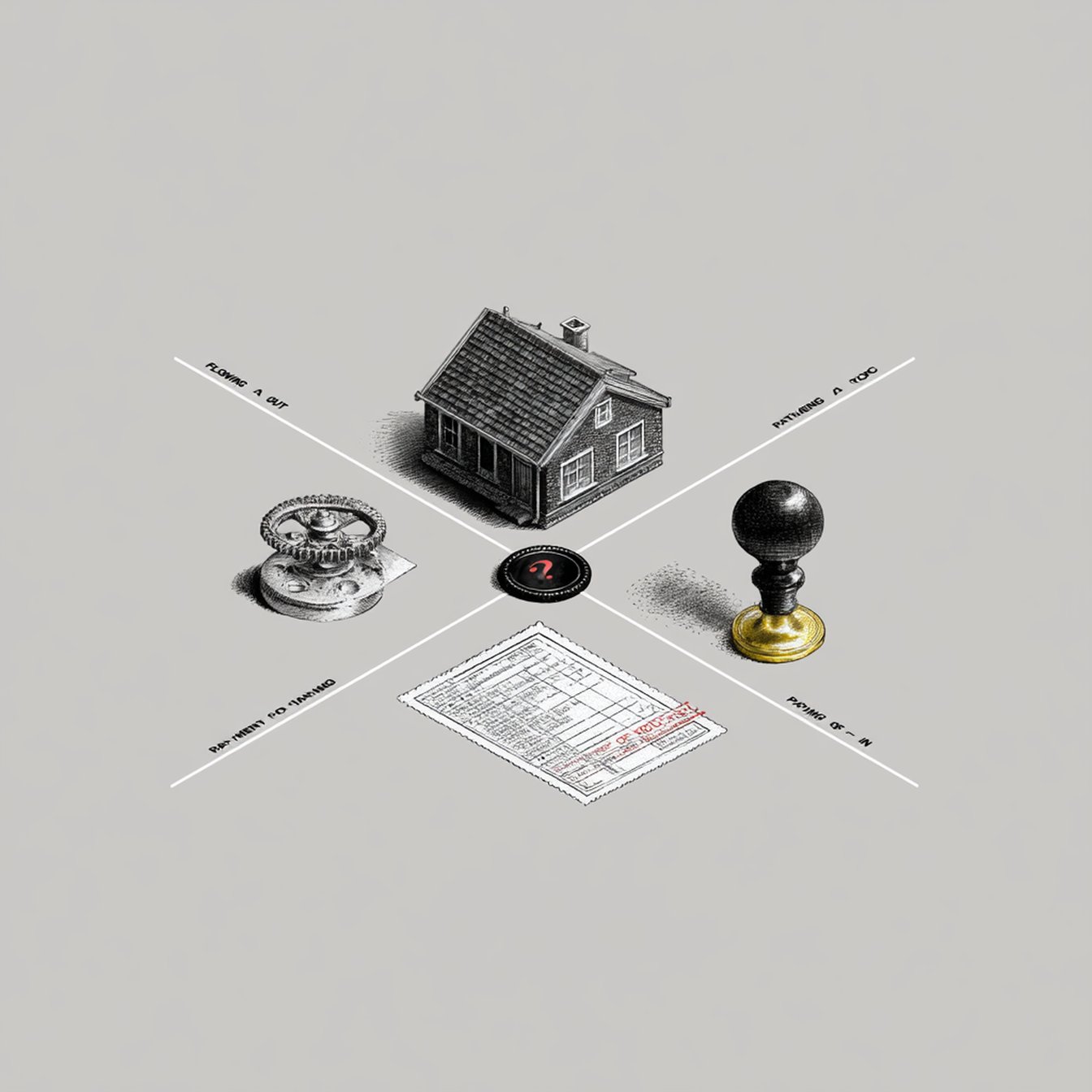
A brake. A returned question. A vouching. Three offerings from a single point — the place where the data goes out and the payment comes in.
A brake. Proven data the agents can check themselves against. Not a human gating every action — that would never scale — but a curated substrate, verified once and queried many times. The brake is the data, not the checkpoint.
A returned question. Here is the reciprocity. We have spent a decade letting firms take our data for nothing; the fair exchange is that something comes back. Not the micro-payment some have proposed, but the demand itself. And — the part that dissolves the obvious objection — you do not need to read anyone’s query to learn it. If you are the one serving the data, you watch which records get pulled, and the demand is legible in its own shadow. Beds and early eating-times requested together suggest families with children; a rigid offer that keeps being asked for and not found is occupancy you are shedding. You learn the boundaries of an ask without ever seeing the asker. The place becomes demand-aware, and a human decides whether the spare room becomes the asked-for room. We can do that. Make up the beds.

A vouching. And here the two halves of trust rejoin. You do not need to know who an agent is to know that it behaved well. You can stamp that a genuine transaction happened — provable, but, with zero-knowledge credentials, unlinkable to any person — and those stamps accrue into a reputation. A credit rating for agents. This is not a hopeful sketch: the primitives are standard (W3C Verifiable Credentials, zero-knowledge selective disclosure, behavioural biometrics that catch the too-regular hand of a bot), and the first productised versions already exist — Bank of Bots issuing the first loan to an agent that signed for it with its own key (early-stage); ACHIVX scoring agent reputation and, tellingly, already defending against the wash-trading attack (self-published). The category is real; the companies are nascent. Both things are true.
What a place is actually for, here
So the answer to the question I started with — what could we offer, and what might we get back — is unusually clean. A place offers the machines proven ground to stand on, and asks in return to see what the world is looking for and to vouch for who behaved honestly. It need not know anyone’s name to do any of it. The thing that qualifies a place to be the demand-sensor and the attestor is the very same thing that makes its data worth trusting: its provenance. Reputation as provenance. The audited supplier writes the most credible receipts.
I will not pretend the road is clear. A reputation you can earn is a reputation someone will try to farm — wash-traded transactions to inflate a score — and the honest position is that cost-weighting and slow accrual raise the bar without closing it. The global rails may keep the scoring for themselves and leave a place to issue attestations into their standards rather than to set them. And the moment you watch individuals rather than aggregates, even pseudonymously, you owe them a real account of why. These are not reasons not to do it. They are the shape of doing it well.
It is not really a piece about AI at all. It is the oldest thing a place can be: somewhere you can trust because it can vouch for itself.
We have just been handed a very large, very anxious new customer who needs exactly that — and who, for once, might pay for the honesty in a currency we actually want: the knowledge of what it came looking for.
From the Studio — the wager behind this piece, and where it connects · sources & confidence
Provenance, kept honest. The agent-safety funding, the payment-identity rails, verifiable credentials and zero-knowledge proofs are Grade A — primary and widely corroborated. The specific reputation products — Bank of Bots, ACHIVX — are included as early evidence the layer is being built, graded B and C respectively; treat them as straws in the wind, not settled fact. Underneath this essay sit three graded, linked theses in the reasoning graph: proven-data-as-a-brake (the epistemic brake), seeing-the-question (demand read from one’s own data egress), and the-fingerprints-that-touch-us (identity-free attestation that accrues into agent reputation). This piece is the synthesis; the workings are in the graph.
Sources & confidence: DeepMind + Schmidt Sciences + ARIA + Cooperative AI Foundation $10M multi-agent safety call, 11 June 2026 [A]; Anthropic, Zero Trust for AI Agents, 27 May 2026 [A]; agent payment/identity rails — Mastercard Agent Pay, Visa Trusted Agent Protocol, Google AP2 (signed mandates), OpenAI–Stripe Agentic Commerce Protocol, and “Know Your Agent” [A]; W3C Verifiable Credentials and zero-knowledge selective disclosure / unlinkability [A]; behavioural biometrics for bot detection [A/B]; “data dignity / data as labour,” Lanier & Weyl, A Blueprint for a Better Digital Society, HBR 2018 — the return-for-data idea this piece turns toward the question rather than cash [A]; Bank of Bots and its “BOB Score” — real but nascent (ex-stealth April 2026; first AI-agent loan) [B]; ACHIVX agent-reputation middleware — real product, traction self-published [C]. The three underlying theses are the author’s own, graded in the Stiwdio reasoning graph.