← iHuwBeneath our feet
Working draft · an iHuw exploration A polemic for the city that is coming

London changes
beneath our feet.

How a city of landings meets the heat, the electrification and the intelligence of the coming age — the only way it ever has. By building the engine back into its own fabric.

First the goods.Then the people.Then the money.Now the mind.
Descend
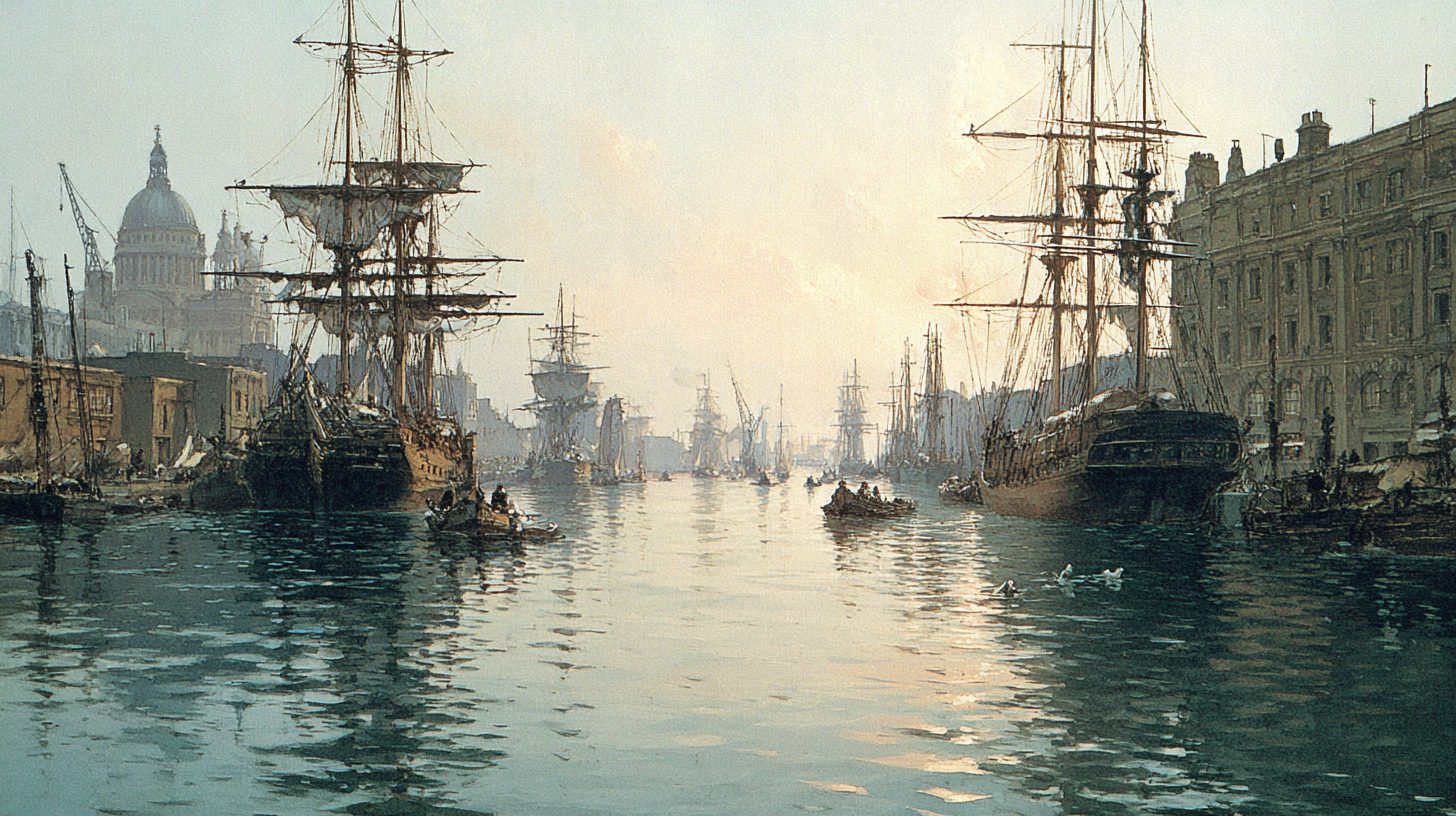
The Pool of London at dawn, tall ships moored along the Thames
The Pool of London — a city built on bringing the world up its river.
Movement I

The river remembers

London began as a transaction — a bridge, a tide, a place shallow enough to ford and deep enough to dock.

Everything that followed grew from one fact: the goods of the planet could be brought up the Thames and traded here. Wool and tin out; spices, silk, sugar, tea, coffee and gold in. The Pool bristled with masts, warehouses rose like a second city, and the clerks weighed and insured the cargo of the world.

A coffee house on a narrow lane became Lloyd's — a trade in beans turned into a trade in risk. London's genius was never the goods themselves, but what happened when goods and the restless people who carried them were thrown together in one dense, bargaining place.
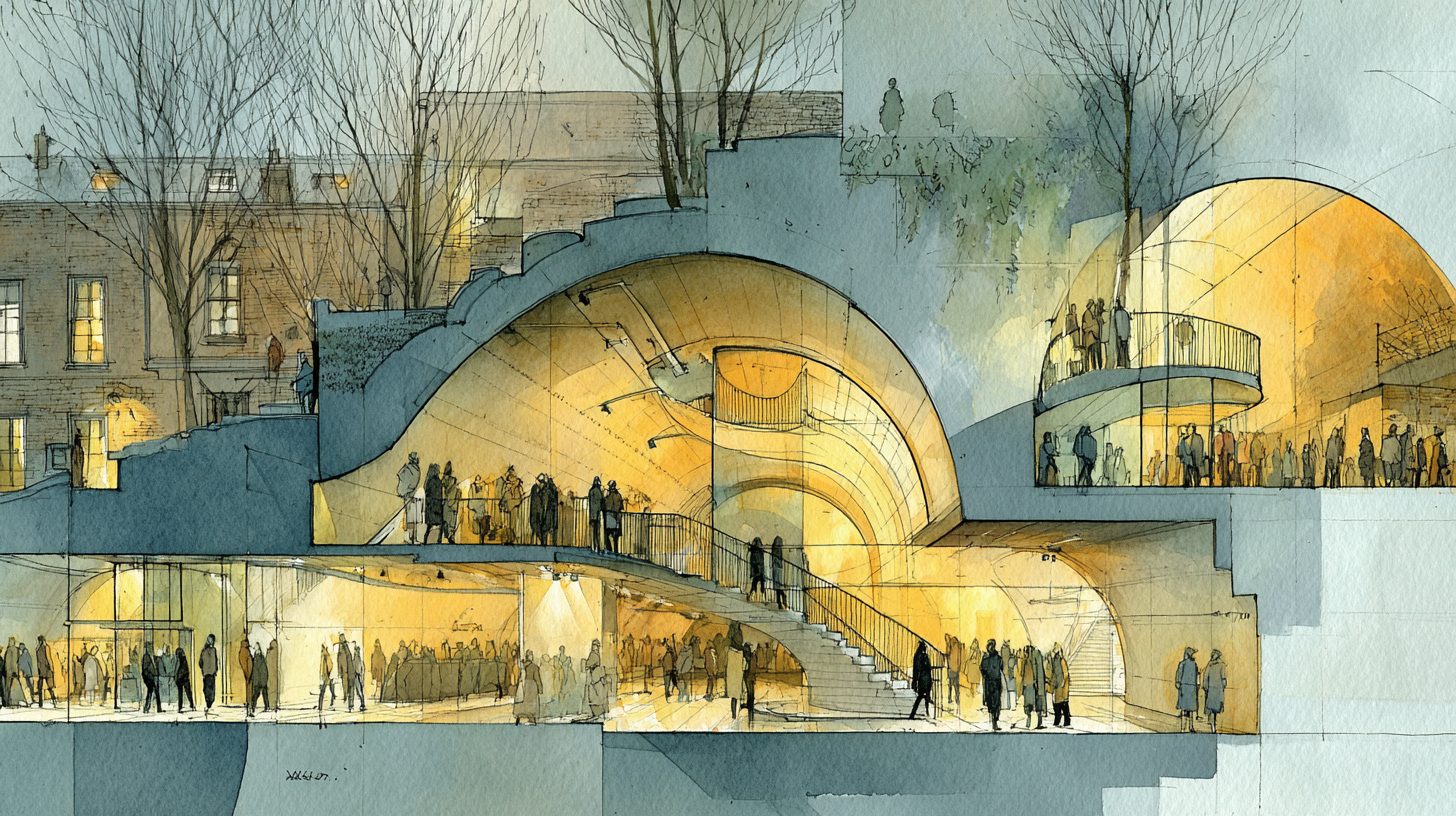
Cutaway of the London Underground, warm-lit platforms and flowing figures
The Underground — the machine built to breathe a workforce in and out.
Movement II

Then the people

The cargo changed, and the city re-engineered itself to carry it. When industry came, London wove the mills and print works and railways into its own fabric, because making things was how it earned its keep.

And when the economy ran on labour, it built the boldest machine of its age simply to bring people in — the Underground, inhaling a workforce each morning and breathing it out each night. The suburbs unspooled along the lines. People were the fuel, so the city built itself around their arrival.

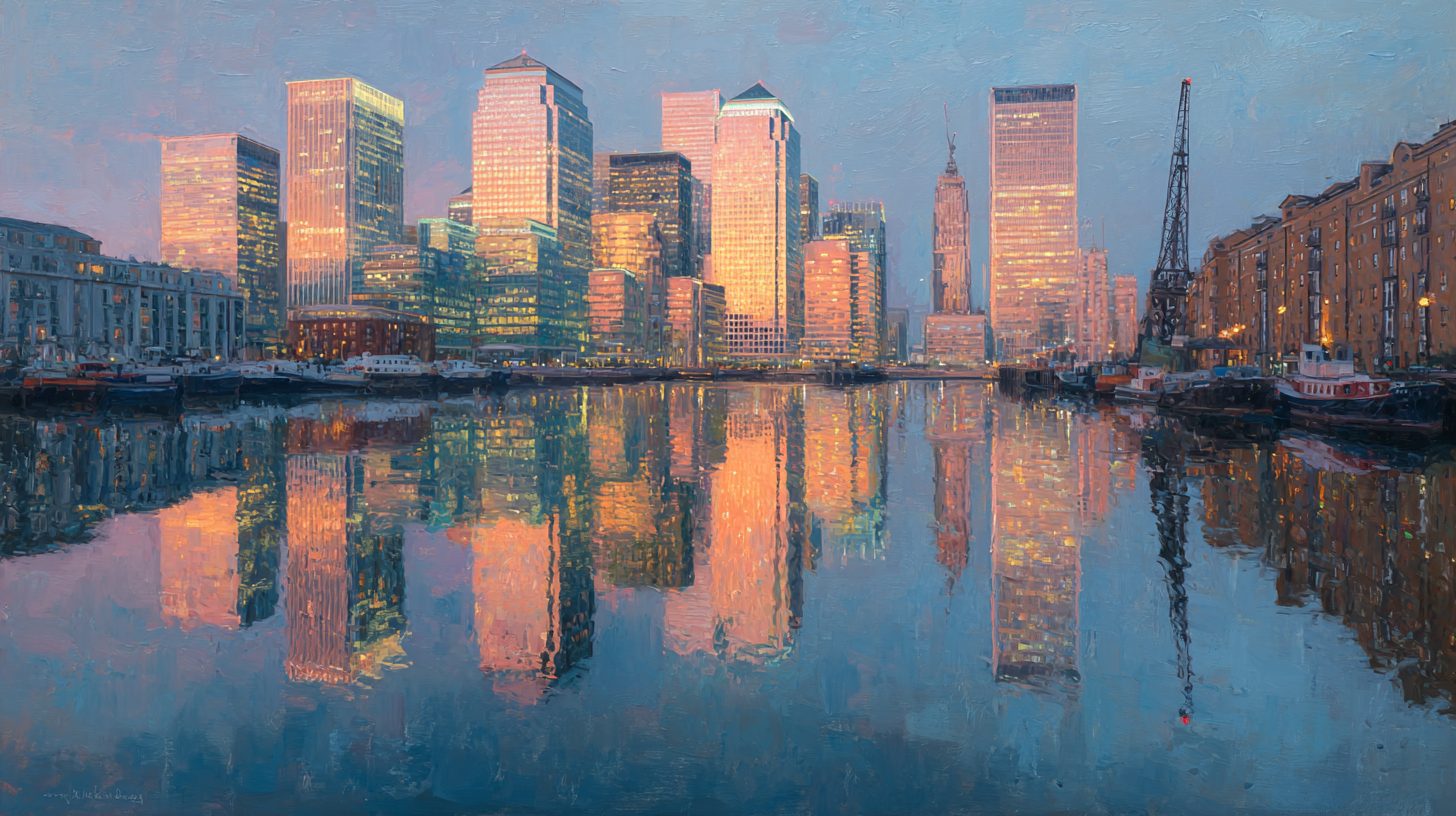
Canary Wharf towers rising at dusk, reflected in the old dock water
Canary Wharf — a graveyard of trade rebuilt, deliberately, as a trading floor.
Movement III

Then the money

When the goods stopped coming — the docks silent, the cranes rusting over the Isle of Dogs — London did what it always does: it found a new cargo.

The quays that once landed sugar were rebuilt to land capital, and Canary Wharf rose from dead water to trade something you cannot weigh. The instinct held: bring the world's most valuable thing to the river, and build whatever it takes to trade it.

First the goods Then the people Then the money Now the mind
Overhead view of makers' workbenches, hands at work among tools
The web of small hands — the thousand small trades a great change breeds.
Movement IV

The web of small hands

Here is the deeper pattern — how London survives its own reinventions. Every great change has bred a thousand small ones, and the small ones feed the great change back.

The docks landed the raw stuff of the world; around them grew a web of skilled hands to fashion it — the silk-weavers of Spitalfields, the jewellers of Clerkenwell, the brewers and printers and furniture-makers who made the cargo worth more. Other cities did it too — most were ports, or, like Manchester, dug a canal to the sea when they had no coast — but London held the fullest version.

It repeats in every age. When Big Bang broke open the City in the eighties, the knowledge of the trading floors spilled out into boutiques and hedge funds and, later, fintechs — a web of specialists who spotted openings the giants missed. Bigness shatters into many small, adaptive, interlocking skills; that is London's quiet genius, a city that feeds on its own ideas, splitting them many ways to breed more. So when a change comes larger than Big Bang — larger, perhaps, than the docks — London can do what another place could not.

Where another place might shatter under a change this size, London metabolises it.

A vast anonymous data-centre shed alone on an empty plain, a distant city on the horizon
The engine offshored — the industry of the age sent to the edge of nowhere.
Movement V

What London forgot

Here is the thread — and where it frayed. In every age, London built its commerce into its body: the docks, the railways, the Tube, the wires beneath the Square Mile. The engine sat inside the city, because that is what made it work.

Now the cargo has changed again — not sugar or coal or capital, but ideas, knowledge, data. The ships arrive full of minds and dock at universities and labs: the Knowledge Quarter, the Crick, the AI hub rising where King's Cross once took in the nation's coal. London is still, gloriously, where the clever come to trade.

But this time we forgot the lesson. We send our data to distant sheds and pipe the answers back; we site the power and the machines anywhere but here and call it efficiency. The city that once built its industry into its streets has let the defining industry of the age become someone else's landscape. That is the forgetting.

We have kept the trading floor — and offshored the dock.

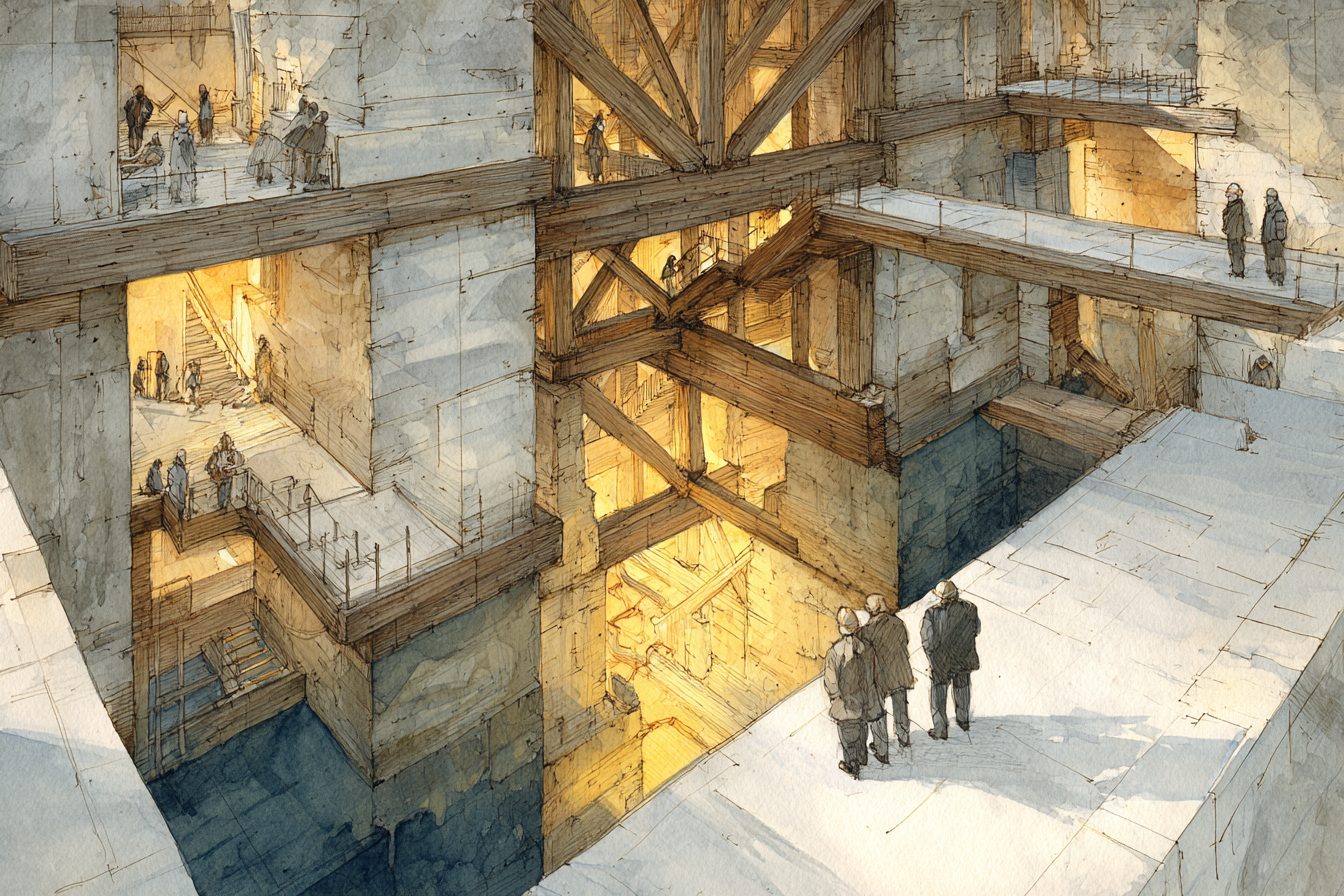
A deep civic excavation with timber shoring and small figures at work
The nerve to build — costly, disruptive, fiercely resisted, made anyway.
Movement VI

The nerve to build

But forgetting is not London's nature. Remaking is.

None of the great works came cheaply or gently. The docks were gouged from marsh. The railways drove straight through the living city — streets cleared, neighbourhoods halved, stations raised on the rubble of what stood before. The Tube was torn open and stitched shut, then bored deeper through the clay. The river was pushed back to make the Embankment. When the docks fell silent, Canary Wharf rose by razing them and starting again.

Each was an act of nerve — costly, resisted — and each happened anyway, because a shared vision ran ahead of the consensus until the building made it real. London has never been afraid to remake itself from the ground up, so long as it could see the prize.

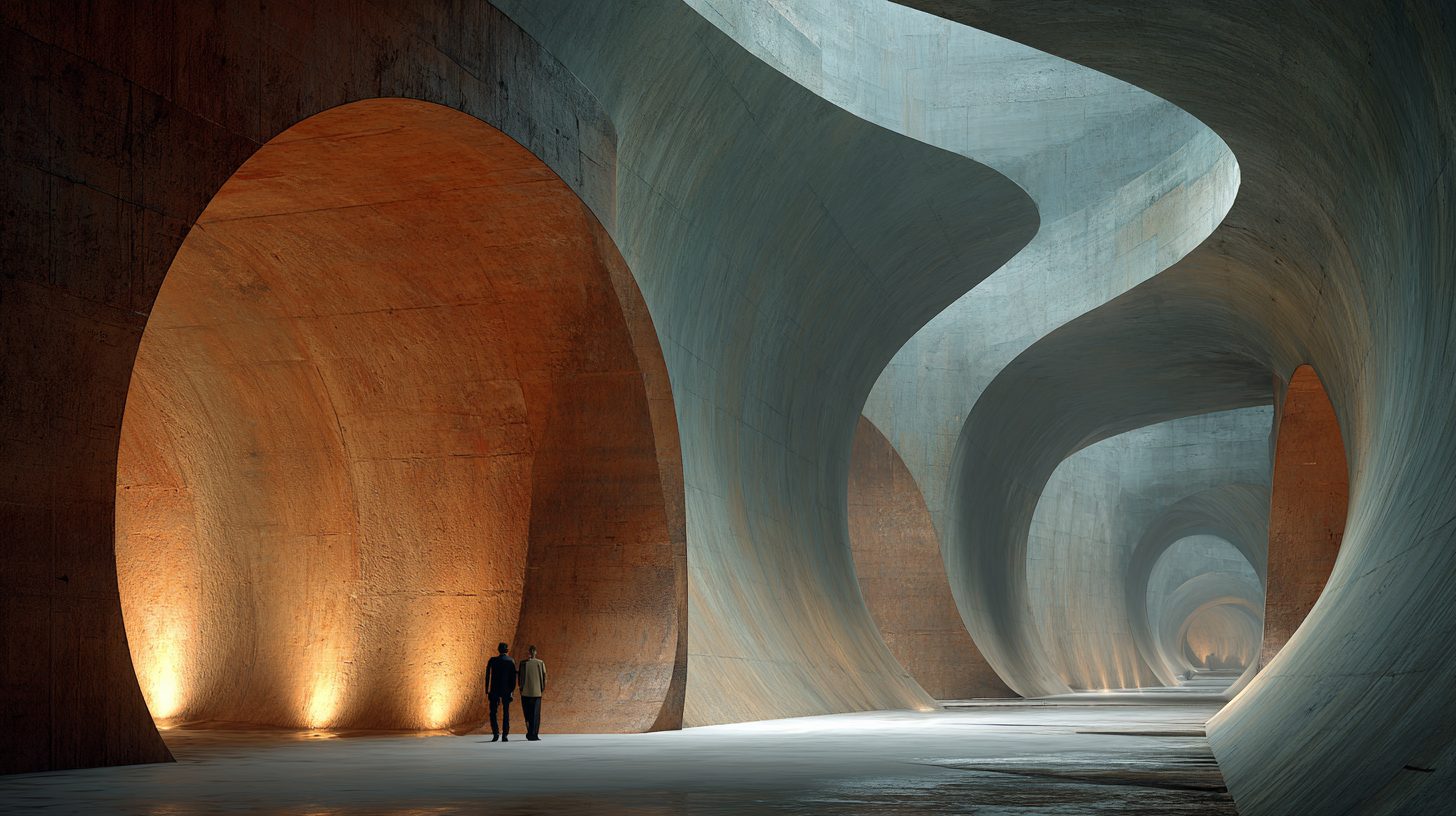
Vast sculpted caverns deep underground, warm light in the recesses
The city beneath — the cut and the bore, through clay that invites the work.
Movement VII

The city beneath

London has always built in two gestures: the cut, and the bore. Open the ground, or thread through it. Trace the line — embankments and canals, railway cuttings and the first tunnels, then Bazalgette's interceptor sewers that saved the city after the Great Stink and carry it still; the Ring Main looping water deep below; and now Tideway, proof that London can build something colossal beneath its feet while the life above never breaks stride.

Beneath it all lies the secret: London Clay, stable and watertight and forgiving to the tunneller's machine. Few great cities are so willing to be dug.

So here is the move the moment asks for — not a novelty but the next line in a two-hundred-year ledger: a network of safe places to dig, linked into a single deep system. The new railway is a tissue of power and data, threaded through the ground so the city above keeps its face while remaking its function.

The new docks are vertical. The new warehouses are deep.

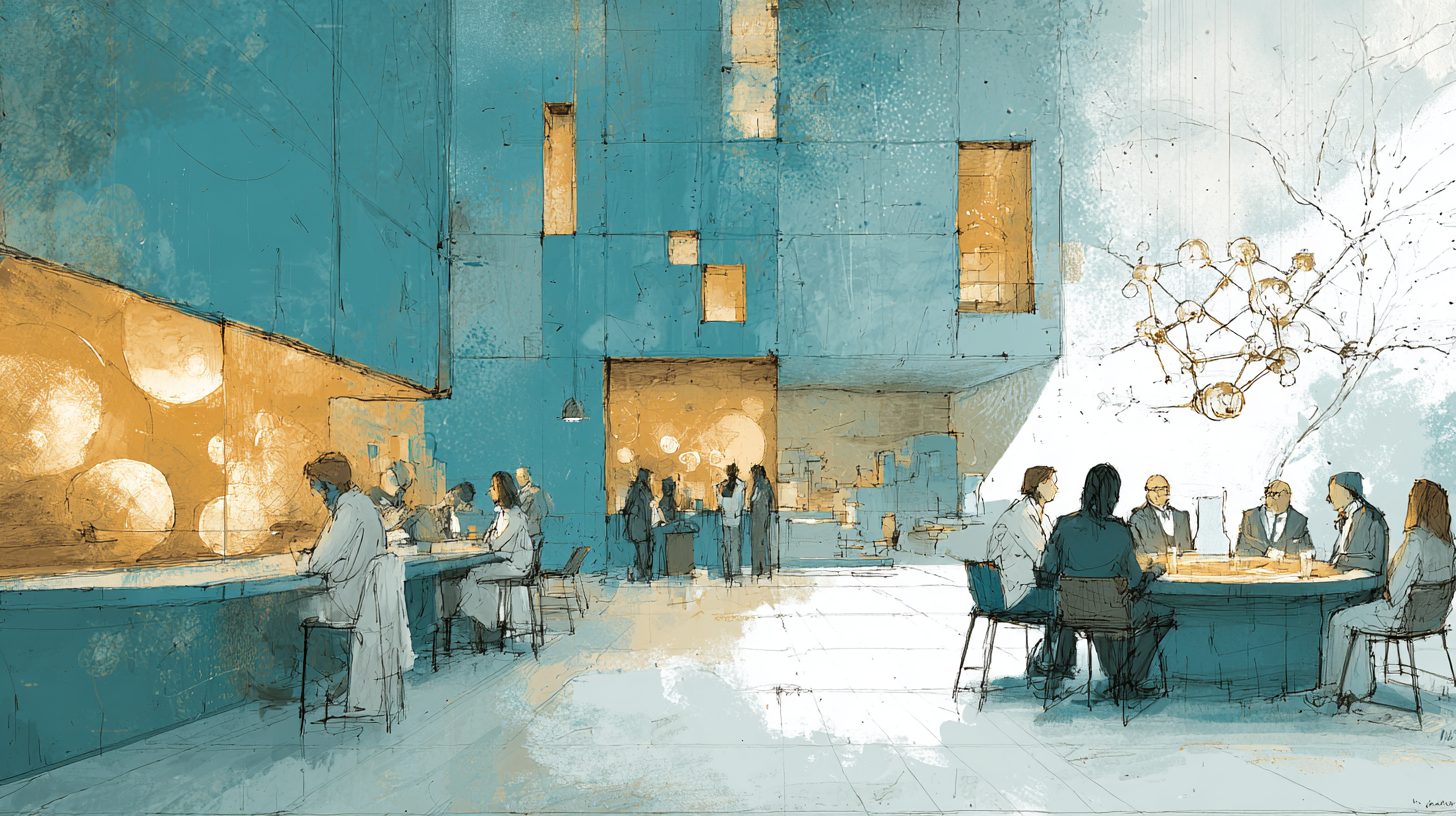
A bright interior holding both a research bench and a round table of people in conversation
The collision — invention and its conscience, at the same table.
Movement VIII

The collision

And the people are still the point. They always were. This is the rarest thing London holds, within a few square miles and one network of tunnels: the people inventing the future and the people who must decide how we live with it, in the same room.

In the labs and spin-outs the machine age is being written — the riddle of protein structure cracked a mile from the wards it will one day heal; models conjured by companies that did not exist a decade ago. A short walk away sit the others: lawmakers, economists, editors, arguing how you tax a productivity that needs no workers, and how a society keeps everyone whole when the machines take the work.

Silicon Valley invents, but it does not govern. Washington and Brussels govern, but they do not invent. London does both — at the same table, in the same week.

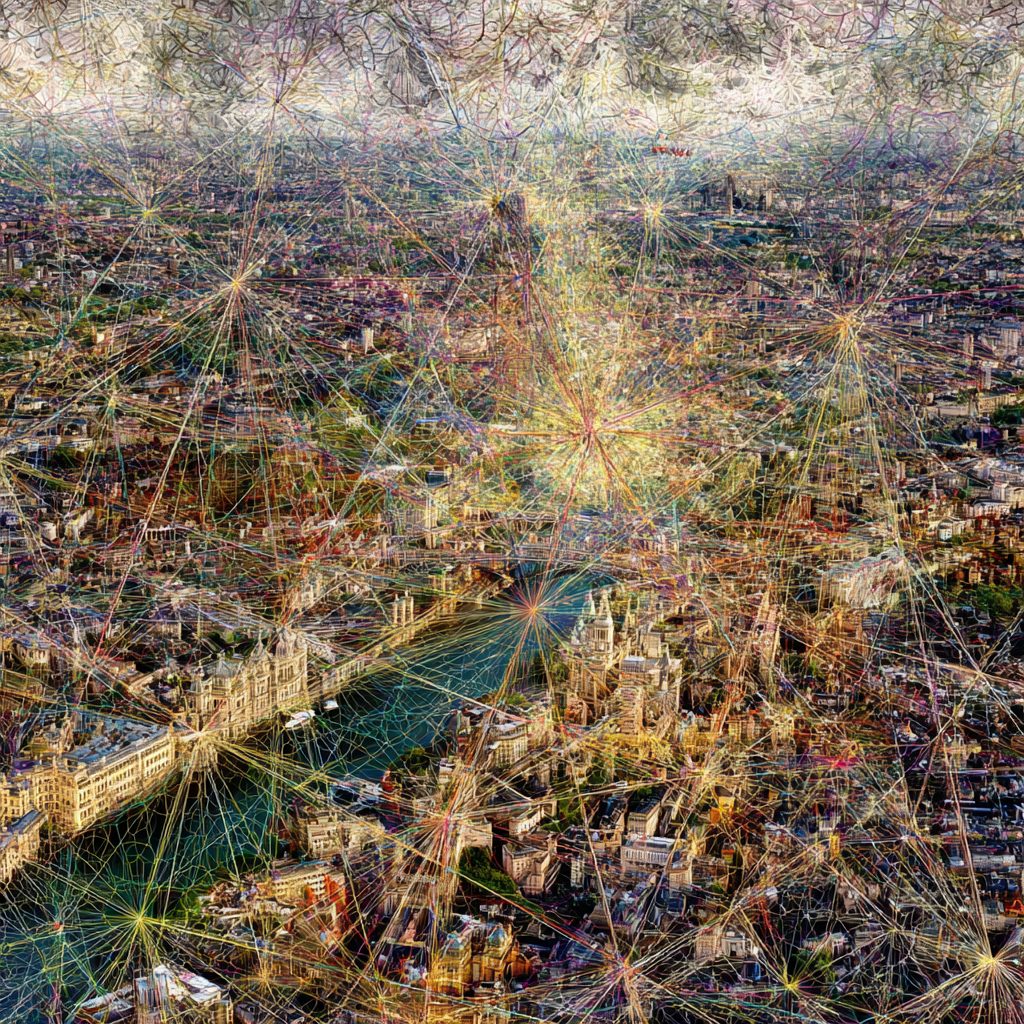
A neural network of fine bright lines overlaid on an aerial view of London
Where it matters most — the dense city as the place consequence compounds.
Movement IX

Where it matters most

We will build the infrastructure. The power, the compute, the heat, the tunnels are coming somewhere, for someone, because the age demands them.

The only question is where — and the answer is not wherever is cheapest or easiest, but wherever the building does the most. Set it on an empty plain and it powers machines, and nothing else. Set it beneath London and it powers the invention, warms the homes, cools the streets as the summers turn, clears the air — and stands beneath the one place on earth where the inventors and governors of this age are trying, together, to work out how to live.

Impact compounds where consequence is densest. Build where it matters most — and it matters most here.

An idea this large cannot remain an idea. It has to touch the ground.And London knows exactly how to make it

The picture, made physical

One organism, breathing

An energy belt at the rim. A tissue of power and data in the deep. Warehouses of compute and stores of cold below the streets — and buildings above that charge cold by night and eject heat to the sky.

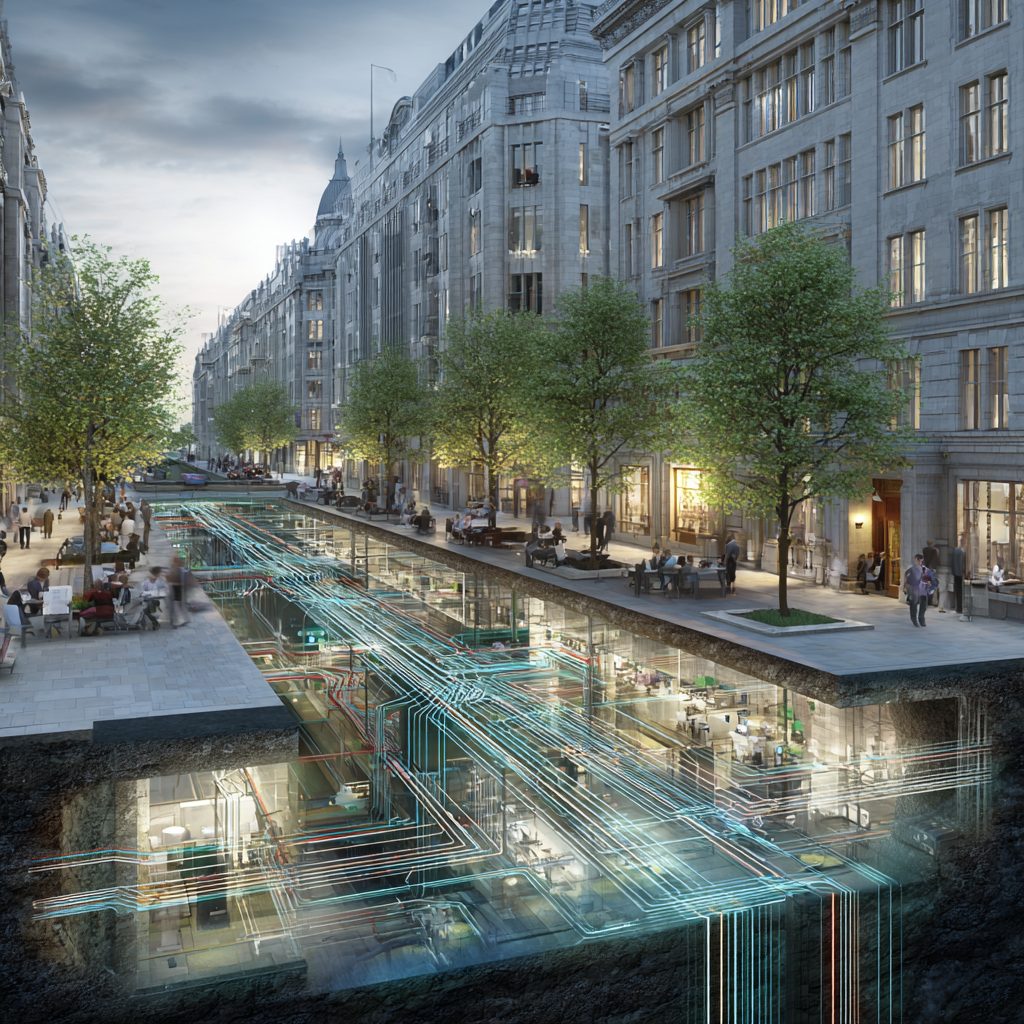
A London street at dusk with a glowing cutaway beneath the pavement revealing data infrastructure
Lift the pavement and the tissue is there — power and data beneath the street, the buildings plugged straight into it.

Most of it never troubles the daylight. To see it whole, you have to go down.

Whoever owns the compute wins.

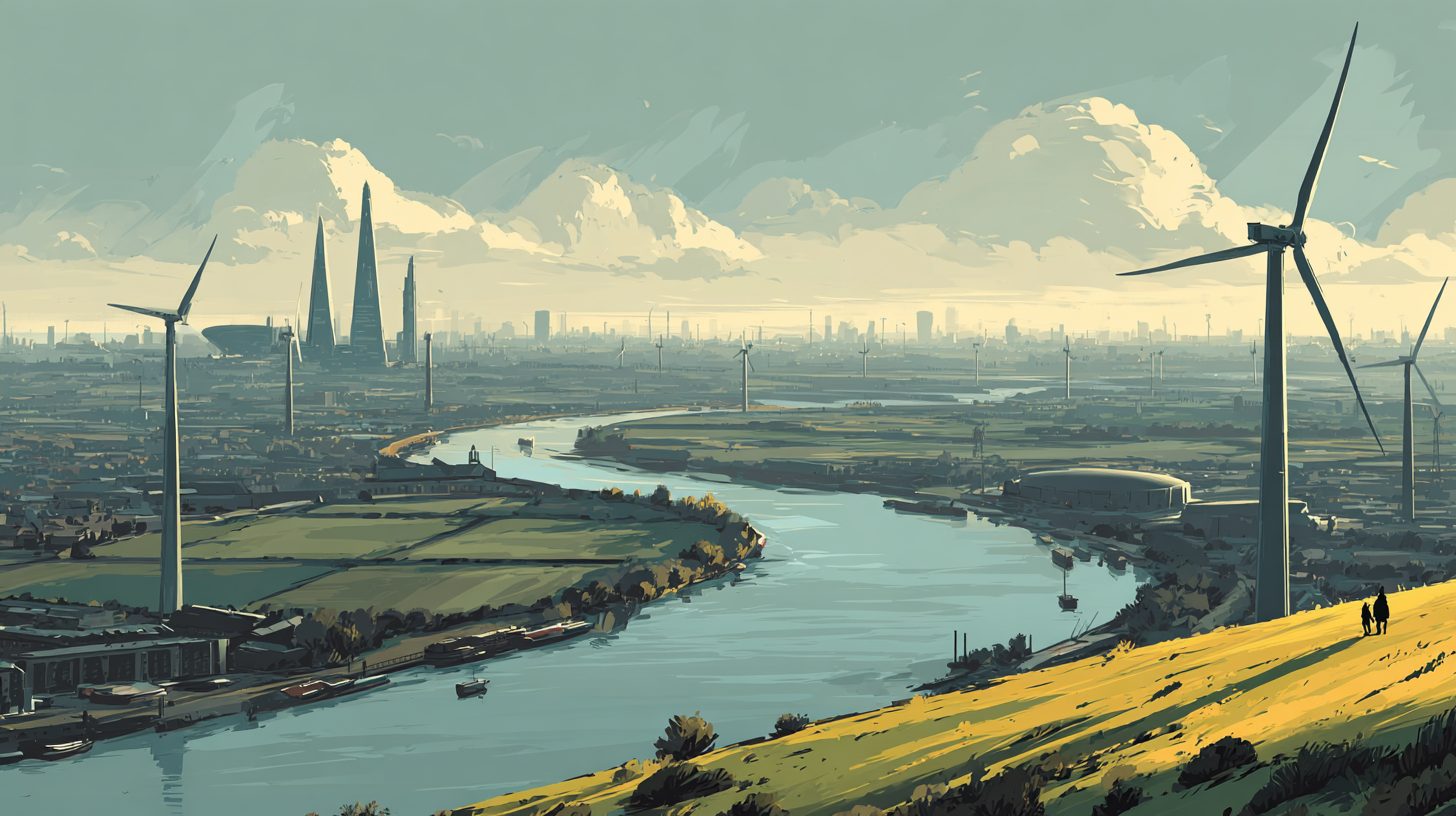
Wind turbines on the green rim of the city, the distant skyline beyond a river
The energy belt — clean power gathered at the rim and brought inward.
Power

Power, brought in

It begins at the rim — a belt of clean generation gathered on the city's edge, wind and sun and, in time, firm new power, carried inward through deep tunnels the way London has always carried what it needs. The city stops chasing the power out to distant plains and brings the power to the work.

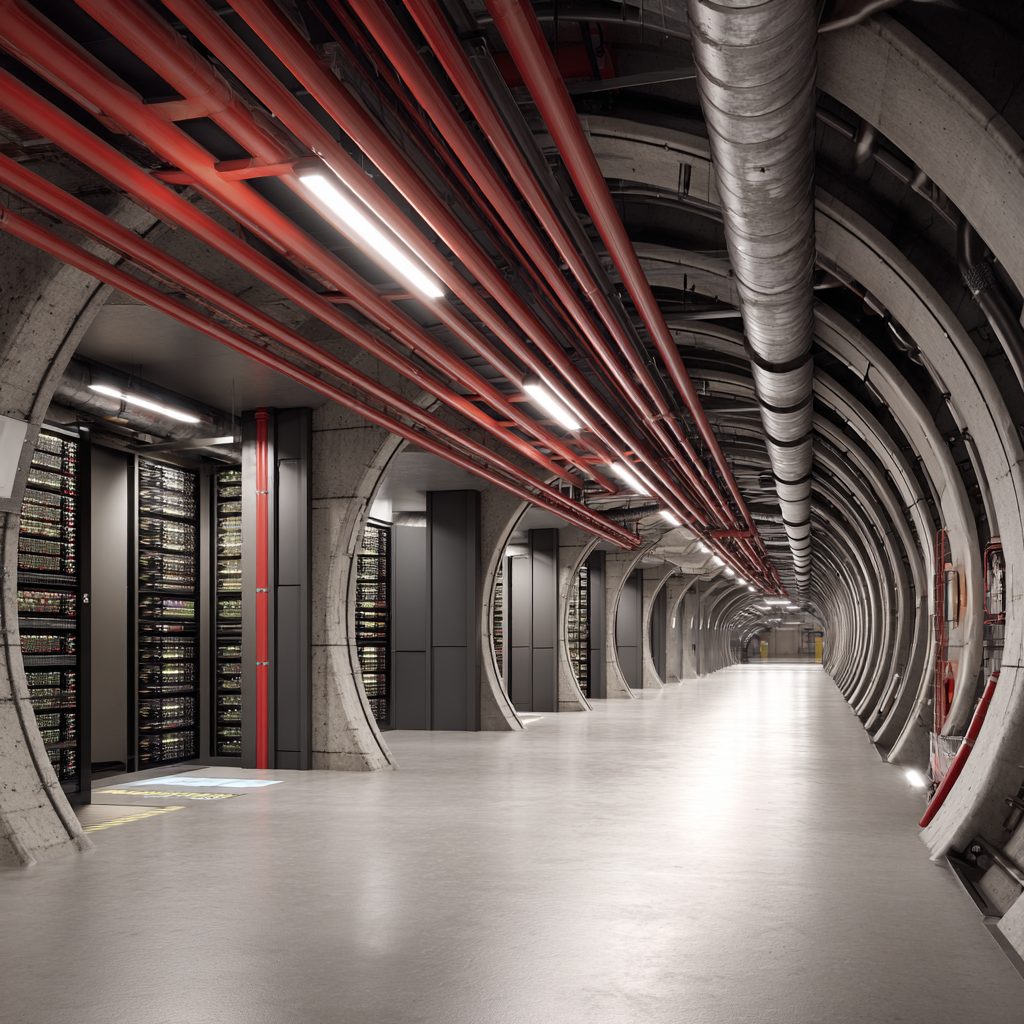
Rows of server racks set into a deep bored tube tunnel lined with services
Halls of inference silicon in the deep, beside tunnels London already knows how to bore.
Compute

The inference power houses

Down in the bore sit halls of silicon, answering the questions of the city overhead. Frontier models run close to the people and trades that call on them, so the query that cannot wait — a price, a diagnosis, a real-time reply — resolves in microseconds because the machine is here, not an ocean away. Bulk training can live wherever power is cheap; the answers a city needs in the moment belong beneath it. Britain now counts data centres among its critical national infrastructure — this is what that protection is for.

A deep hall with streams of fibre-optic light flowing past racks of silicon
The fast lane — light carrying the question in and the answer out.
Photonics

The fast lane

The chip is rarely the slow part — it computes far faster than the wires and fibres can feed it. The bottleneck is getting the question in and the answer out, and light is how that lane widens: optical interconnects and co-packaged photonics moving data closer to the speed the silicon runs. Underground, those expressways can run point to point — private, direct and short — between the deep halls and the city they serve.

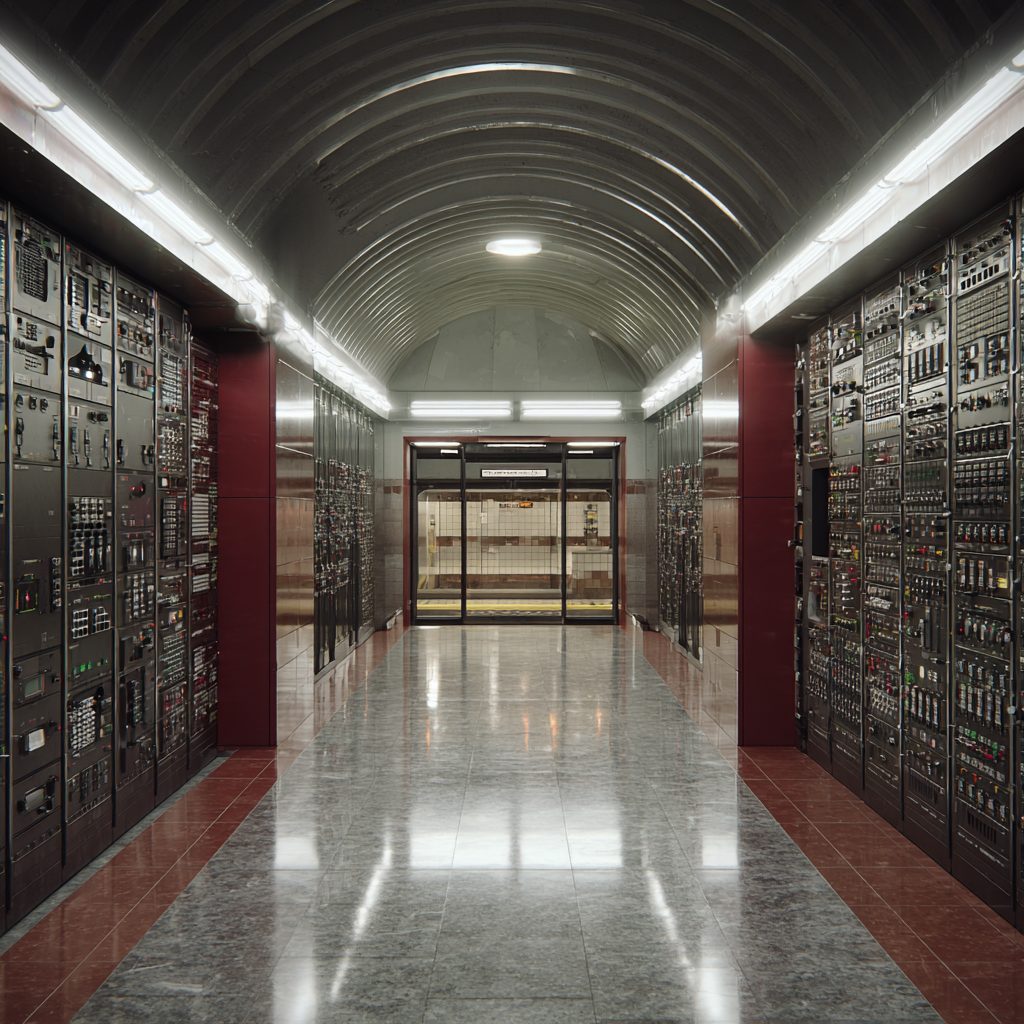
A vast, hardened sub-surface hall woven into the Underground
Secure by depth — a hardened world beneath the streets.
Security

Secure by depth

Depth is a kind of armour. Far underground, a facility is hard to reach and hard to harm — physically secure in a way no surface shed can match. The same depth makes it easier to engineer shielding against a rare electromagnetic pulse or a once-in-a-century solar storm — protection from deliberate design, not from earth alone. And the links carrying data out can be secured at the physical layer, drawing on the quantum key distribution already being trialled over city fibre.

Abstract cutaway of cryogenic quantum machinery, cool tones with small warm node lights
A colder future, a floor down — machines that ask for depth, stillness and cold.
Quantum

Kept cold

A further floor down sits a colder future. The quantum machines now being built must be chilled to a hair above absolute zero and guarded from the smallest disturbance, fed by vast memory and very fat data pipes. A deep, stable, secure home, rich in power and cooling, is exactly what such a machine wants — and a city that can place one quietly beneath its feet has somewhere to keep it.

A robot tending the racks inside an automated, secure data centre
Automated and secure — far underground, the deep node runs itself.
Automation

Built and run by machines

A site like this is a proving ground for the machines that will build and tend it. Boring, lining and fitting out deep underground is work to hand to automated construction; once built, robots keep the racks running in conditions people rarely need to enter. At scale, the deep node becomes more than infrastructure — a home for the robotics and automation industries that could power the next chapter of the UK economy.

A row of deep underground strongroom vaults beneath London, gold vault doors
Vaults beneath the city — sovereign data that stays put, with the answer sent to it.
Sovereignty

The vaults of London

Some data can never travel — health records, state secrets, a bank's own books. The pattern now emerging turns the old model around: instead of carrying the data to the question, you send the question, the algorithm, to the data, drawing a federated answer from vaults that never give up their contents. London could be where those vaults sit: sovereign data held secure beneath the city, with federated expressways running between them.

A person on a London street in smart glasses looking at a phone, a shimmer of data linking it to a glowing lake of compute below
Fingertips above, foundations below — the device in your hand, in conversation with the compute beneath the street.
Symbiosis

Fingertips and foundations

The phone in your hand and the glasses on your face are the thin edge of it — a personal device in constant conversation with a lake of compute and memory it could never hold alone. The cleverness you carry feels like your own, but most of it is borrowed, drawn in the moment from somewhere larger. Increasingly, that somewhere need not be a distant cloud. It can be the ground beneath your feet.

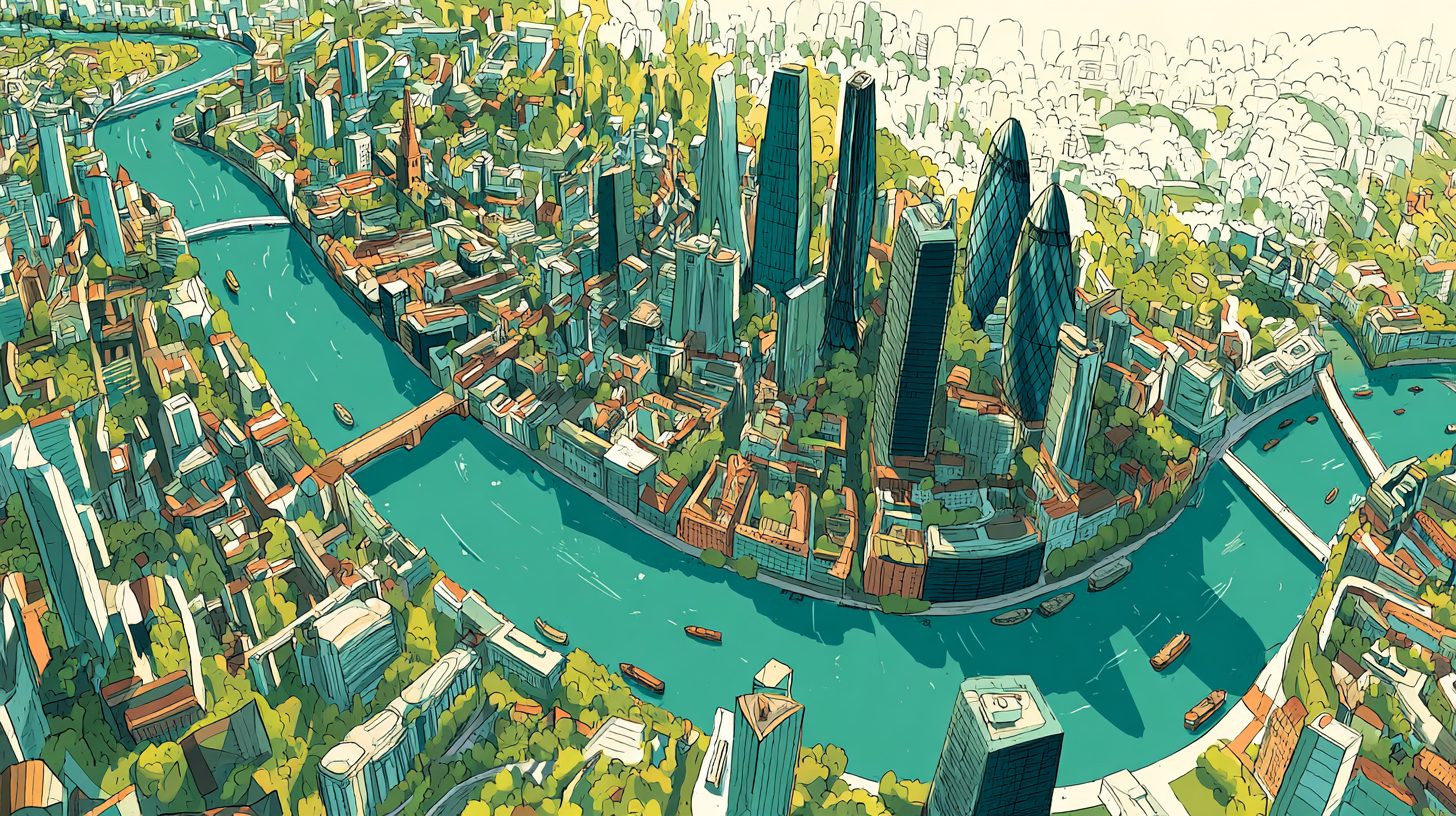
A green, planted aerial view of a future City of London on the Thames
The picture of the future — the engine built back into the fabric, the streets left to the people.
Movement X

The picture of the future

Add it up and the result is less a building than an organism.

Power drawn in, heat given off, cold banked by night and spent by day, compute grown shaft by shaft as the city needs it — almost without anyone above noticing. We are used to data at our fingertips; this is data beneath our toes.

And as the city electrifies, boiler by boiler and car by car, the air clears the way it cleared when the great smogs lifted — London becoming again what it has always secretly been: not a museum of trade gone by but a workshop, dense enough to throw people together until new ideas strike and new work is born, enough perhaps to meet the shock of the old work the machines will take. The engine built back into the fabric, so the promise can be kept above the streets as well as below them: that you can still come here, as they always have, to make something new.

How it works

The mechanics, plainly

Strip away the poetry and it is a handful of plain moves — each already proven somewhere, assembled, for once, in one place.

01Bring the power in

An energy belt of clean generation at the city's edge, threaded inward through deep tunnels — rather than pushing the work out to the power.

02Sink the compute

Automated data centres bored deep into the London Clay, where land is scarce above but the ground is generous below.

03Reuse the heat

Capture the data centres' reject heat into a heat network — lifted by heat pumps where needed — so it warms buildings instead of the sky.

04Charge cold at night

Run cooling when power is cheapest, often cleanest, and the air is coolest — banking it as ice deep in the ground.

05Spend cold by day

Release the stored coolth to keep buildings comfortable and shave the afternoon peak off the grid.

06Reward the flexibility

Buildings keep their own cold stores and are paid for the demand they shift, coordinated as one network.

For the sceptic

The honest questions

A vision this large should take the hard questions head-on. Here are the ones that matter — answered plainly, including where the honest answer is still “not yet proven.”

Why not just build the data centres where the power is, and pipe the data back?
On transport cost alone, you would — moving data down a fibre is cheap and low-loss, far more efficient than moving the equivalent energy as electricity, which is exactly why the sheds have drifted to the edges. But London has to bring clean power in regardless, to electrify millions of heat pumps and electric cars; the energy belt is justified by decarbonising the city, and the data centre is simply the anchor tenant that helps pay for the tunnels and hands back its waste heat. And the compute that truly must stay — low-latency finance, secure and sovereign data — can never be sleeved back from a distant shed. Send the bulk training elsewhere; keep the premium here.
Isn't data-centre heat too low-grade to be useful?
It used to be barely warm. The move to liquid and immersion cooling for modern AI hardware now yields hotter, more useful heat, and heat pumps lift the remainder to the temperature a network needs. In Stockholm, data centres already feed waste heat into the city's district-heating network, which its operator says recovers enough heat to warm tens of thousands of apartments; similar schemes are operating or in development in the Netherlands.
Does the waste heat make the cold?
No — and it is worth being precise rather than tidy. Heat and cold are two separate loops that share the tunnels, the site and the operating philosophy, not the same energy. The honesty is part of the design, not a flaw in it.
Can London actually get the power?
This is the hardest question, and the real constraint — in recent years, grid capacity in parts of London, the west especially, has been tight for new large connections. That is precisely why the energy belt, not the data centre, is the headline: the scheme only works as part of a wider effort to bring clean power into London. The connection has to be solved, and we don't pretend it already is.
Why would a building run its chillers for the network?
Mostly it runs them for itself. Charging cold with cheap, clean night power to avoid expensive daytime cooling is simple arbitrage; the store stays in the building, and only the coordination and the payment for shifting demand are shared. No city-wide cold pipes are needed to begin — the network can be virtual long before it is ever physical.
Is building under London affordable?
It is capital-heavy, but London already builds at this scale beneath itself — Tideway, the deep power tunnels — and the regulated-utility model that financed the super sewer is the template for paying it back over decades. The London Clay makes the boring unusually kind.

The cargo changes. The instinct does not.

First the goods. Then the people. Then the money. Now the mind — and a city built, once more, to receive it.

Notes & sources

A working draft. The argument is deliberately bold, but its factual claims are sourced below; longstanding history (the Underground's 1863 opening, the 1986 Big Bang, Lloyd's coffee-house origins and the like) is a matter of public record. The proposals themselves — the deep node, the coolth network, automated construction — are described as proposals, not as things already built.

  1. UK designates data centres as Critical National Infrastructure, 12 Sept 2024 — gov.uk
  2. Data-centre waste-heat recovery into district heating, Stockholm — Stockholm Exergi
  3. Data-centre heat reuse in the Amsterdam region — AMS Institute
  4. Liquid / immersion cooling and heat reuse (review) — ScienceDirect
  5. West London electricity-capacity constraints — Greater London Authority
  6. Data-centre sector disputes the grid-constraint link — Computer Weekly
  7. Grid carbon intensity varies by time of day — NESO
  8. Ice / thermal energy storage for cooling — CALMAC (Trane)
  9. Chiller efficiency and ambient temperature — Australian Government (HVAC factsheet)
  10. Underground siting, EMP & solar-storm risk (balanced) — The Register / Uptime
  11. Quantum key distribution over fibre — CableLabs
  12. Latency, colocation and where AI training is sited — Epoch AI
  13. Photonics and the data-movement bottleneck (co-packaged optics) — npj Nanophotonics (Nature)
  14. Why quantum processors need millikelvin cryogenic cooling — IBM Quantum
  15. Federated learning — moving the model to the data — Google Cloud
  16. Thames Tideway: regulated-utility (RAB) delivery model — Tideway
  17. National Grid London Power Tunnels — National Grid
  18. London Clay as a tunnelling medium — British Geological Survey
  19. Bazalgette's sewers and the Great Stink — Institution of Civil Engineers
  20. AlphaFold and the 2024 Nobel Prize in Chemistry — NobelPrize.org
  21. The Knowledge Quarter, King's Cross — Knowledge Quarter