An exploration
Did We Forget the Trees?
What a hillside still remembers it can grow
These explorations weave memory and present thinking — not records of what happened, but attempts to learn by holding the past and the present in the same frame. Why it reads this way →
A few months ago I found myself looking at a map of hazelnut production. It was one of those moments that begins as a practical question and ends somewhere entirely different.
The practical question was simple enough. Could North Wales support commercial hazelnut production? The answer appeared almost immediately. Most of the world's hazelnuts come from Turkey. Not from vast high-technology agricultural complexes. Not from highly controlled environments. Not from systems dependent on artificial intelligence and robotics.
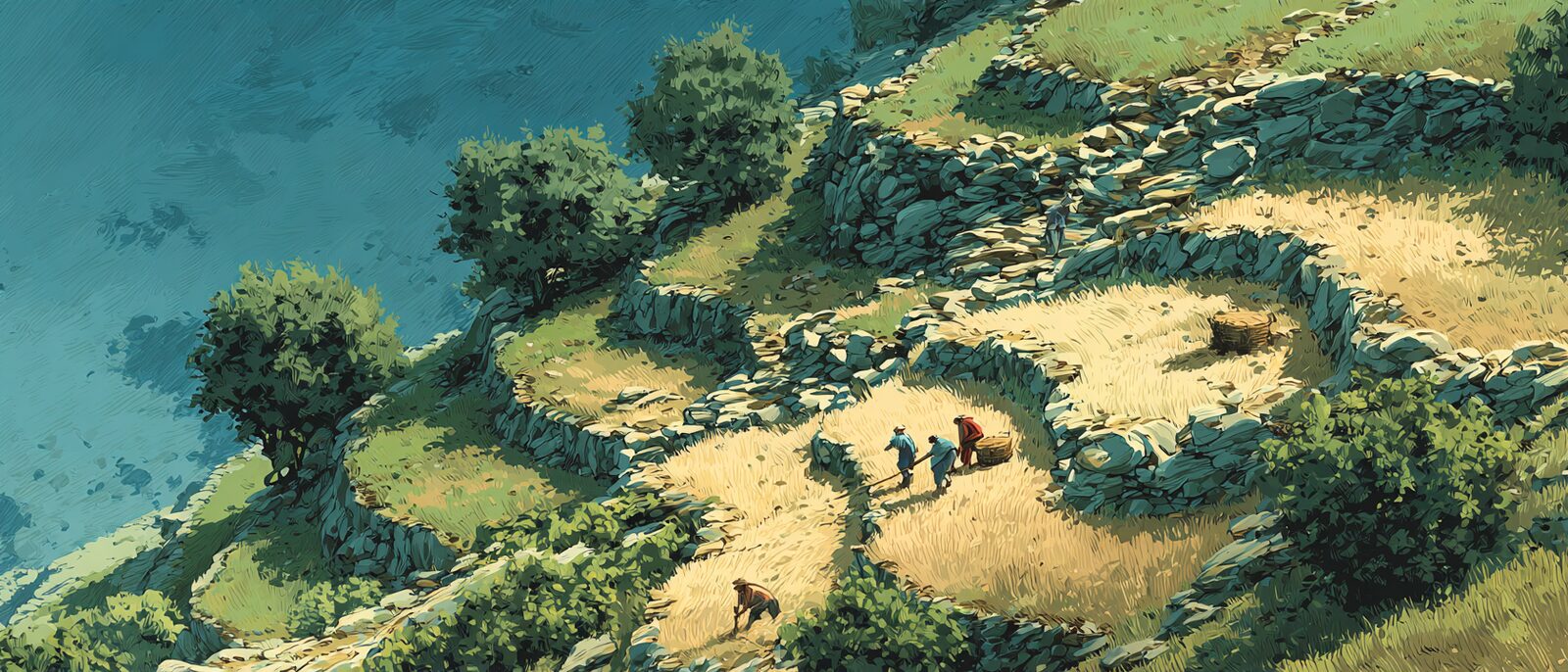
They come from hillsides. Many are still harvested by hand. The climate is wet. The winters are mild. The terrain is often steep. Farms are frequently small.
The more I looked, the more familiar it felt. The photographs could almost have been taken in parts of Wales.
If hazelnuts can grow there, why not here?
The obvious answer is economics. Turkey already produces them at scale. Supply chains exist. Knowledge exists. Processing exists. Markets exist. But economics only tells part of the story. The more interesting question is why we stopped asking what our landscape might be capable of producing.
Sheep country
As children many of us were taught that Wales was sheep country.
The idea became so deeply embedded that alternative possibilities almost disappeared from view. Yet history tells a different story. Travel around North Wales and you will find place names, estate records and fragments of memory that hint at a far more diverse landscape than the one we inherited.
Perhaps the most striking example is the walnut. Older residents occasionally recall walnut trees. Historic estates certainly planted them. There are references scattered through old records. Yet ask around today and very few people can point to a mature walnut tree growing locally. Many younger people have never seen one in the landscape at all. The tree has almost vanished from memory.
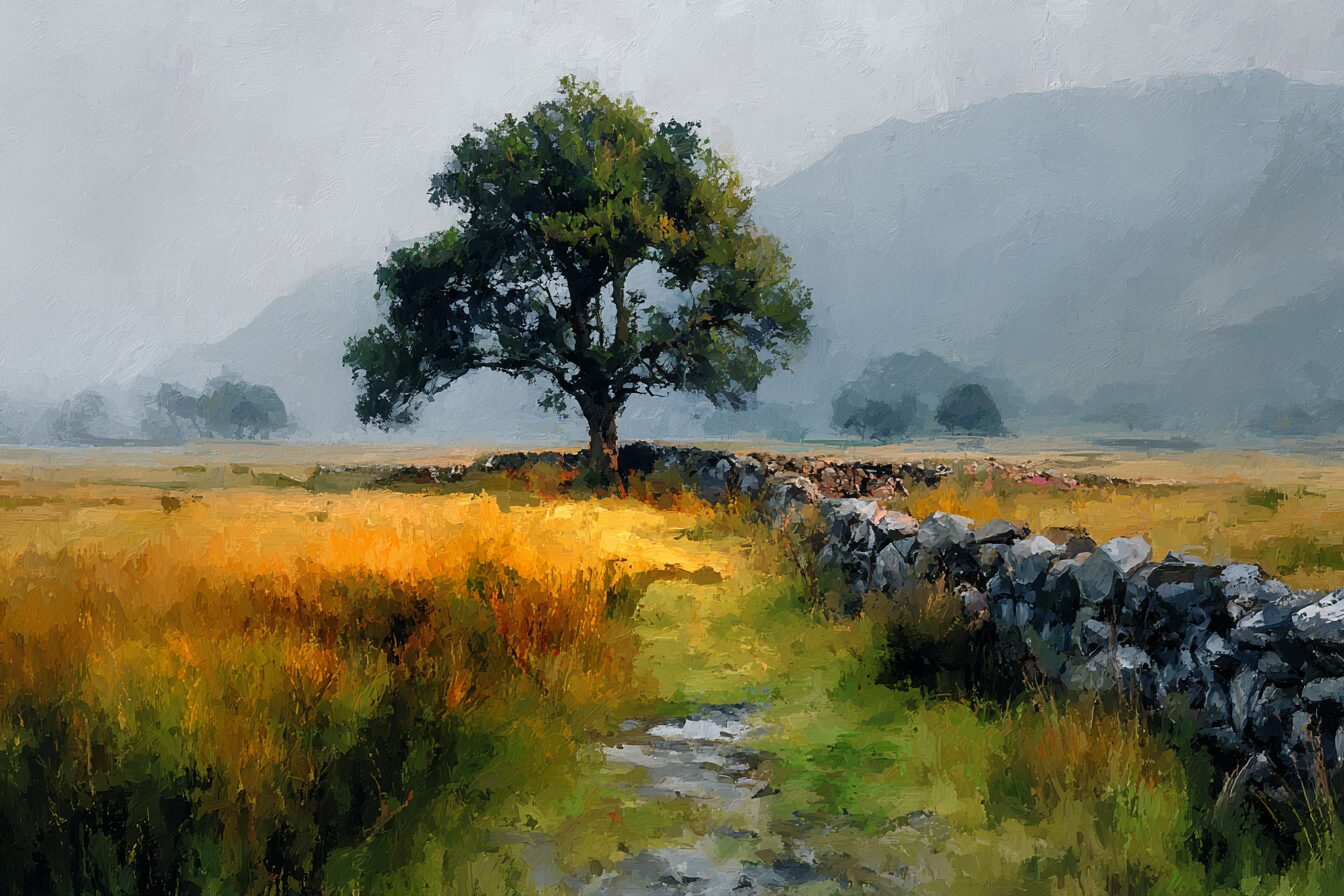
The remarkable thing is that the climate has not become less suitable. If anything, it may be becoming more suitable.
Perhaps some opportunities are not absent because they are impossible. Perhaps they are absent because we stopped looking.
The map being redrawn
For generations agriculture was largely about optimisation. How many sheep? How many cattle? How much grass? How much yield? Those questions remain important. But climate change is quietly introducing a new set of questions. What becomes possible? What becomes viable? What should we be experimenting with now, before necessity forces us to do so later?
Around the world entire agricultural regions are beginning to shift. Wine production is moving north. New crops are appearing in unexpected places. Growing seasons are changing. Rainfall patterns are changing. The map of agriculture is being redrawn, not through policy but through climate itself.
The challenge is that most places are still looking backwards. They are trying to preserve yesterday's agricultural landscape rather than understand tomorrow's. I wonder whether Wales might have an advantage precisely because it sits slightly outside the centres of agricultural power. We are not trying to defend vast established monocultures. We have room to experiment.
The layered field
Imagine a different approach to a small area of land. Not thousands of acres. Five acres. Ten acres. A field most people would drive past without noticing. Instead of asking what single crop should be grown there, we ask a different question. What combination of crops, trees, energy systems and enterprises could make this piece of land more productive, more resilient and more valuable to its community?
Suddenly the landscape starts to look very different.
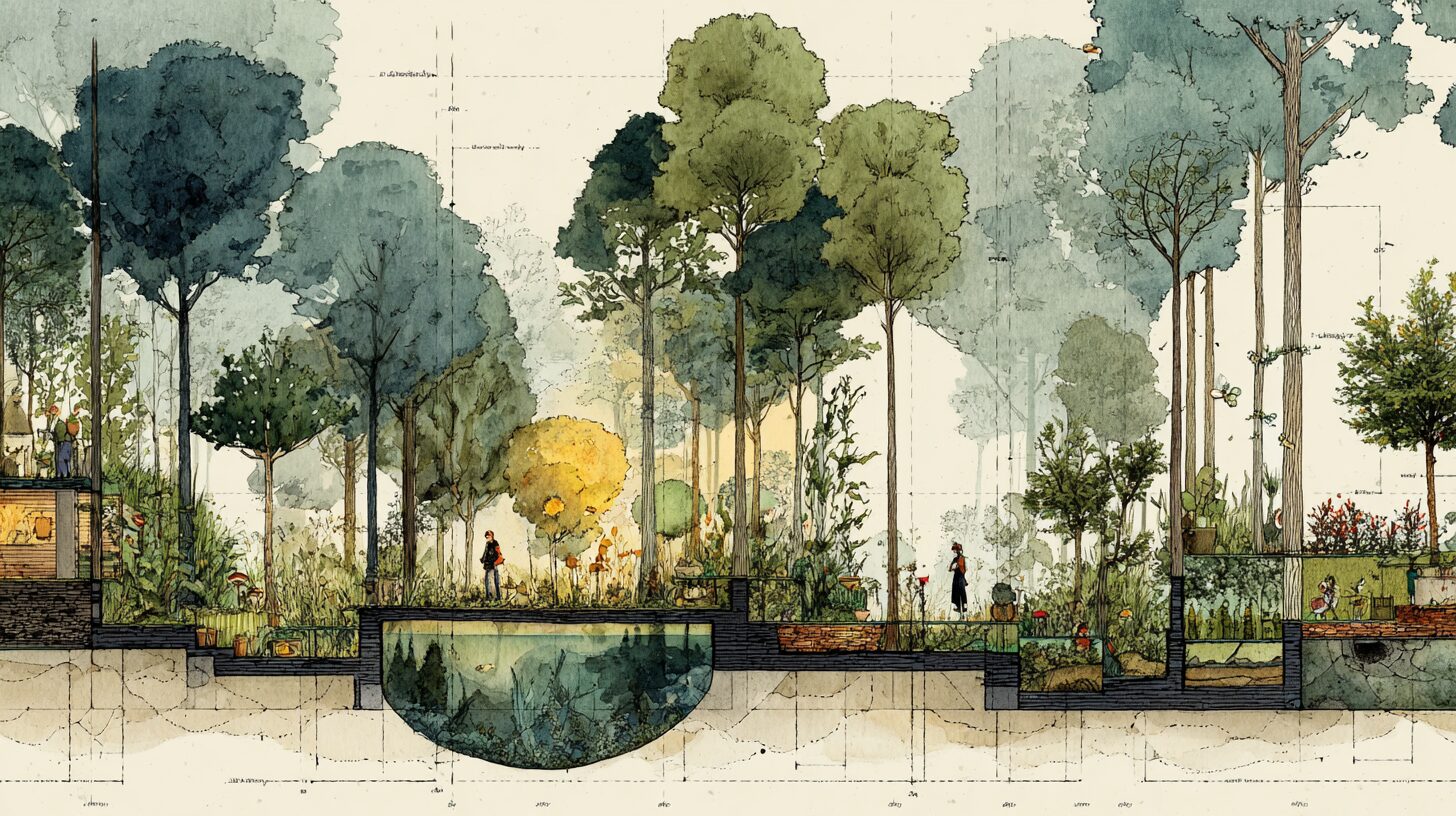
The field becomes layered. Not unlike a natural woodland. This is the principle behind agroforestry, although the word sometimes makes it sound more exotic than it really is. At its heart it is simply recognising that nature rarely operates in single layers. Forests do not produce only one thing. They produce many things simultaneously.
The question is whether agriculture can learn from the same principle. There are encouraging signs that it can.
The tool in the pocket
What makes this particularly interesting today is that we now possess tools previous generations lacked. A farmer considering walnuts fifty years ago faced a difficult challenge. Information was scarce. Markets were distant. Buyers were unknown. Production data barely existed.
Today the situation is entirely different. A grower can monitor soil moisture in real time. Track weather conditions. Model yields. Share information with neighbouring producers. Connect directly to buyers. Coordinate harvesting. Access specialist advice. Monitor cold storage capacity. Forecast demand. All from a device carried in their pocket.
Technology is not making agriculture less local. It can make it more local.
Small, together
Historically one of the greatest barriers to diversification was scale. A supermarket buyer does not want fifty kilograms of walnuts from one farm. They want fifty tonnes. A hospital kitchen cannot redesign procurement around a single market garden. A processor requires consistency and volume. Individually, small producers struggle. Collectively, they become visible.
Digital systems allow production to be aggregated in ways that were previously difficult. Ten growers become fifty. Fifty become two hundred. A collection of small orchards starts to resemble an industry. Not through centralisation, but through coordination.
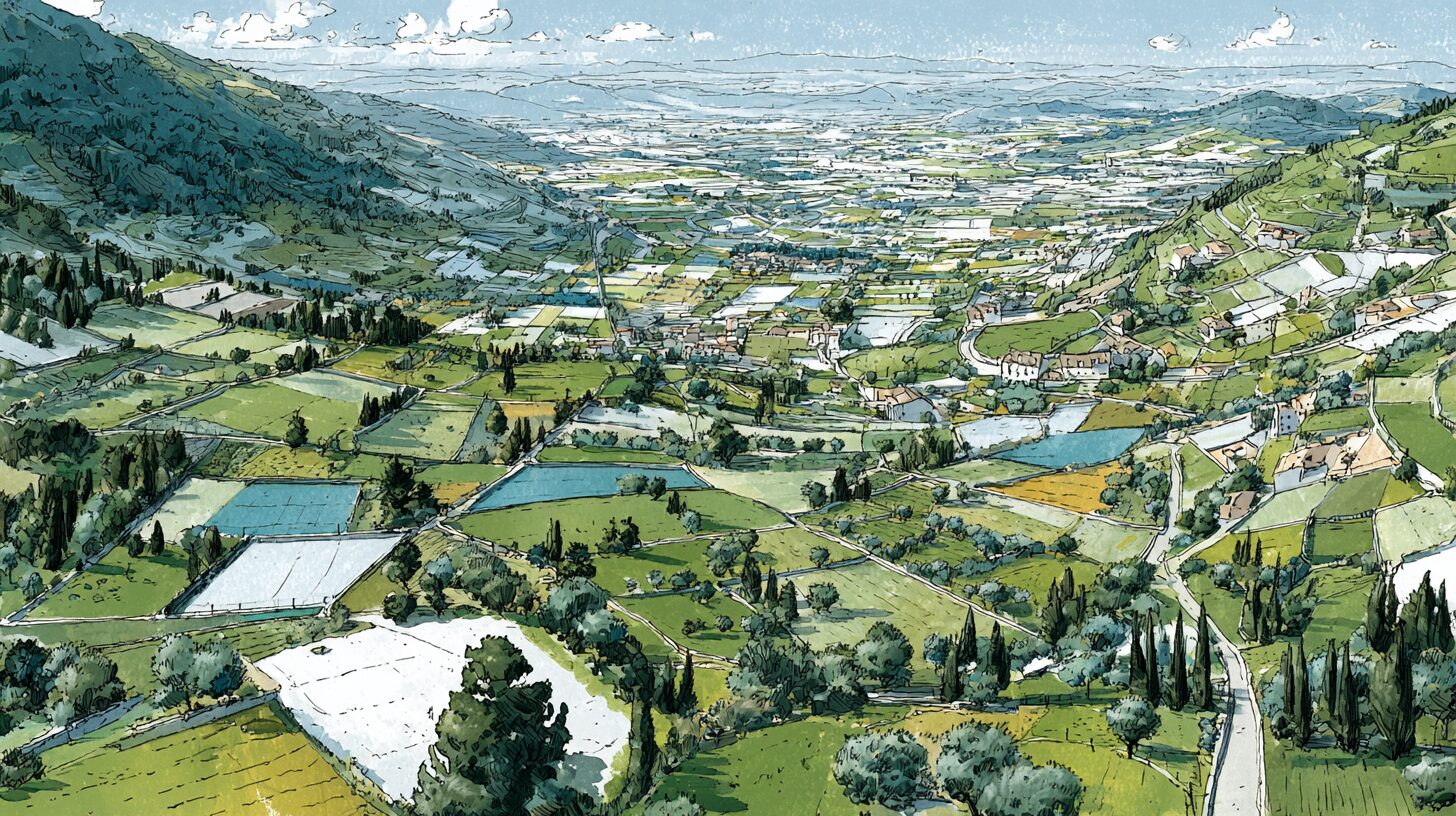
The implications extend beyond food. Imagine local schools monitoring crop development — students learning biology, climate science and data analysis through real growing systems. Imagine community groups helping establish orchards whose yields support local projects. Imagine hospitals purchasing a proportion of produce from local growers. Imagine environmental monitoring generating datasets valuable to researchers. Imagine visitors arriving not simply to consume a landscape but to participate in it.
The crop itself becomes only part of the story.
A bounded laboratory
This way of thinking has much in common with the idea explored in Battery Island. There the island acts as a bounded laboratory for understanding future energy systems. Here the landscape becomes a bounded laboratory for understanding future food systems.
The purpose is not self-sufficiency. The purpose is learning. Learning what grows. Learning what markets exist. Learning what communities value. Learning what climate change makes possible. Most importantly, learning how capability is built.
The question is not whether North Wales will become the next great hazelnut-producing region. It may. It may not. The question is whether we can rediscover the habit of experimentation. Whether we can once again look at a hillside and ask not only what it is, but what it could become.
That feels increasingly important. Because the future may belong not to places with the largest resources, but to places that remain curious enough to notice opportunities before everyone else does.
What the hillside remembers
Somewhere in Turkey, on hillsides not unlike our own, families continue to harvest hazelnuts from systems refined over generations. Somewhere in Wales there may be hillsides equally suited to growing them. The difference is not climate. Or soil. Or rainfall.
The difference may simply be that one landscape still remembers what it is capable of, while the other has forgotten.
Perhaps the first step towards a more resilient future is not inventing something new.
Perhaps it is remembering possibilities that have been quietly waiting in front of us all along.