An exploration
How We Keep the Value
Cadw’r Gwerth — the engineering of bringing the value home, and the cheering news that Wales has already built most of the parts.
These explorations weave memory and present thinking — not records of what happened, but attempts to learn by holding the past and the present in the same frame. Why it reads this way →
In the last piece, Cynefin, I argued that Wales did not really lose its land — it lost the coordination and the knowledge of where the value sits. The land mostly came back to local hands after the First World War; what kept walking away was the value of what the land produces, down a lengthening chain to the supermarket shelf. That piece ended on a promise: that the how of bringing the value home deserved an essay of its own. This is it.
It is a more practical piece than the first, and a more hopeful one, for a reason I did not expect when I started. Almost everything required to do this already exists in Wales. The problem is not that the parts are missing. It is that they are wired to the wrong place.
Two levers, not one argument
Start with the chain, because it is where the value leaks. A supply chain is a line of hands between the field and the eater, and each hand takes a margin for its work — the abattoir, the processor, the packer, the haulier, the distributor, the retailer. None of that is villainy; moving food is hard. But the longer the line, the more of the final price is spoken for before a penny reaches the farm. Over half a century we let the line grow very long and let the hand at the far end — the point of sale — set the terms for everyone behind it.
There are exactly two honest ways to bring the value back, and the most useful thing I can say is that they are not rivals. They are two levers on the same machine.
The first lever is distance: find the eater closer to the field, so fewer hands take a cut and more of the price stays near the farm. This is not about charging the shopper more — that just shrinks the market. It is about removing the leakage. Hold the shelf price where it is, shorten the line, and the share that currently dissolves into distance stays home instead.
The second lever is depth: do more of the making in the valley before the product leaves. Raw milk is worth little; cheese is worth a great deal more, and the difference is created — and kept — wherever the cheese is made. A tray of raspberries is a commodity; raspberry cordial is a product. Every step of processing is value, and value accrues where the work is done.
Plot the two levers as axes and you get a simple map with four corners. In the bottom corner sits today’s default: raw produce sold into a long chain — the farm keeps the smallest slice. Shorten the chain alone and you recover the distribution margin (the box scheme, the farm shop). Deepen the processing alone but still sell through the supermarket and you recover the processing margin but surrender the distribution one again — and you risk the processing itself being owned by someone else. The prize is the far corner: made and sold here — both margins kept, the value fully contained. That is not a theory. On the Llŷn Peninsula it has a name.
The thing already works
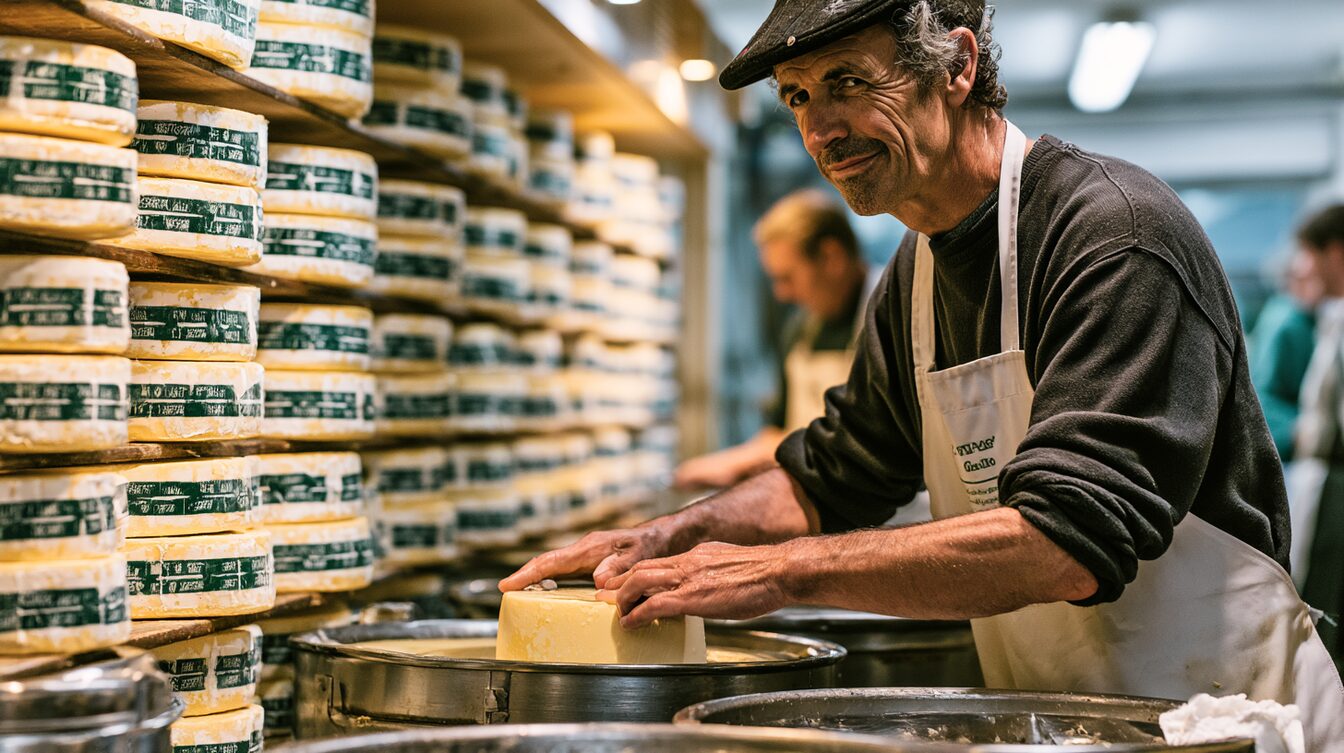
South Caernarfon Creameries was founded in 1938 by a dairy farmer who wanted his neighbours to get a better price for their milk. Today it is wholly owned by around a hundred and fifty farms: every farmer who supplies the milk also owns a share of the company that turns it into cheese. The farms keep their own ground; they pool the function — processing, branding, selling — and they keep the value that function creates, including a vintage cheddar matured five hundred feet underground in the slate caverns of Blaenau Ffestiniog. Calon Wen, a co-operative of organic family farms, does the same for organic milk and butter.
I dwell on this because it dissolves the usual objection that this is utopian. Keep title, pool function is not a model borrowed from a business school or a kibbutz; it is a North-Wales dairy that has been running for the better part of a century, and it is exactly the shape the whole long history of Welsh land kept reaching for — the kindred gwely, the grange, the shared harvest of cymhortha, in modern dress. The question is not whether it can work. It is why it is the exception rather than the rule.
See it move
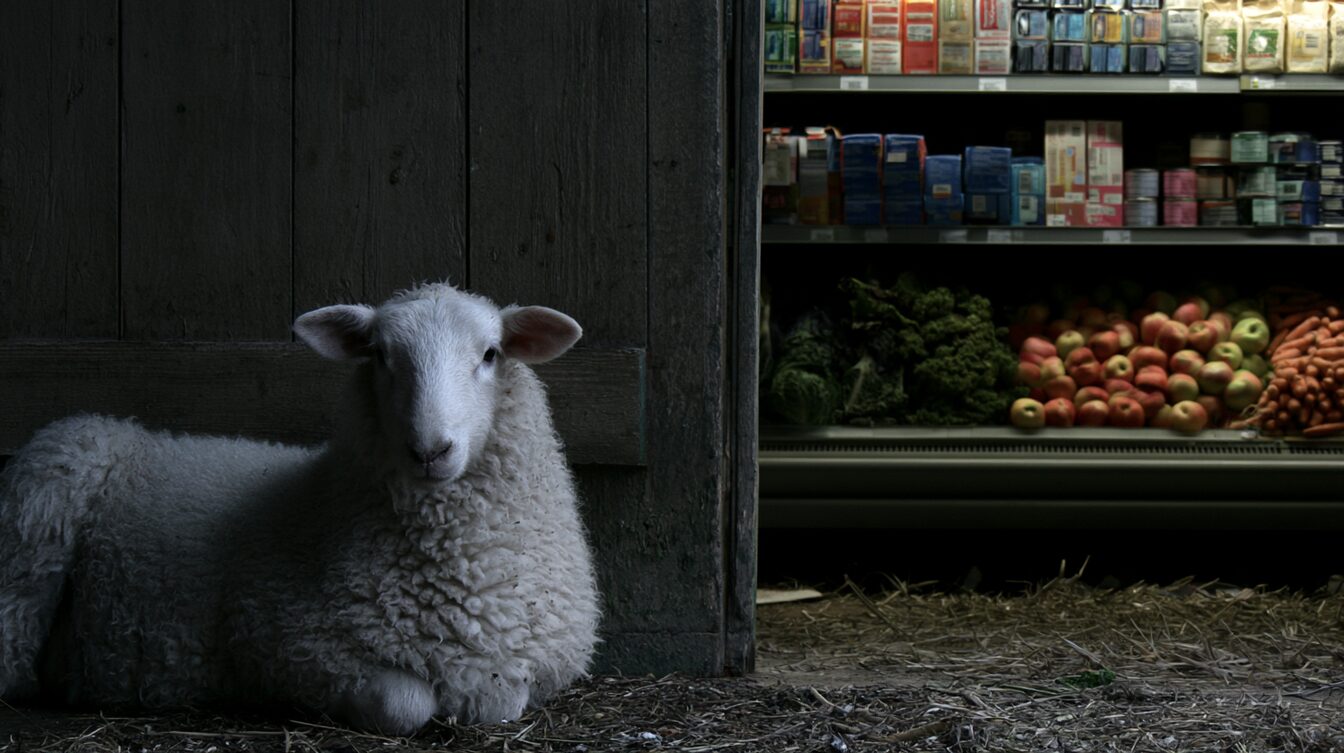
Because the two levers interact, the cleanest way to feel the argument is to play with it. Below, a model: pick a product, then move the customer closer and deepen the processing, and watch where the value settles — at the same shelf price. One control matters more than any other: whether the processing is owned in the valley. Turn that off and the added value, however much you create, simply leaves. It is the single most important switch in the whole debate, and it is the one the existing system mostly has set to “off”.
What the land could be worth
There is a number that ought to stop a Welsh policymaker in their tracks, and it needs stating carefully because it is easy to abuse. An upland sheep farm in a Less Favoured Area earns very little per hectare from the animals themselves — across the LFA, livestock farm incomes are thin and, stripped of subsidy, frequently negative. The same hectare under soft fruit or a high-value specialty crop can generate gross revenue one or even two orders of magnitude higher. That gap is real, and it is the case for diversification in a sentence.
But honesty about it is what makes it usable. Gross revenue is not margin: soft fruit is brutally labour-intensive — labour can be half the cost — and the establishment capital and the years to first yield are real. Only a fraction of Welsh land, and Welsh weather, suits field fruit at all; the uplands are grass for good reasons. So the right reading is not “replace sheep with raspberries.” It is narrower and sounder: where a hectare can carry a higher-value crop, the difference it makes is enormous — and the way to capture it without betting the farm is to do it together, at a scale a single holding could not finance or sell. The value-per-hectare case and the cooperative case are the same case.
For the land that can’t switch — most of it — the depth lever still applies, because the value can be added to what the grass already produces. Which points at the most Wales-specific opportunity of all.
Turning the constraint into the asset
Wales is grass. We treat that as the thing that rules options out. But the same research campus that holds a seventy-year plant-breeding heritage and a biobank of tens of thousands of seed varieties also runs a biorefining pilot — and grass, refined, yields protein and materials worth far more than grass grazed. The constraint becomes the feedstock. This is the same move I keep finding everywhere in this notebook: the thing written off as a limitation is usually a dormant asset waiting for a different question. Welsh upland grass is not a reason the value can’t stay; it may be one of the ways it does.
Why it isn’t naive
I want to put the strongest objections in their own light, because each names a real gate that the design has to pass.
The middle of the chain does real work. Cut it out carelessly and you have not removed a cost — you have moved it onto the farm, along with its risk. A farmer doing five jobs badly is not liberated. So the answer is never simply “sell direct”; it is shared infrastructure that does the five jobs well, by fewer hands, closer to home — which is precisely what a processing co-op is.
Route to market is the real killer. Most farm value-add ventures die not in the kitchen but at the customer — a shed of chutney nobody buys is worse than selling raw. Demand has to be secured before capacity is built. This is where Wales holds a card no other UK nation holds, and I will come to it.
And the matching of land to newcomers, and money to projects, is not magic. New Zealand’s celebrated sharemilking ladder has been thinning as land prices climb; Wales’s own new-entrant matching has placed only a few dozen against tens of thousands of holdings. A mechanism can exist and still not carry the weight. None of this works if the newcomer simply inherits the same broken economics. Succession, value and ownership have to move together.
It is already half-built — and mis-wired
Here is the discovery that changed how I see the whole thing. When I went looking for what Wales would need to build, I found most of it already built.
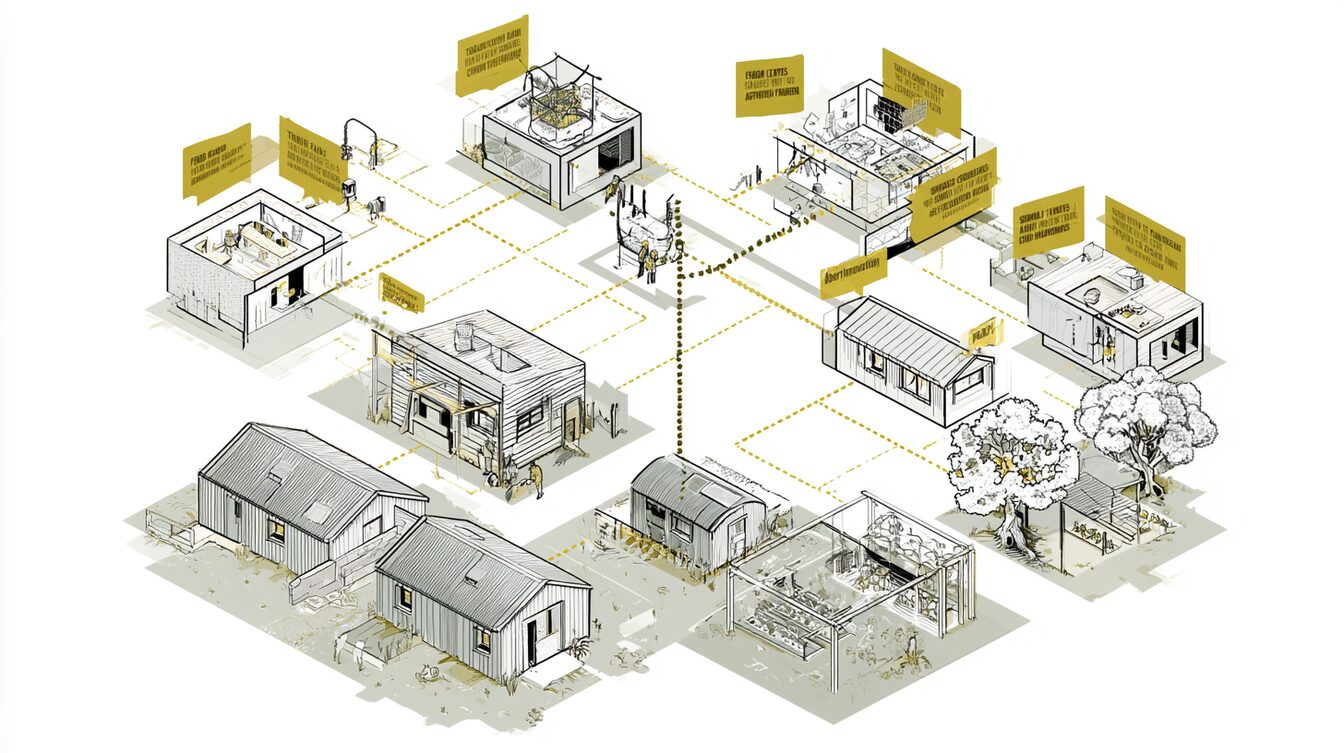
There is a trade apparatus — a national food-and-drink event that brings global buyers to Welsh producers, and a stable of protected names from Halen Môn to Welsh Lamb. There is an innovation infrastructure most regions would envy: a major bio-innovation campus at Aberystwyth and three food-technology centres, North to South, whose support programme has put hundreds of millions of pounds of impact into Welsh food businesses. There is a North Wales agritech push exactly where it should be — a science park cluster on Anglesey, a vertical-farming programme scaled across a dozen sites, a horticulture-growth programme with hundreds of growers. There is even a working proof of shortened, fairer supply: local organic veg going into a couple of hundred primary schools, riding universal free school meals. And underneath it all sits a policy other nations don’t have — Wales was the first country in the world to make the foundational economy, keeping wealth circulating locally, an explicit aim of government.
So why is the value still leaking? Because the scaffolding is wired to the wrong place. Five wires are missing, and naming them is the actual work:
It is built for food businesses, not primary producers — the centres grow processors and brands downstream of the farm, so the value they add lands with the business unless the farmer owns the processing. The funding is project-shaped — serial, time-limited, much of it EU-legacy — rather than a durable institution a co-op can build on. The cooperative layer that would let farms own the value-add is thin: South Caernarfon Creameries is admired precisely because it is unusual. The horticulture base is small and the switching cost from livestock is high. And the demand still runs through the supermarkets, so even a protected name often sees its premium captured downstream of the farm gate.
None of those is a missing building. They are missing connections. That is a far more hopeful problem.
Re-wire, don’t rebuild
The programme, then, is not a new institution to found but a set of wires to connect, and each one re-uses something Wales already has.
Turn the food centres into incubators for producer-owned processing, not only for SMEs — so a cluster of farms can do what the Llŷn dairy farmers did, with shared kit they part-own. Make public procurement the demand backbone the route-to-market gate requires: scale the schools-veg model into hospitals, colleges and the wider public plate, underwritten by the free-school-meals commitment, so a new grower co-op has a buyer before it breaks ground. Point the biorefining and the breeding heritage at the grass, so the land that can’t grow fruit still climbs the value ladder. And wire the agritech cluster onto farms rather than leaving it in science-park units, so the precision and data roles become the attractive new jobs that bring young people back — the succession repair and the value repair, finally moving together.
What I would actually do
The smallest honest test is a single valley. Take a cluster of neighbouring holdings where owners are ageing and willing. Bring in new entrants on keep-title-pool-function terms through the matching that already exists. Stand up one processing step the farms own together — a creamery, a press, a small cutting-and-curing line — using an existing centre’s expertise. Secure an anchor buyer first: a school cluster, a hospital, a college kitchen. Give each newcomer a designed new role — data, growing, processing — rather than the old manual one. Hold the consumer price at the going rate.
Then measure two things, and only two, at the start: how much more of the retail price reaches the farm, and whether the farmers renew for a second season — because renewal, not a spreadsheet, is the real proof that the thing is trusted, and trust is what every co-operative in this story has actually run on. If the share does not move, or the value does not recirculate, the design is wrong, and you change the design rather than scold the people. That is the kill switch, written in before the start.
We have a habit, in Wales, of believing the good version of our economy is somewhere else, or in the past, or waiting on a grant. The strange and cheering truth is that the parts are mostly here, and one of the clearest proofs — a farmer-owned creamery keeping the value of its members’ milk — has been quietly working since 1938.
The land came back a century ago. Bringing the value home is the same move, one generation on: hold your own, work it together, and keep what you make.
From the Studio — the wager behind this piece, and where it connects · sources & confidence
The wager, stated so it can be judged: the value Wales loses is recoverable with the parts it already owns — two levers (shorten the distance, deepen the making) governed by a single decisive gate (the processing must be owned in the valley), so the programme is to re-wire, not rebuild. That reading — the two-lever framing, the four-quadrant map, “economic containment”, and the single-valley pilot — is my own, offered as conjecture and owed the bounded test above: stand up one producer-owned processing step against a secured public-sector buyer, and judge it on two numbers only — how much more of the retail price reaches the farm, and whether the farmers renew. If the share does not move, the design is wrong; that is the kill switch. Where it connects: it extends Cynefin, distance-and-depth and welsh-foodtech-landscape; it instantiates producer-owned-processing in a real, century-old case (South Caernarfon Creameries); it reappears in a-field-held-in-common (keep title, pool function); and it is challenged by the-market-that-closed — the standing warning that you can build every part and still fail at the route to market if the relationships are not there.
Sources & confidence. The mechanisms are anchored in real, verifiable examples held at Grade B: South Caernarfon Creameries (a ~150-farm, 100% farmer-owned dairy co-op founded 1938, Llŷn Peninsula) and Calon Wen (a ~25-farm organic co-op), attested from the companies’ own records and Welsh food-sector sources [B]. The Welsh food-and-agritech scaffolding — BlasCymru/TasteWales, the ~20 protected geographical-indication names, AberInnovation and IBERS, the three Food Innovation Wales centres and the HELIX programme, M-SParc, Tech Tyfu, Tyfu Cymru, Welsh Veg in Schools, and the Foundational Economy — is Grade B from government, university and programme sources, most liftable to Grade A by citing the underlying reports directly [B]. The grocery-concentration and farmgate figures are Grade A (Kantar; AHDB) [A]. The value-per-hectare contrast is deliberately directional, not precise: upland-LFA livestock incomes are thin and subsidy-dependent (Grade A, gov.wales / Defra Farm Business Survey) and soft-fruit gross revenue per hectare is far higher (Grade B, SRUC / industry data) — but it is gross revenue, not margin, and the labour, capital and land-suitability caveats are stated in the text rather than buried [A/B]. The carbon and horticulture-headroom facts used here and in Cynefin are Grade A (Poore & Nemecek 2018; Defra horticulture statistics) [A]. The two-lever framing, the four-quadrant map, the “re-wire don’t rebuild” reading and the single-valley pilot are the author’s own, owed the bounded test above. Underlying theses in the reasoning graph: cynefin, wales-land-arc, wales-land-succession, the-length-of-the-chain, distance-and-depth, welsh-foodtech-landscape, a-field-held-in-common, farm-in-a-box, the-market-that-closed.