An exploration
The Hub and the Spine
The future we could almost see
These explorations weave memory and present thinking — not records of what happened, but attempts to learn by holding the past and the present in the same frame. Why it reads this way →
Most people remember the airport.
When the Thames Hub is mentioned, the conversation quickly returns to runways in the estuary. The environmental objections. The political controversy. The question of whether it would ever have been built. The airport became the story.
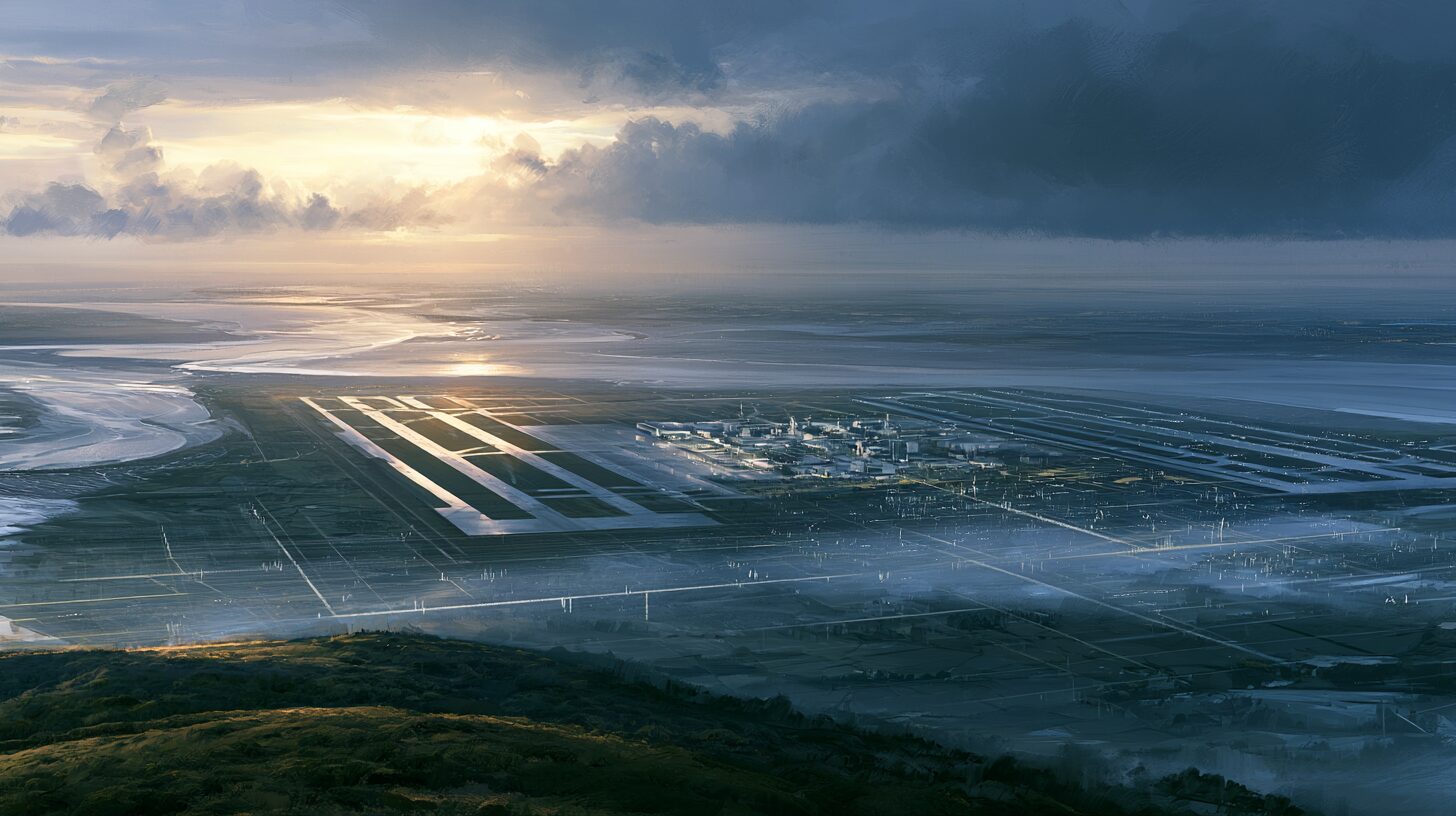
Looking back, I increasingly think it was the least important part of the proposal. The airport was simply the visible object. The real idea lay beneath it.
Hidden within the drawings was an attempt to think about Britain as a connected system rather than a collection of separate projects. Transport linked to energy. Energy linked to communications. Communications linked to economic development. Flood protection linked to national resilience.
The proposal was not really about an airport. It was about a country.
The projects we cannot agree on
More than a decade later, many of the underlying questions remain unresolved. The Lower Thames Crossing continues to be debated. The long-term future of London's flood defences remains uncertain. Questions of energy infrastructure continue to provoke controversy.
Each discussion follows a familiar pattern.
The conversation becomes increasingly detailed and increasingly localised. Yet somehow the larger question disappears.
What future are these projects intended to create?
This is the paradox of modern infrastructure. The bigger the challenge, the more narrowly we seem to discuss it.
The problem with projects
Infrastructure schemes are usually required to justify themselves individually. A road must justify itself as a road. A railway as a railway. A flood barrier as a flood barrier. An energy corridor as an energy corridor.
The result is that each project develops its own internal logic. Vehicle movements. Passenger numbers. Journey times. Cost-benefit ratios. Risk calculations. The project begins to explain itself through its own metrics. A form of institutional navel-gazing emerges. The wider purpose disappears.
Yet history suggests this is not how transformational infrastructure is created. Roman roads were not justified as roads. They were justified as instruments of governance. Victorian railways were not justified through passenger forecasts. They were justified as part of a vision of industrial Britain.
The individual projects mattered because they formed part of a larger story. People understood where the nation was heading. The infrastructure became the physical expression of that direction.
The spine
The most important idea within the Thames Hub proposal was not the airport. It was the corridor. The spine.
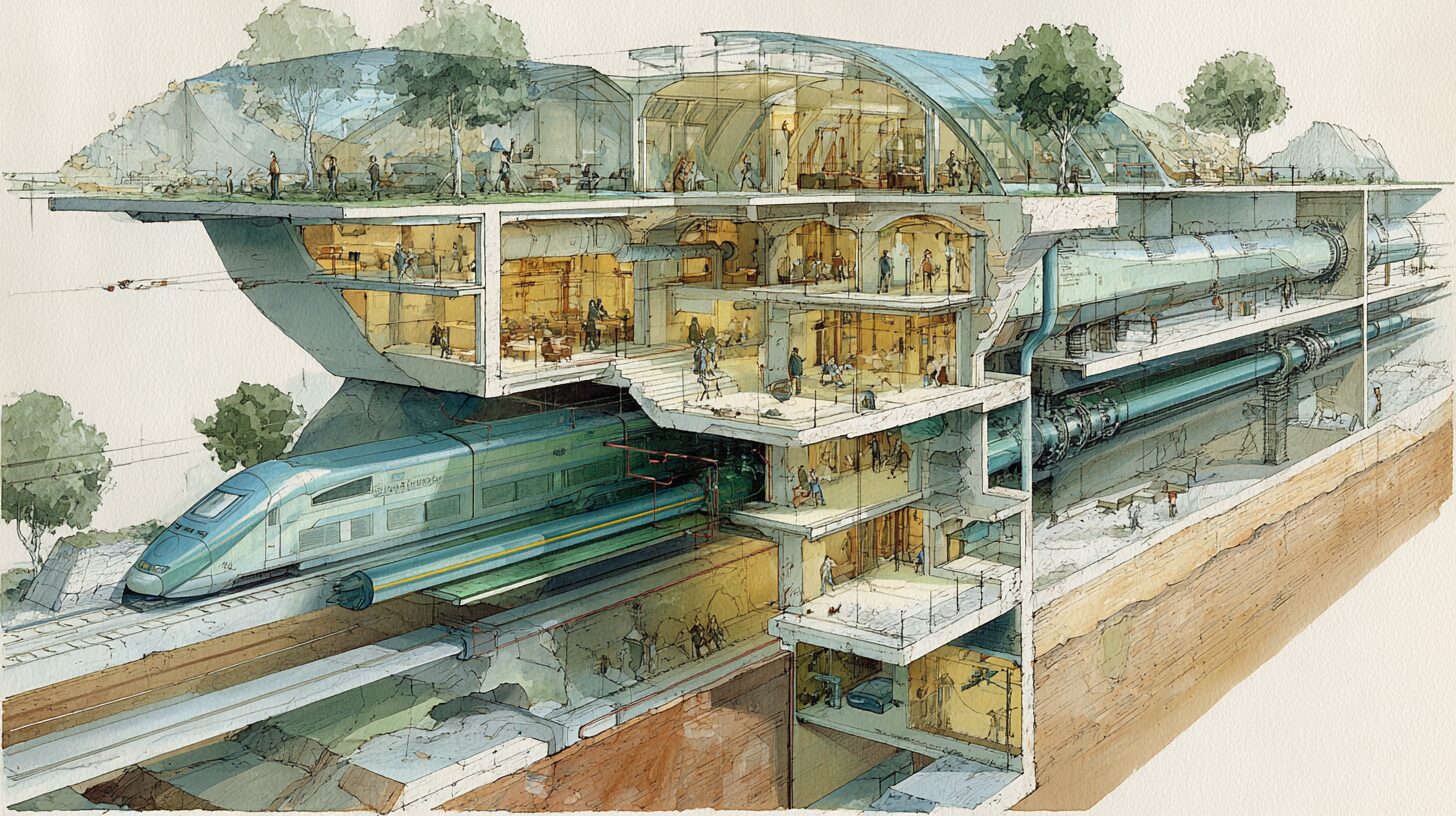
A strategic route along the eastern side of Britain bringing together rail infrastructure, freight, ports, energy transmission, communications and flood protection. The proposal asked a deceptively simple question. What if infrastructure systems were designed together rather than separately?
What if a flood barrier could also support transport? What if a transport corridor could also carry energy? What if communications infrastructure could be integrated from the outset? What if resilience, growth and connectivity were treated as parts of the same problem?
The insight was straightforward. The greatest value often emerges not from the individual assets but from the relationships between them.
The whole becomes more valuable than the sum of its parts.
What if you only dig once
The idea arrived, as the best ones often do, as a question about something else entirely. If you are cutting a route the length of the country for a high-speed railway — excavating a corridor, moving earth on an enormous scale, acquiring the land and the consent and the political will to do it — then you are doing the hardest part only once. So what else could travel in that cut?
None of these on its own would justify digging a trench across Britain. Together, sharing the one cut, they change the arithmetic entirely. The expensive, disruptive, once-in-a-generation act of opening the ground becomes a platform for half a dozen futures at once. The cost is the digging; almost everything else is what you choose to lay in it.
You only dig once. The real question is how much future you put in the trench.
Four ways of seeing
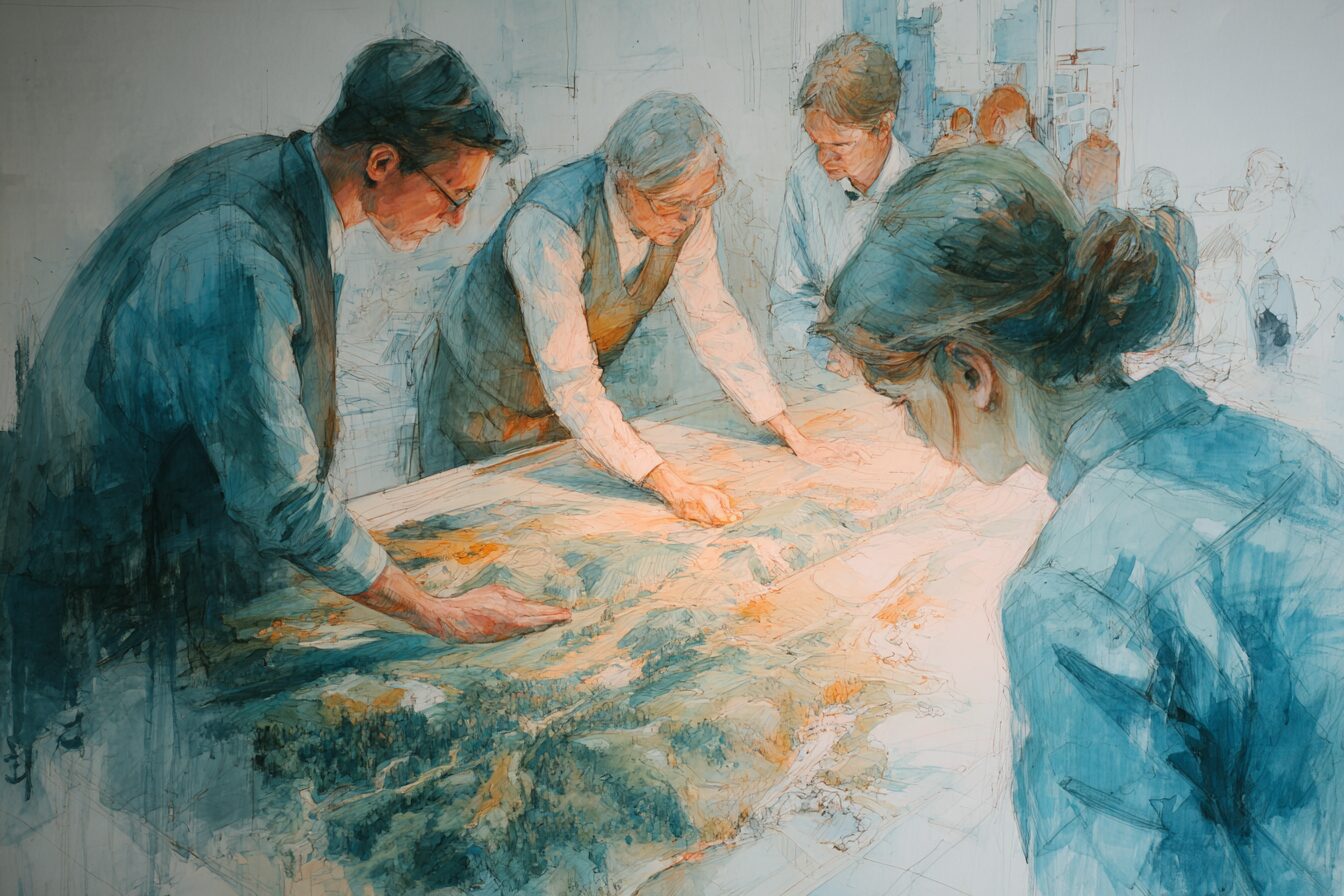
Looking back, I realise the project was shaped by conversations with people who approached the challenge from very different perspectives. What follows is how I remember their thinking shaping the work — my recollection, not their final word.
Norman Foster brought the lens of vision. What might Britain become? How should a nation organise itself spatially? What possibilities emerge when one steps back from individual projects and looks at the whole landscape?
Dieter Helm brought the perspective of assets. As I understood it, his argument was never really about energy. It was about stewardship. Nations inherit assets from previous generations and create assets for those that follow. Infrastructure should therefore be understood not as expenditure but as investment in long-term national capability.
Bridget Rosewell approached the question through economics. As I remember it, her work consistently challenged the assumption that infrastructure merely responds to demand. Infrastructure creates demand. It changes behaviour. It alters investment patterns. It reshapes economic geography. The railways did not emerge because Victorian Britain already had Victorian travel patterns. Victorian travel patterns emerged because the railways existed.
David Kerr brought the engineer's perspective. How does the system actually work? How can vision become delivery? How can individual projects contribute to a coherent framework capable of evolving over decades?
Each perspective was different. Together they formed something larger — a way of thinking about infrastructure as a platform for future possibility.
Looking forward from the wrong future
At the time we thought we were looking a long way ahead. The proposal considered future freight demand. Future aviation demand. Future energy demand. Future patterns of growth. The spine incorporated communications infrastructure and envisaged widespread wireless connectivity across large areas.
At the time this felt speculative. A glimpse into the future. Yet looking back from today, what strikes me is not how ambitious it was. It is how much we underestimated the speed of change.
The future arrived faster than we expected.
The invisible layer
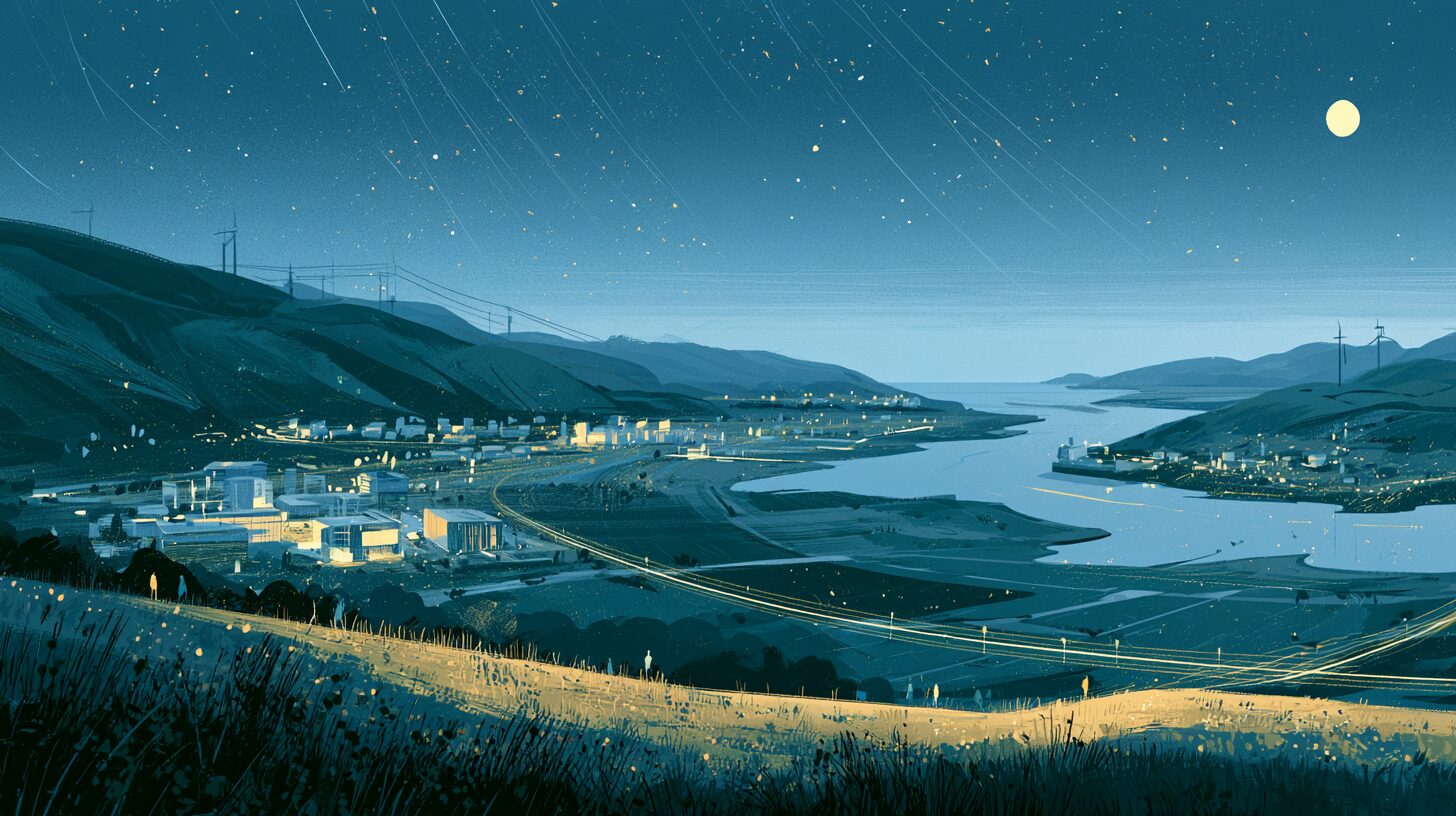
The spine was conceived primarily as physical infrastructure. Railways. Ports. Power lines. Flood barriers. Transport corridors. The digital layer was present but secondary.
Today the relationship has reversed. Increasingly the most important infrastructure in society is invisible. Data. Computation. Artificial intelligence. Digital identity. Sensor networks. Communications. Autonomous systems.
The physical infrastructure remains essential, but it now supports another layer sitting above it. A layer of awareness. A layer of intelligence. A layer of coordination.
The infrastructure of the twenty-first century is increasingly defined by information flows rather than physical flows alone. The spine has become partly digital.
The new national asset
This is where the thinking of Helm, Rosewell and Kerr begins to converge in a way that feels even more relevant today than when the project was conceived. Helm asks what assets we should leave behind. Rosewell asks how those assets reshape future opportunity. Kerr asks how complex systems can be assembled and maintained.
Together they point towards a different understanding of infrastructure. Infrastructure is not a collection of projects. It is a collection of capabilities. Capabilities that allow a nation to adapt. To innovate. To compete. To recover. To grow.
Increasingly those capabilities depend upon intelligence as much as concrete and steel. The strategic assets of the future may include energy systems, flood defences and transport corridors. But they will also include data, computation, knowledge and institutional capacity. The boundary between physical and digital infrastructure is beginning to disappear.
The story we need
Perhaps the greatest lesson from the Hub and Spine is not about engineering at all. It is about imagination.
Large infrastructure projects struggle when they are presented in isolation. People see the costs. The disruption. The environmental impacts. The trade-offs. What they struggle to see is the future those projects are intended to create.
A compelling national narrative changes that relationship. Individual projects become understandable because they sit within a larger direction of travel. Trade-offs become easier to accept because they contribute to a shared objective. People can rally around a destination even if they disagree about individual steps along the way.
The Romans understood this. The Victorians understood it. Somewhere along the way we became better at evaluating projects than imagining futures.
The spine we cannot yet see
The original proposal imagined a spine running through the landscape. Today I find myself wondering whether the most important spine of the coming century may be largely invisible. Not a railway. Not a motorway. Not a power line. But an intelligence layer woven through the systems themselves.
A nervous system for places. Capable of sensing. Learning. Adapting. Coordinating. Helping communities, cities and nations understand themselves in real time.
The technologies are changing rapidly. The principle remains remarkably familiar.
The future belongs not to the strongest individual systems but to the relationships between them. Perhaps that was always the real idea behind the Hub and Spine. Not an airport. Not a barrier. Not even a corridor. But the recognition that the most important infrastructure is often the infrastructure that allows everything else to work together.
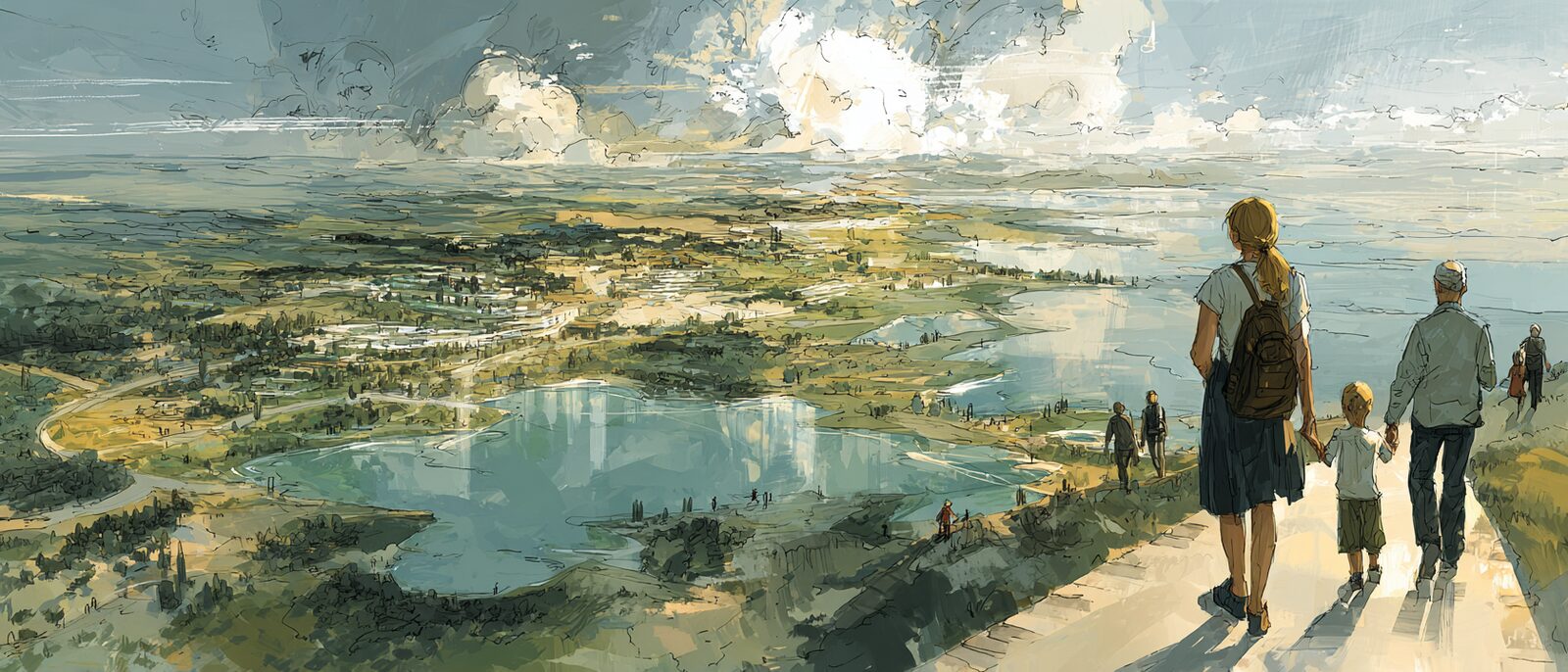
And that every generation is ultimately judged not by the projects it builds, but by the possibilities it leaves behind.