
An exploration
Looking Out to Sea
What the ocean lacks that we could supply — and whether supplying it leaves both sides better off
These explorations weave memory and present thinking — not records of what happened, but attempts to learn by holding the past and the present in the same frame. Why it reads this way →
I have been turning these ideas over for the best part of a decade, and the question underneath them has never really been how could we work the ocean? That phrasing already gives the game away — it treats the sea as a resource to be mined, which is exactly the habit that got us here. The question I keep coming back to is gentler and harder. What is the ocean’s potential? What is missing from it that we could supply? And if we can supply it, does it leave both sides better off — the sea healthier, and us with an honest economic return? If the answer to the last part is no, the idea fails, however clever. Symbiosis is not a hope I bolt on at the end. It is the admission test.
This is a thought piece, not a prospectus. Much of what follows is conjecture, and some of it will turn out to be wrong. I am setting it down because the shape of the argument has become clear to me even where the numbers and the engineering have not.
The bet underneath it all
There is a story the age keeps telling itself: that we have made such a mess of this planet that the serious move is to leave it — to point our ingenuity and our capital at the stars and begin again somewhere clean. I want to make the opposite bet. That the braver and more useful thing is to turn that same ambition inward, toward the world we already have, and spend it on making our natural systems healthier, more resilient, and capable of helping us reverse some of the damage we have already done.
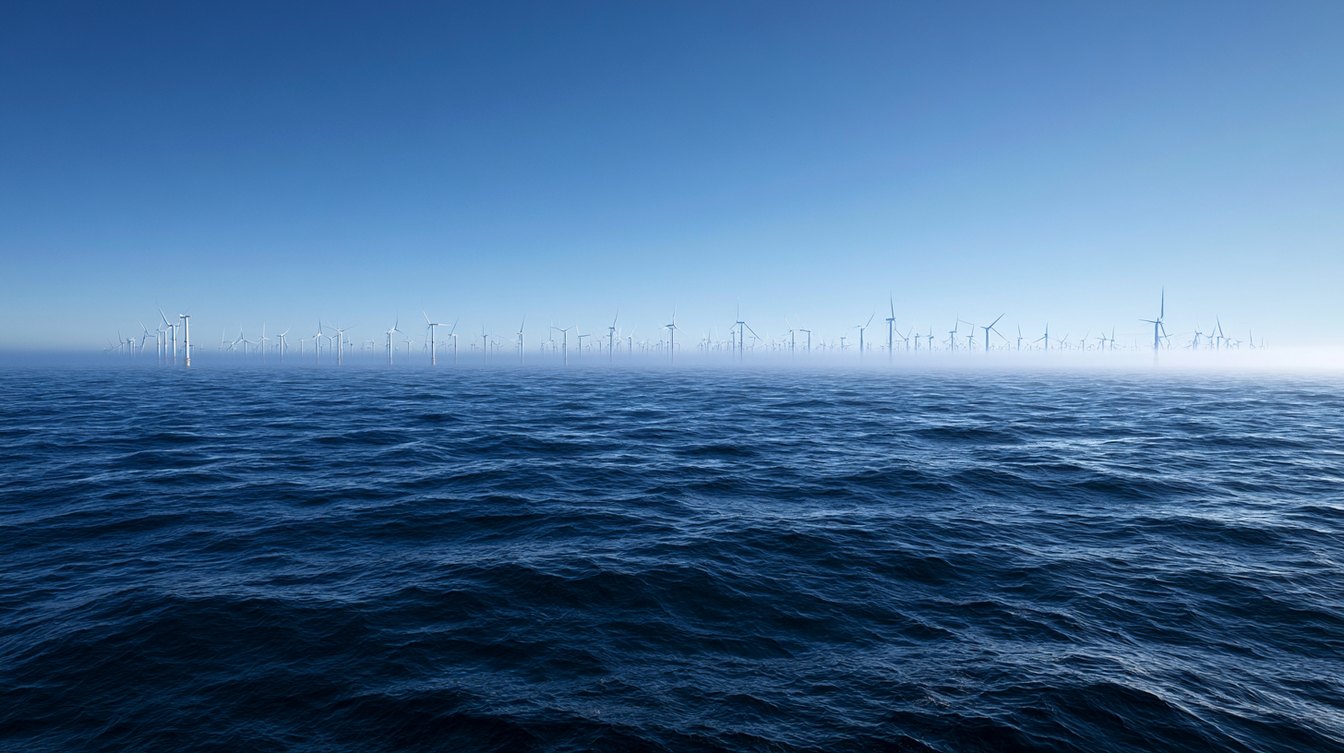
That is the moonshot. Not an escape hatch — a repair. And the place to attempt it is hiding in plain sight, because we keep forgetting what kind of planet this is. We call it Earth, but it is mostly water. We have crowded almost all of our activity onto the green fraction, and it is close to self-evident that if we keep squeezing everything we do onto that thin strip of land, we will go on degrading it. Working with the blue is, among other things, how we give the green a chance to recover. Two thirds of the planet has been treated as the empty space between nations. It is not empty. It is the largest underused capability we have.
A blank sheet of paper
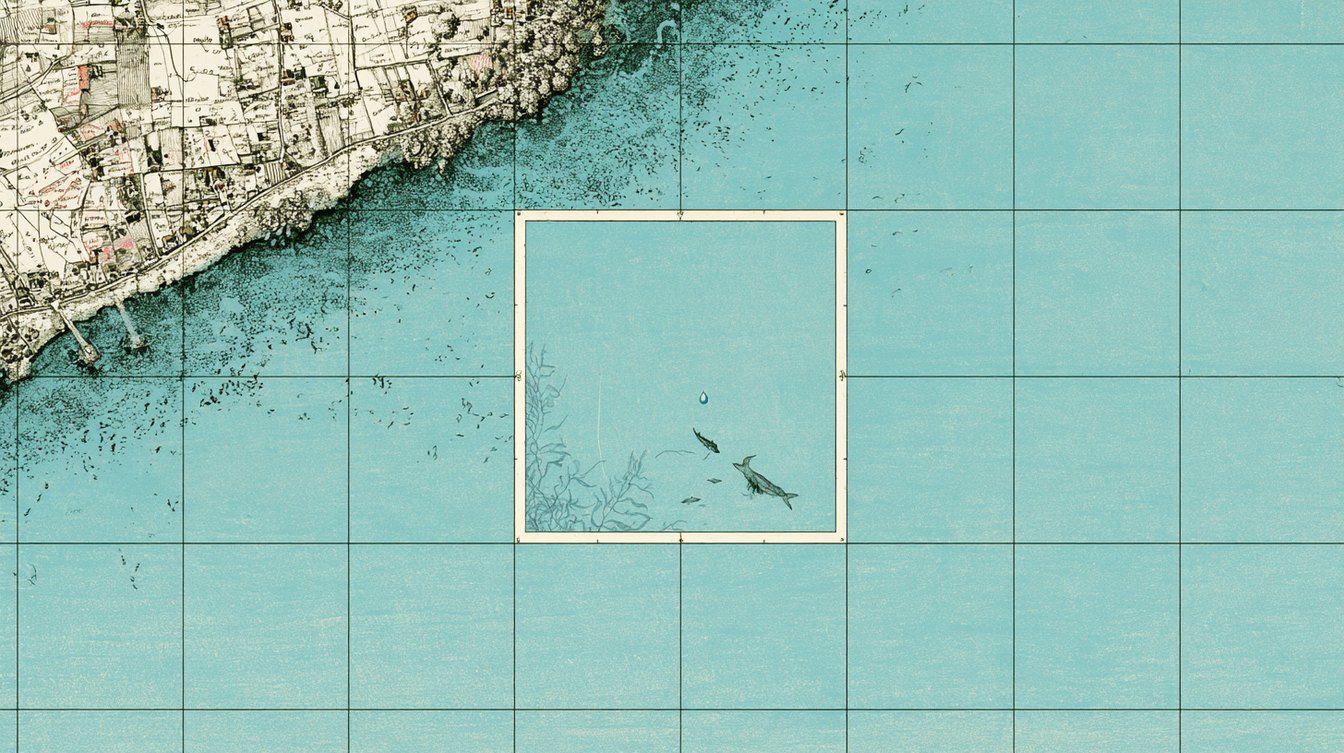
We know what a square kilometre of land is worth because we long ago decided to find out. We fenced it, mapped it, counted the trees, drew the roads and named the towns and cities and the fields between them. Value, on land, is something we can read off a boundary — but only because we first imposed the boundary. We have never laid that machinery over the ocean, which sounds like an absence and is really an opening: out there it is still, more or less, a blank sheet of paper. We get to decide what to measure before we decide what to take.
And the blank sheet is, awkwardly, where the resource actually is. The great majority of the sunlight that reaches this planet falls on water, and it is most abundant in the equatorial belt — the one part of the system we have barely thought to look at. We chose instead to cut down standing forest. Something like four in ten of us live within a hundred kilometres of a coast, and still we face inland, toward the land we have already spent, rather than out toward the part we have not.
So here is the inversion I keep returning to. Take that square kilometre of ocean and refuse to begin with what can we get from it. Begin with what can we give back to it — restore first — and only then ask what, within a system left healthier than we found it, we might sustainably take. The discipline is that we must create more than we consume, up to a point of genuine balance, never drawing the system down. Put the giving first and the taking second, and you may well arrive at a different balance than a century of fences and extraction has trained us to expect.
There is a sharper version of this. Life in the open sea is not spread evenly; it gathers wherever the seabed rises close enough to the surface for currents to lift nutrients into the light. Coastlines do it; so do shallow banks like Dogger in the North Sea, and the drowned mountains and old volcanoes — seamounts — that stand up from the deep without quite breaking it. These are the ocean’s oases: already productive, already mixing. So the opportunity is not to fertilise empty water from nothing — that is the geoengineering move, and rightly the most contested — but to find a place that is already an oasis and gently enhance what it does, measured from its own baseline. Build on a living process rather than impose one.
The pattern was already in the notebook
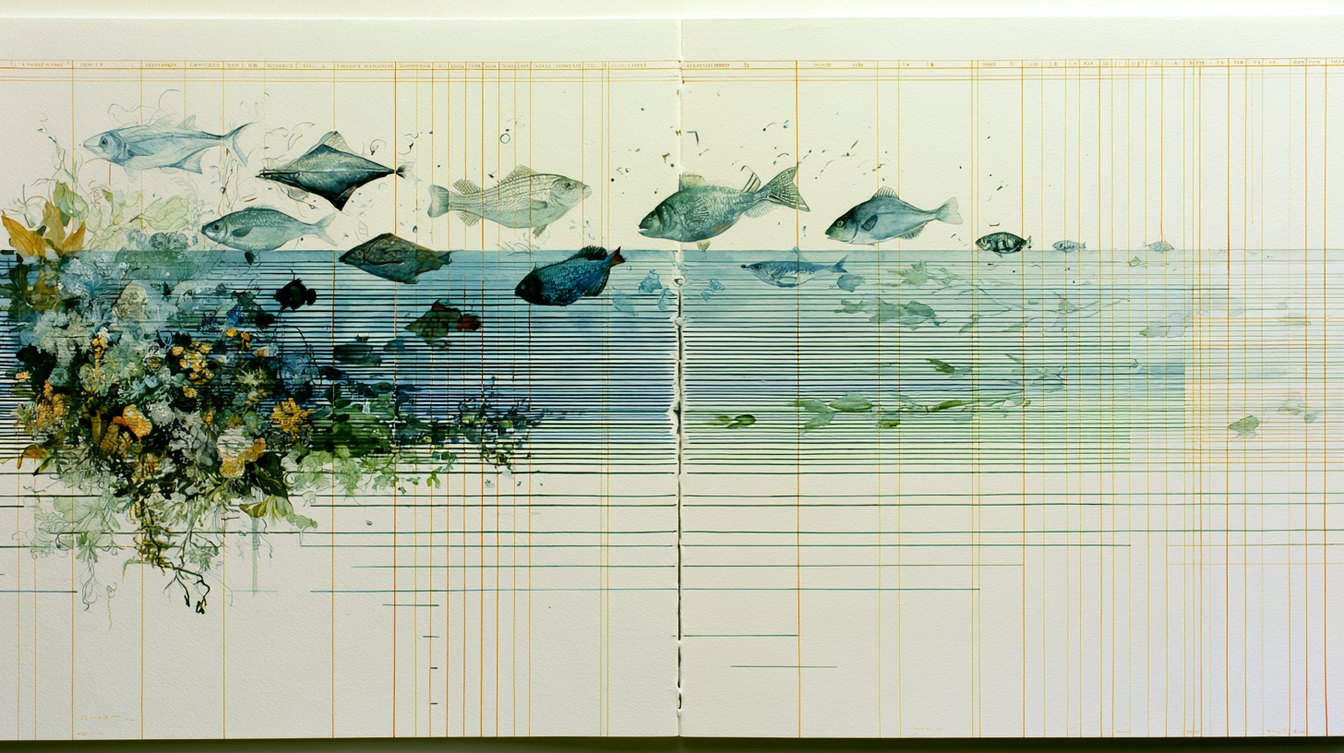
None of this is a departure from how I have learned to think; it is the same instinct carried out to sea. This notebook keeps returning to a small handful of moves. That value lives between things, in the relationships a structure holds together, not in any single asset. That a great deal of what we write off as finished is only dormant — the tropical surface ocean is a sunlit desert not because the productivity is gone but because it is held down, asleep, waiting for the nutrients beneath it. That the real question is rarely raw supply but coordination — whether the many things a place could do can be made to happen together. And that the difference between something done to a place and something done with it is the whole of the matter.
The deepest of those instincts, though, is the one this notebook was practically built on: don’t assert — grade, and link. Nothing is simply “true”; it sits on a scale of confidence and you always say where. I have used that as an intellectual discipline. What I have come to believe is that it is also an engineering discipline, and that it is the only thing that makes the whole idea defensible. More on that in a moment, because it is where the honest objection lives.
The objection I take seriously
There is a serious argument against everything I have just written, and it deserves to be stated at its strongest rather than waved away. It goes: this is man interfering again — the same hubris, the same certainty that we can improve on systems we barely understand, now aimed at the one part of the planet still close to wild. Leave it alone. Every time we have been sure our intervention would help, we have found the bill arriving later, in a currency we did not expect. The precautionary instinct says: the burden of proof is on the one who would build.
I think that is right, and I want to agree with it loudly rather than defend against it — because agreeing with it is what produces the discipline the idea actually needs. The honest position is not “trust us, it’ll be fine.” It is this: structures designed from the first line to be symbiotic, and deployed only where they can be shown to do more good than harm — and not a marginal, hopeful margin, but a rigorously analysed one, with the scientific proofs sitting alongside the design before anything is built, before anything goes to sea. The bar is the bill of evidence, paid up front.
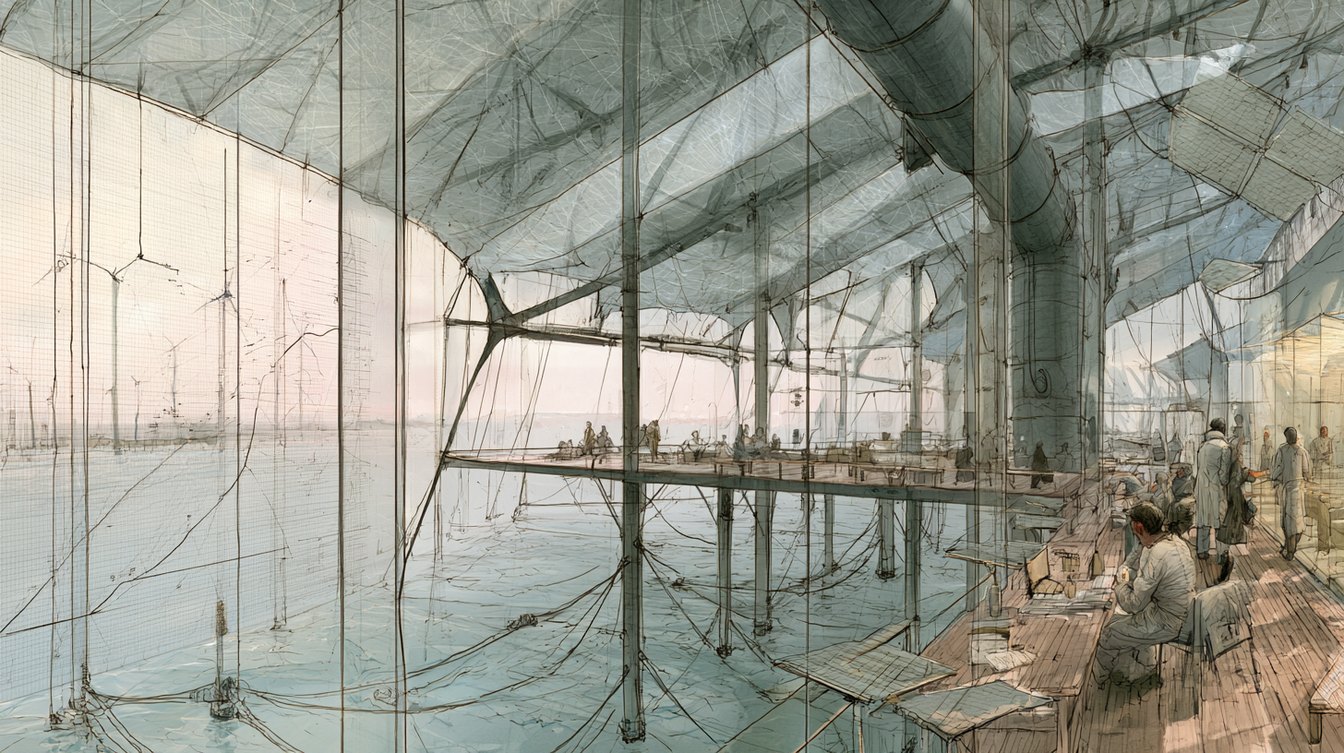
And once it is out there, it does not stop being a question. It becomes a living laboratory — instrumented, feeding data and results back continuously, capable of being changed or, if the evidence turns, removed. What we build will be technically formidable; it will likely be designed with the help of AI and assembled by robots, mass engineering carried out at sea. But the humility has to live in what it is for. A space station spends every watt of its ingenuity fighting nature — holding the vacuum and the radiation and the cold at bay — because space is not our habitat and never will be. The thing I am describing is the opposite of that. It is an extraordinary structure whose whole purpose is to work with natural forces rather than against them, on the planet that is already our home. That is the more modest ambition, and I have come to think the harder one: not to keep nature out, but to fit ourselves back in.
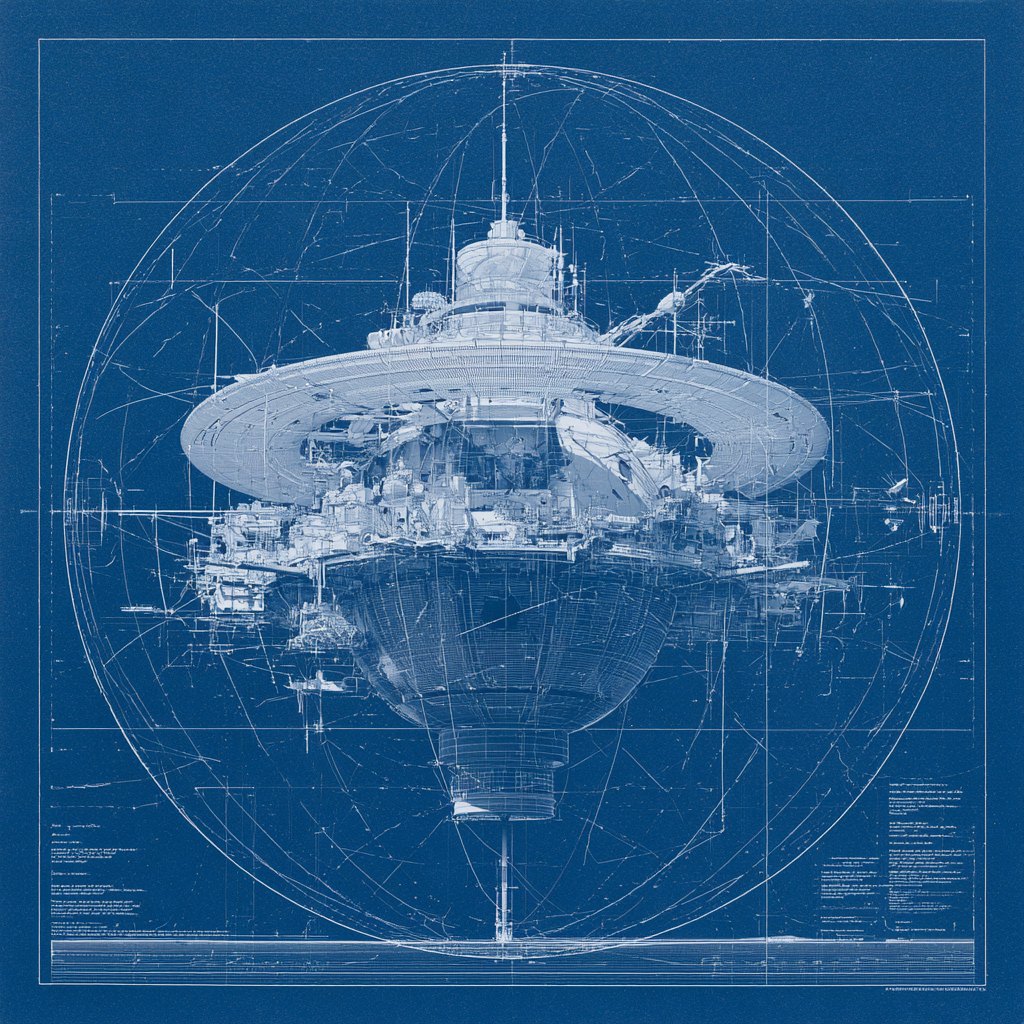
This is exactly where the grade-and-link habit stops being a writer’s tic and becomes the safety mechanism. A symbiotic structure is one whose benefits are attested before deployment and measured after, not asserted. The discipline that keeps a notebook honest is the same discipline that should decide whether a thing is allowed in the water.
What the proof would have to clear
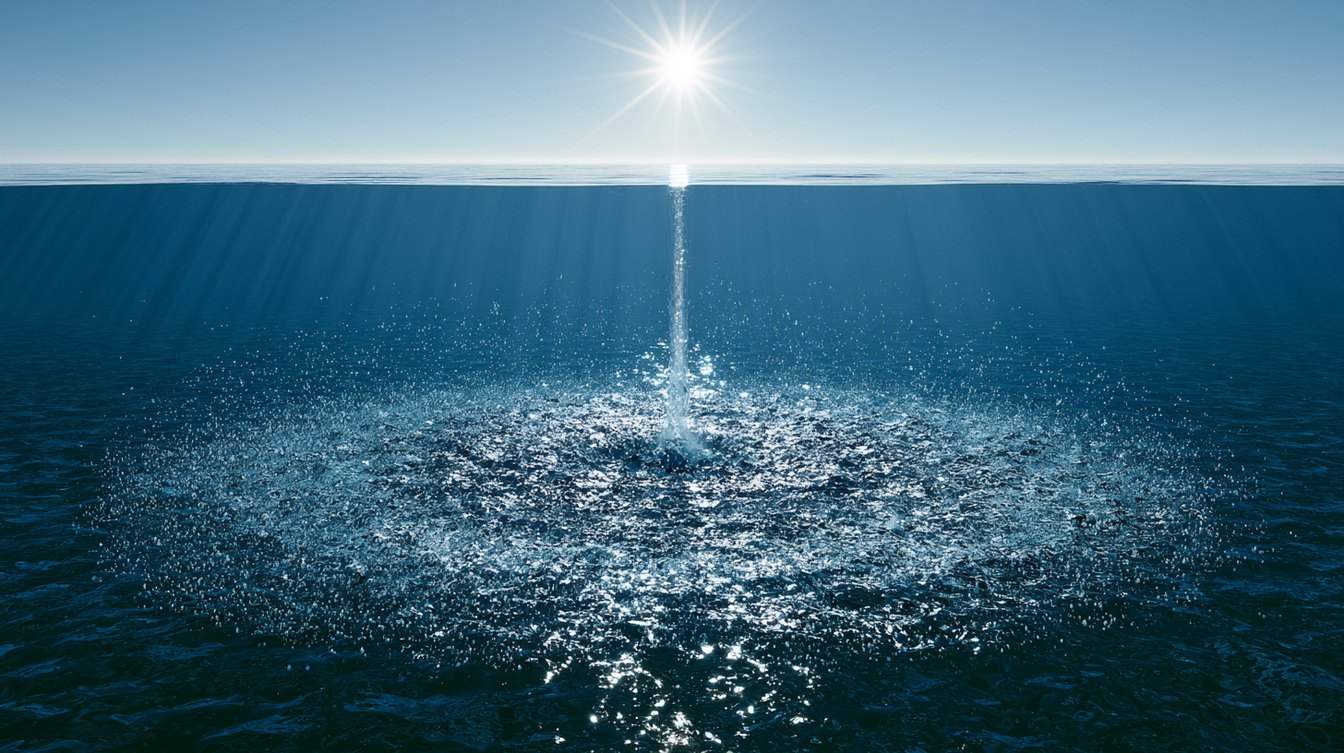
I will not pretend the proofs are in hand; they are the work. The pieces exist as real science, at honest grades. The temperature gradient between warm surface and cold deep water can generate power and, in a hybrid cycle, distil fresh water as a co-product — demonstrated, though not yet at large commercial scale (Grade B). Cold, nutrient-rich water moving toward the surface is exactly what makes those oases productive in the first place; enhancing mixing that already happens is a gentler proposition than the headline case of fertilising open, empty water — which is genuinely unsettled, its carbon benefit disputed and the practice regulated under the London Protocol and a biodiversity moratorium (Grade C, contested). The honest version works with a place that is already alive and proves the gain against its baseline rather than asserting it. Submerged structures reliably gather life and raise local fish biomass (Grade B), though whether they make new life or merely concentrate what was there is still argued. Each of these is a place where “more good than harm” has to be proven, not assumed — and the contested ones are precisely the ones that must clear the highest bar, or stay on the drawing board.
There are honest engineering and economic frictions too. My own work on stranded energy keeps warning that making fuel in the remotest place and shipping it is usually the losing move — which means the case here cannot rest on exported hydrogen at all; it has to rest on the whole symbiotic bundle being worth more, to both sides, than the sum of its parts. Maybe it will not. Maybe the structures will prove too costly, or too fragile in a cyclone sea, or the markets too thin. I hold that possibility openly.
Why it matters even if we are wrong
And here is the part I have grown most sure of, which is also the most counter-intuitive. Suppose a good many of these specific solutions are wrong — technically unworkable, financially hopeless. The effort is still not wasted, if it starts the right argument. A serious, well-posed attempt to make the ocean healthier and sustainably productive — to create more than we consume, up to a point of genuine balance, rather than drawing it down — held to a real standard of proof, forces the world’s ingenuity onto a question it has been avoiding. It convenes people. It makes a debate happen that was not happening.
That is the achievement I would stake the whole thing on, and it belongs to Tuvalu. A small nation, among the most directly threatened by what the rest of us have done, has the standing to ask this question in a way no large and comfortable country could. Not by lecturing, but by needing the answer first, and honestly, and out loud. If Tuvalu’s situation is what brings the scientists and the engineers and the capital together to look for solutions that outlast any single design, then it will have done something the great powers have not managed: it will have turned its own peril into a reason for the world to think harder about the planet we share.
We live on a blue planet. We have spent a long time acting as though only the green parts count, and as though the only direction left is up and out.
I would rather we looked down, at the water, and asked whether the place we are so keen to leave might still be the place we learn to mend. The structures may change. The argument is the point. We can do that. Let’s find out, properly.
From the Studio — the wager behind this piece, and where it connects · sources & confidence
Provenance, kept honest. Tuvalu’s exposure and its sovereignty strategy — sea level risen about 21 cm in 30 years, much of the land under high tide by 2100, the 2022 digital nation, the 2023 Falepili Union, the 2025 ICJ statehood ruling — are Grade A. OTEC with freshwater co-production, offshore green ammonia, and the fish-aggregating effect of submerged structures are real but pre-commercial or debated — Grade B, with the reef “attraction vs production” question left open. The keystone “net positive” hope leans on artificial upwelling, whose net benefit is contested and whose practice is regulated under the London Protocol and a CBD moratorium — Grade C, contested, treated here as a hypothesis that must be proven before deployment, not a fact. Deep-ocean-ridge geothermal is Grade C, exploratory. The project’s own engineering and engagement claims are the author’s, at Grade C until the artefacts are in hand. The disciplines this piece rests on — grade-before-you-assert, more-good-than-harm-proven-first, the structure as a living laboratory — and the underlying theses live in the reasoning graph: the-living-baseline, siting-follows-demand-not-power, electron-to-value-screen, stranded-asset-stacking, battery-island, and the new ones this piece proposes — regenerative-infrastructure, ocean-as-infrastructure, value-per-area, give-back-first, seamount-oasis, enhance-dont-introduce, symbiosis-is-the-admission-test.
Sources & confidence: Tuvalu sea-level rise and inundation projections — NASA–UN gauging; UN News 2026; Al Jazeera 2025 [A]; digital nation 2022, Falepili Union 2023, ICJ statehood ruling 2025 [A]; OTEC with hybrid-cycle freshwater co-production — Makai, hybrid-cycle literature [B]; offshore green hydrogen/ammonia on floating platforms — Dolphyn (Aberdeen), H2Carrier, China’s first offshore hydrogen-ammonia plant, pre-commercial and ~2–3× conventional cost [B]; rigs-to-reefs fish biomass — BSEE, BOEM, PLOS One, with attraction-vs-production unresolved [B]; artificial upwelling — real mechanism, net benefit contested, regulated under the London Protocol and a CBD moratorium [C, contested]; mid-ocean-ridge geothermal — IDDP-2 (~600 °C), experimental vent thermoelectrics, no viable baseload at scale [C, exploratory]. The underlying theses are the author’s own, graded in the Stiwdio reasoning graph.