An exploration
The Places We Bury Value
What if waste is the beginning of a process, not the end?
These explorations weave memory and present thinking — not records of what happened, but attempts to learn by holding the past and the present in the same frame. Why it reads this way →
I have noticed something curious about modern infrastructure. The more valuable a material becomes, the more carefully we manage it. We insure it, monitor it, transport it securely and track it through supply chains. Yet some of the most valuable material streams in society are still treated as rubbish.
Every day millions of tonnes of organic matter, plastics, sludge, agricultural residues and industrial by-products move through systems whose primary purpose is simply to make them disappear. We collect them, move them, bury them, burn them, hide them — and then spend vast sums extracting equivalent resources somewhere else. The contradiction is so familiar that we barely notice it.
Yet we rarely describe any of these places as resource facilities. We describe them as disposal facilities. The language matters, because it determines what questions we ask. If something is waste, the question is: how do we get rid of it safely? If something is a resource, the question is: what capability might it contain?
That feels like a small distinction. It isn't. It changes everything.
The view from the landfill
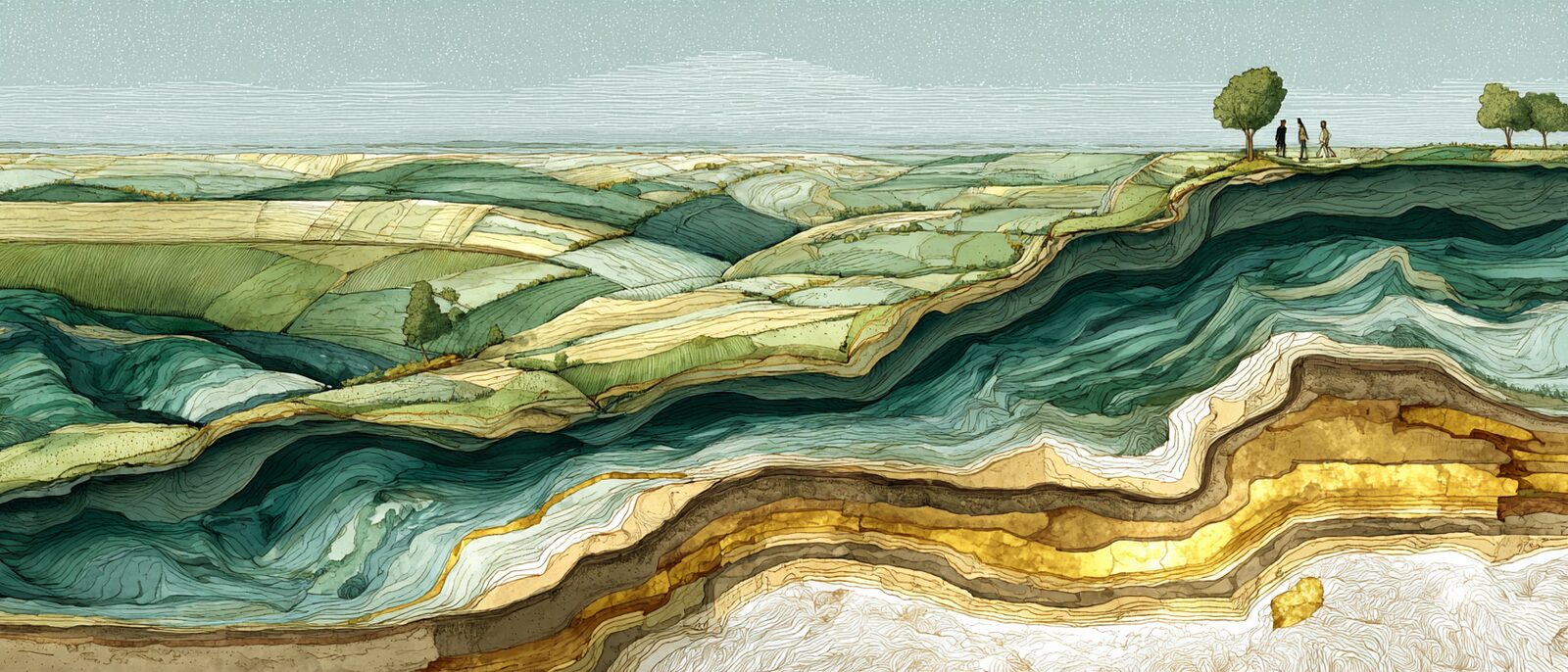
Most people think of landfill as a hole in the ground — a necessary but undesirable thing society tolerates because there is no alternative. But stand back and look at it differently. What is actually happening? For decades we have been creating vast, uncontrolled biological reactors. Organic material decomposes. Microbes consume carbon. Methane is generated. Heat is generated. Liquids move through the waste mass. Chemical processes unfold for decades.
In effect, we have spent fifty years building enormous anaerobic digestion facilities and then largely ignoring what happens inside them. Some sites capture gas; many historical ones did not. Most were designed around containment rather than optimisation — environmental protection rather than resource recovery. That was entirely understandable. The challenge is that the world has changed. Methane is no longer merely a risk. Carbon is no longer merely a pollutant. Energy security matters. Material security matters. Climate matters.
So the question becomes: if we were designing these systems today from first principles, would we build them the same way? I suspect we would not.
Designing with decomposition
This is where the idea of the Intelligent Pod emerged — not as a waste technology, nor even an energy technology, but as a way of asking a different question. What if decomposition itself became infrastructure?
The idea is surprisingly simple. Instead of one giant landfill, waste is placed within large engineered cells, or pods. Each pod becomes a bounded system. Small enough to understand. Large enough to matter.
The same pattern appears elsewhere in these notebooks. Battery Island treats an island as a bounded energy system. Farm in a Box treats a local food economy as a bounded agricultural system. The Intelligent Pod applies the same thinking to materials. Once bounded, a system can be observed — sensors measuring temperature, moisture, gas, settlement and chemistry; processes adjusted; performance improved.
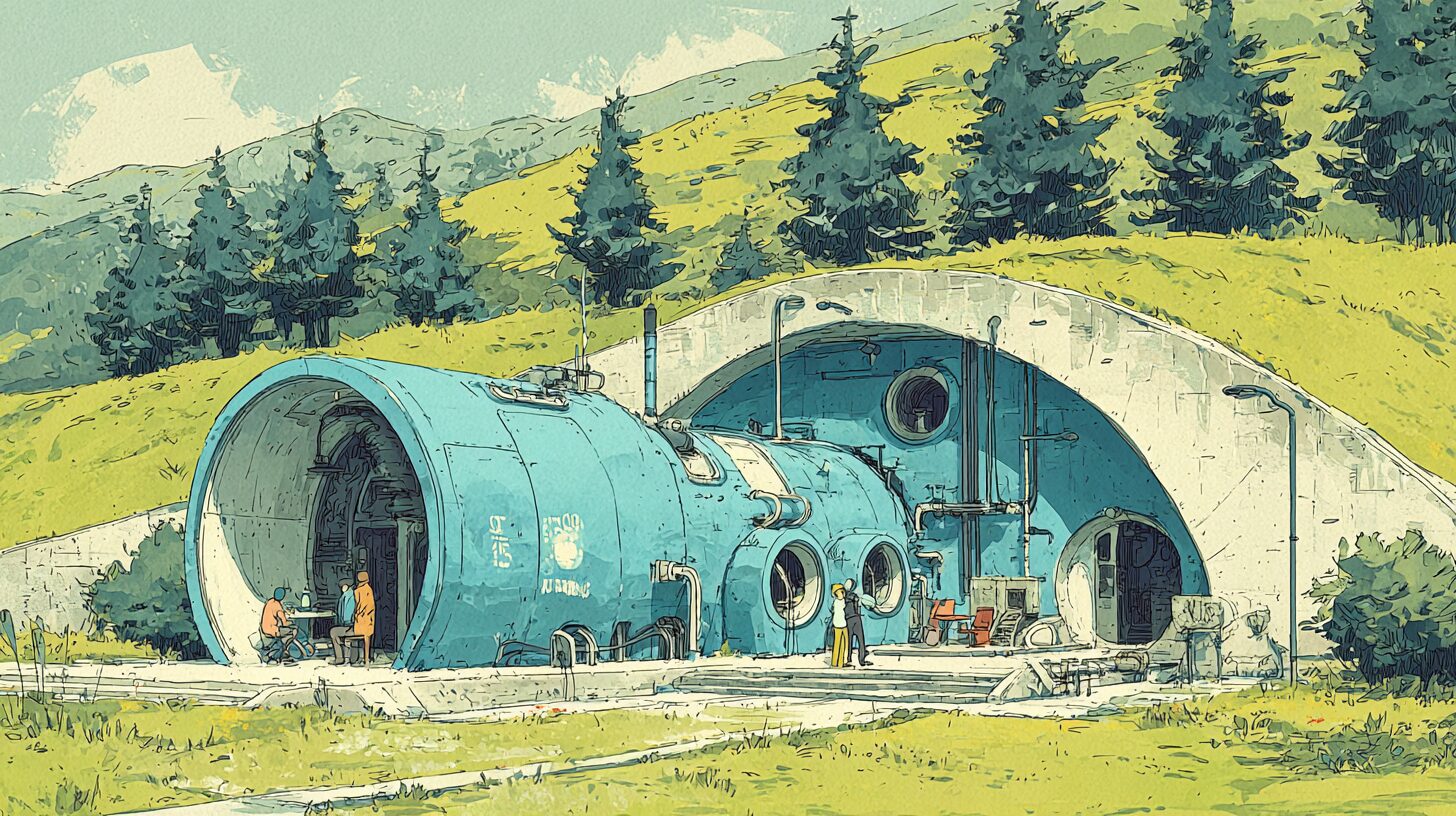
The objective is not storage. It is learning. Every pod becomes a laboratory operating at full scale.
That distinction matters, because many of the challenges we face are no longer scientific problems. We know decomposition works. We know methane forms. We know carbon remains. The challenge is operational: can we manage these processes deliberately rather than accidentally?
Methane is not the destination
Most conversations about anaerobic digestion stop at methane. Produce gas. Generate electricity. Export power. Job done. But methane is not particularly interesting. What is interesting is what methane allows.
Methane is effectively stored sunlight. Plants capture energy, biology concentrates it, microbes transform it; the gas becomes a transport mechanism carrying carbon and hydrogen together. Historically we burned it because that was simplest. Today there are alternatives. Methane can still fuel generators — in many places it should; reliable local electricity has enormous value, especially where energy infrastructure is fragile. But methane can also become a feedstock. Instead of burning the carbon, can we keep it? Instead of releasing it, can we capture it? Instead of treating methane as fuel, can we treat it as raw material?
The carbon economy hidden inside waste
Most discussions about carbon focus on emissions. Far fewer focus on carbon as a product. Yet almost everything around us contains carbon — tyres, paints, plastics, composites, batteries, construction products, electronics, industrial fillers, agricultural amendments, advanced materials. Carbon is not rare. High-quality carbon is.
The possibility we have explored is that waste streams may ultimately become one of the world's largest distributed sources of carbon feedstock. Organic waste becomes methane; methane becomes hydrogen and solid carbon. Plastic waste becomes oils, gases and char. Biomass becomes biochar. Different routes, same destination: carbon retained rather than released.
The significance is easy to underestimate. We are entering a period where societies require both decarbonisation and materials security at once. Those objectives are often presented as contradictory. In reality they may be complementary — if we build systems capable of capturing value rather than losing it.
Learning from imperfect feedstocks
One of the most useful conversations in this work came from discussing plastics. The prevailing assumption in recycling is that purity is everything. Sort more. Separate more. Clean more. Control more. That works when feedstocks are predictable. Reality often isn't. Ocean plastics are mixed. Municipal plastics are mixed. Post-digestion residues are mixed. The world is messy.
Perhaps the more important challenge is not achieving perfect feedstocks. Perhaps it is building systems capable of handling imperfect ones — shifting innovation from collection towards processing, from controlling inputs towards adapting to variability, from purity towards resilience.
The distinction may sound technical. It is actually social. Communities capable of dealing with imperfect realities tend to be more resilient than those dependent on ideal conditions.
The return of the local energy system
There is another pattern here. Many of the most interesting opportunities emerge when systems become local enough to understand. Not isolated. Connected. But locally legible. A town producing biogas from local organic waste — generating electricity, producing heat, creating carbon products, supporting local agriculture, creating skilled jobs, monitoring its own environmental performance, training young people.
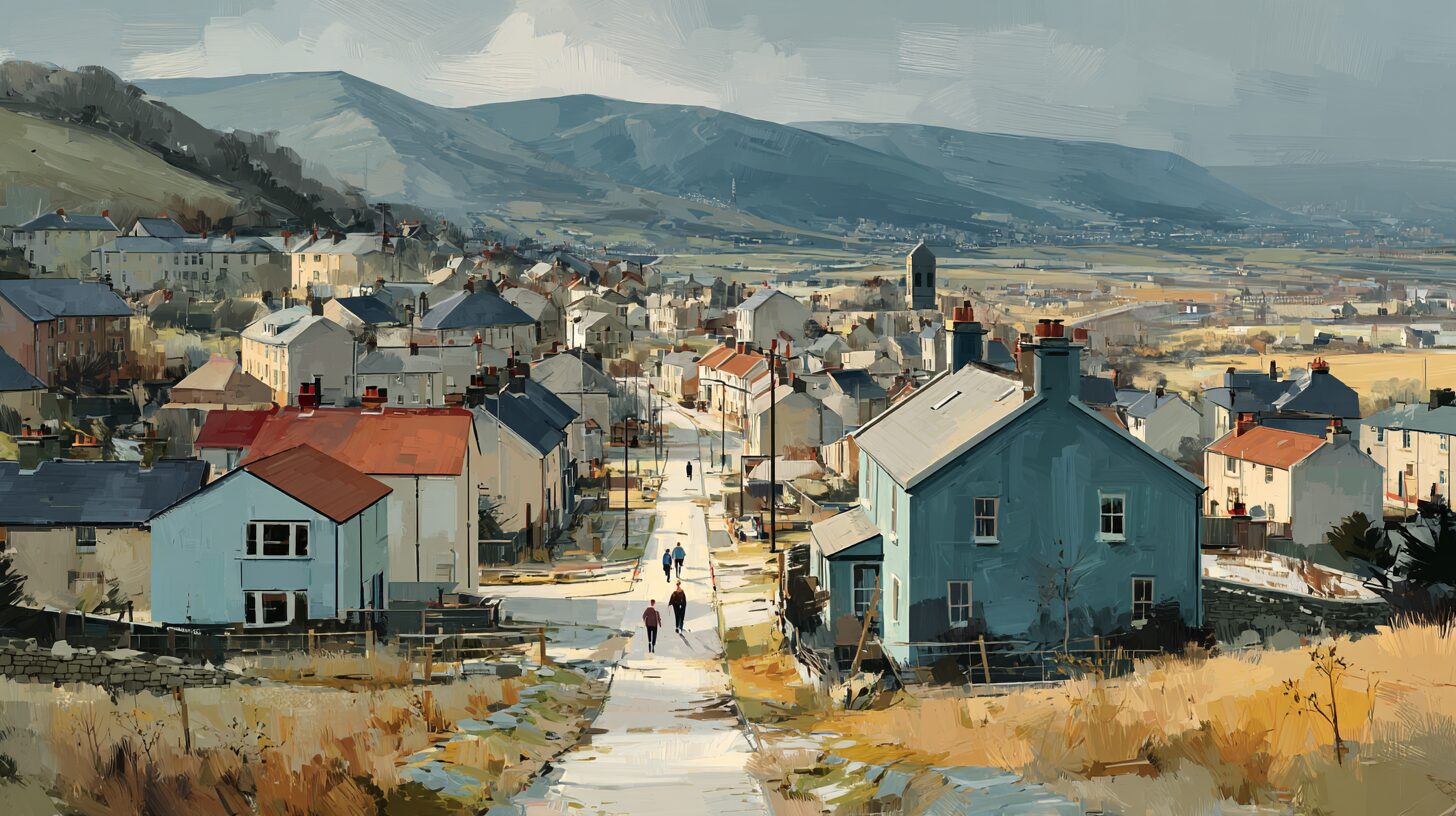
The individual technologies are not revolutionary. The configuration is. Infrastructure stops being something delivered from elsewhere and becomes something participated in. Something owned. Something understood. The capability remains in the place.
Many communities possess infrastructure. Far fewer possess agency. The distinction matters.
Waste as a capability system
What if the real output of a waste facility is not energy? What if it is capability?
That framing shifts the discussion entirely. The facility stops being a cost centre and becomes part of a wider resilience system — a place where biology, engineering, materials science and community wealth intersect. Not because someone planned a grand vision, but because value was allowed to remain where it emerged.
What could be tested next
This is still a proposition rather than a finished system. Many technical, commercial and regulatory questions remain — which is precisely why small-scale experimentation matters. A single monitored pod. A methane-capture pilot. A carbon-characterisation programme. Testing char from mixed plastic streams. Exploring methane-to-hydrogen conversion. Creating local markets for carbon products. None of these require a complete answer. They require a place willing to learn.
Dolgellau has often served as that kind of place in my thinking. Not because it is unique. Because it is comprehensible. Small enough to understand, large enough to matter. The lesson would not belong to Dolgellau; it would travel — just as lessons from Battery Island travel beyond islands, and lessons from letting water back into landscapes travel beyond river catchments. The place is the laboratory. The capability is the output.
One line
Perhaps the future of waste is not learning how to dispose of things more efficiently.
Perhaps it is learning how to recognise the value we have been burying all along.