An exploration
Slow Delivery
The infrastructure we forgot
These explorations weave memory and present thinking — not records of what happened, but attempts to learn by holding the past and the present in the same frame. Why it reads this way →
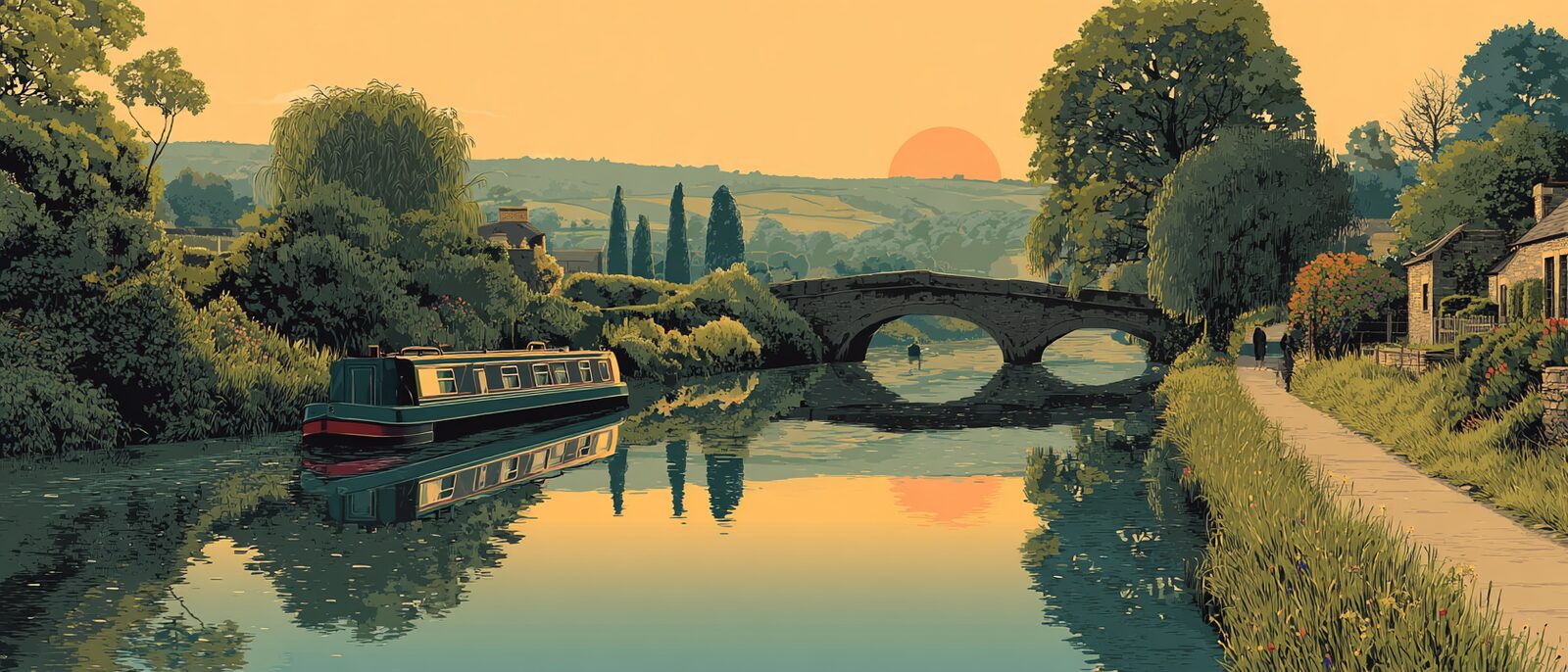
There is a canal near where I live. Like most people, I spent years looking at it without really seeing it.
Occasionally I would watch a narrowboat pass through a lock and wonder how extraordinary it must have seemed when the network was first constructed. Then the thought would disappear. The canal belonged to history. Or so I assumed.
The interesting thing about infrastructure is that it rarely disappears. It simply falls out of fashion.
Faster
For most of the last two centuries progress has moved in one direction. Faster. Larger. More concentrated.
The objective was always the same. Reduce cost. Increase efficiency. Move more goods. Move them more quickly.
The results have been remarkable. Raw materials arrive through major ports. Food is processed in vast facilities. Products move through regional distribution hubs. Lorries replenish stores. Consumers purchase goods from shelves stocked with extraordinary precision. It is one of the great achievements of modern civilisation.
Yet it is built upon a particular assumption. That speed is always the answer.
Looking at the map
The idea began with a map. Actually several maps. One showing Britain's canal and navigable waterway network. Another showing population. Another showing the places where roads and waterways intersect. Another showing how far people can travel by bicycle from those intersections.
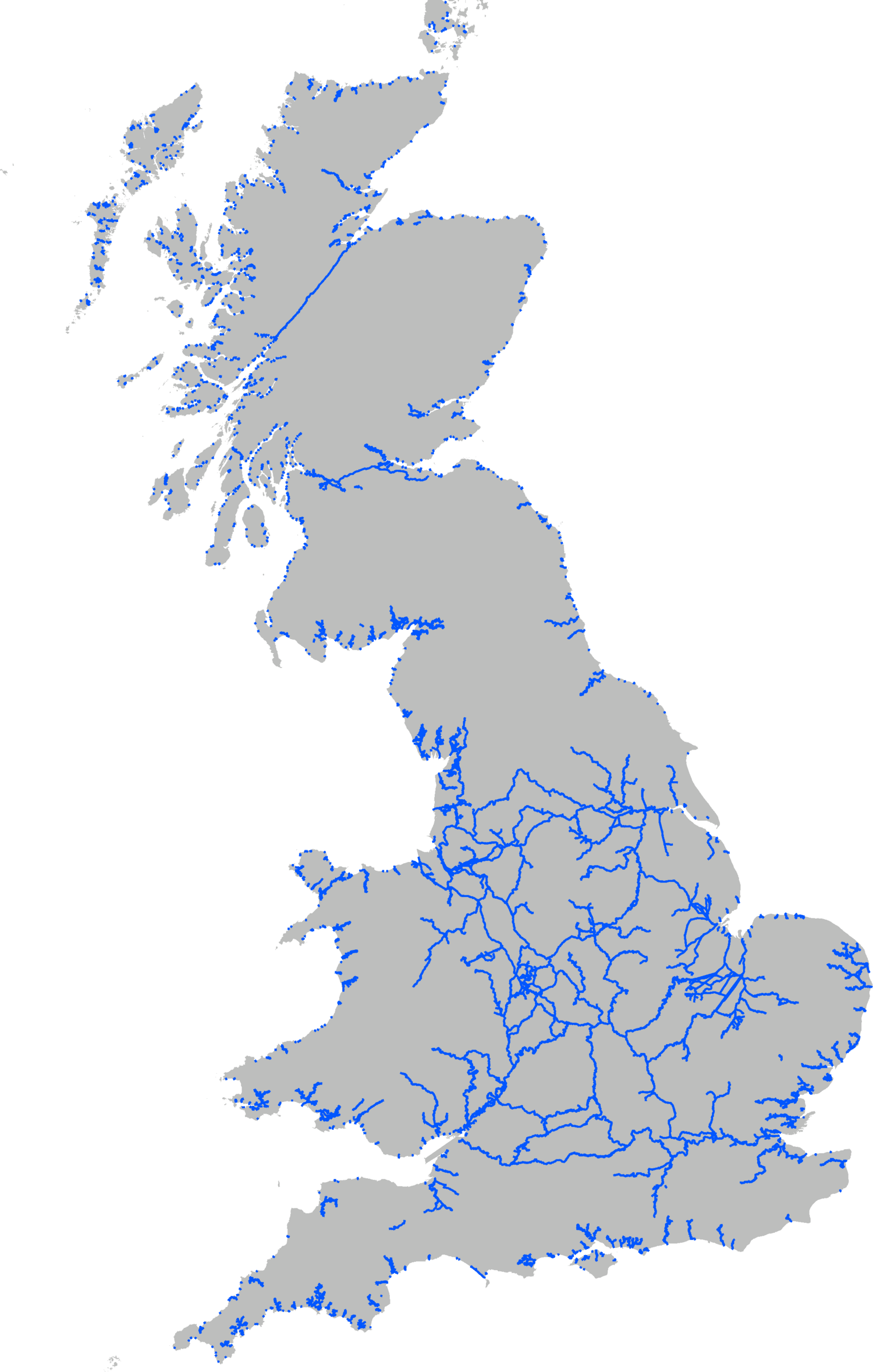
The results were surprising. The waterways were not isolated from modern Britain. They were woven through it. Thousands of road crossings. Thousands of potential transfer points. Millions of people living within easy reach. The old network had not disappeared. It remained embedded within the geography of everyday life.
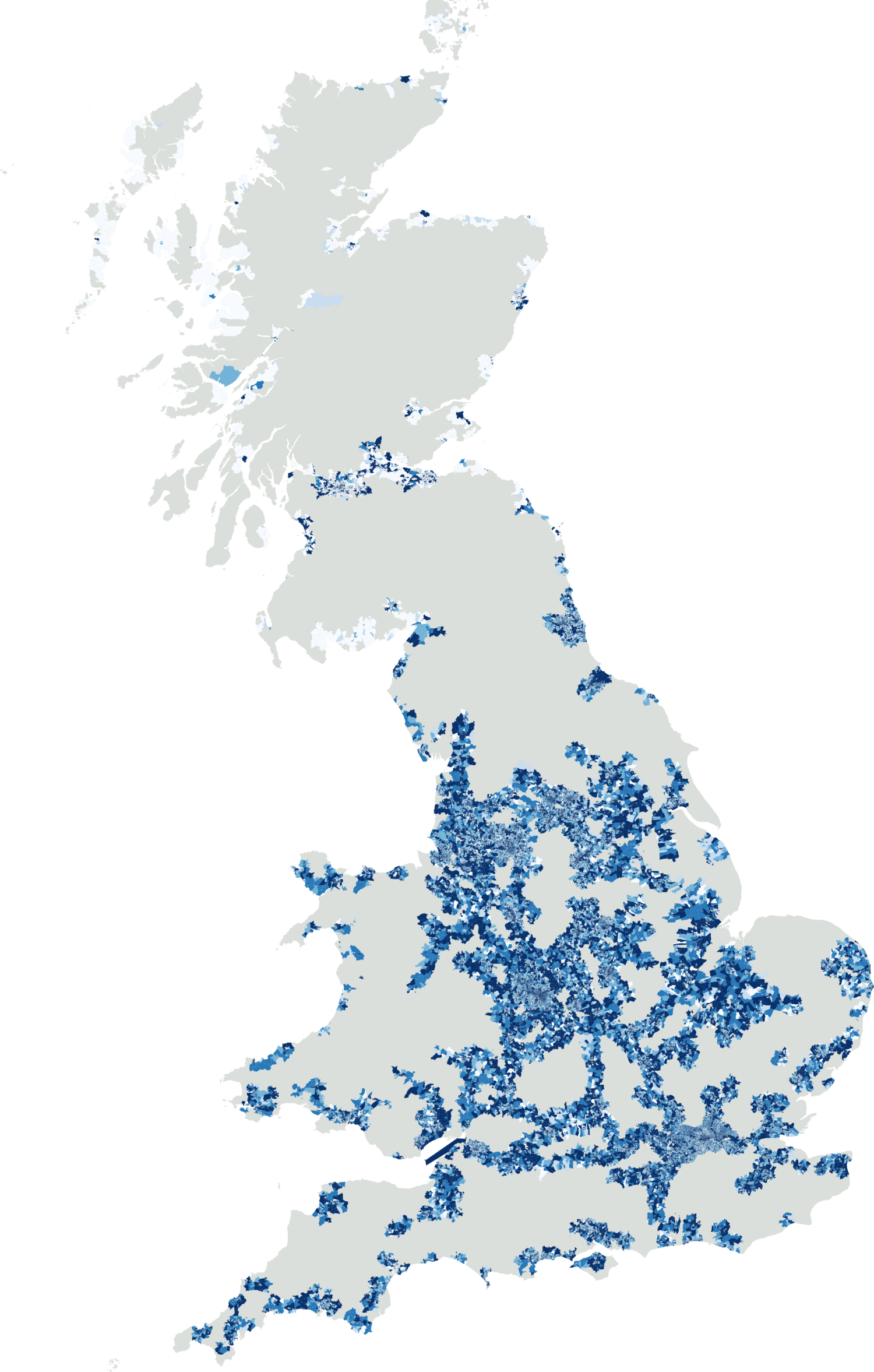
The infrastructure was still there. What was missing was a reason to use it.
The warehouse that moves
The original question was simple. What if information changes the economics of logistics?
Historically canals lost because they were slow. Roads and railways were faster. Distribution centres were more efficient. Large factories outperformed local production. The argument appeared settled.
Yet modern logistics depends on information as much as movement. Increasingly we know what people want before they buy it. We know where demand is emerging. We know where inventory is located. We know how journeys are progressing. The cost of coordination has collapsed. And once coordination becomes cheap, different possibilities emerge.
Imagine a barge leaving a port carrying ingredients rather than finished products. Raw goods. Packaging materials. Partially prepared products. Digital instructions. As it travels, orders accumulate. Products are assembled during the journey. Packaging occurs close to the point of consumption. Inventory remains flexible until the final moment. At canal-road intersections goods transfer to cargo bikes or electric vehicles for local distribution.
Picture it from the other side. The barge has left; these are the things aboard. You choose what you want, and it is packaged for you in transit — into a paper bag, a recycled cardboard box, a recyclable jar. Handled in a food-safe environment, but not a factory. Nothing is made faster. It is made closer, and with more care.

Slow Delivery
The idea became known as Slow Delivery. Not because it was inefficient. But because it challenged an assumption. For decades logistics has pursued speed above almost everything else.
This was never an attempt to compete with next-day delivery. It was the opposite instinct — to slow the pace and be consequential in what we move, and how.
What if intelligence mattered more than velocity? What if information could compensate for distance? What if knowing precisely what was required allowed slower systems to compete with faster ones?
The objective was never to beat next-day delivery. The objective was to create a different relationship between information and movement — to explore whether knowledge could substitute for scale. It was a proposition, not a finished system: a way of asking the question rather than a claim to have answered it.
The return of local exchange
Something unexpected emerged from this thinking. The system was not simply capable of delivering goods. It could collect them.
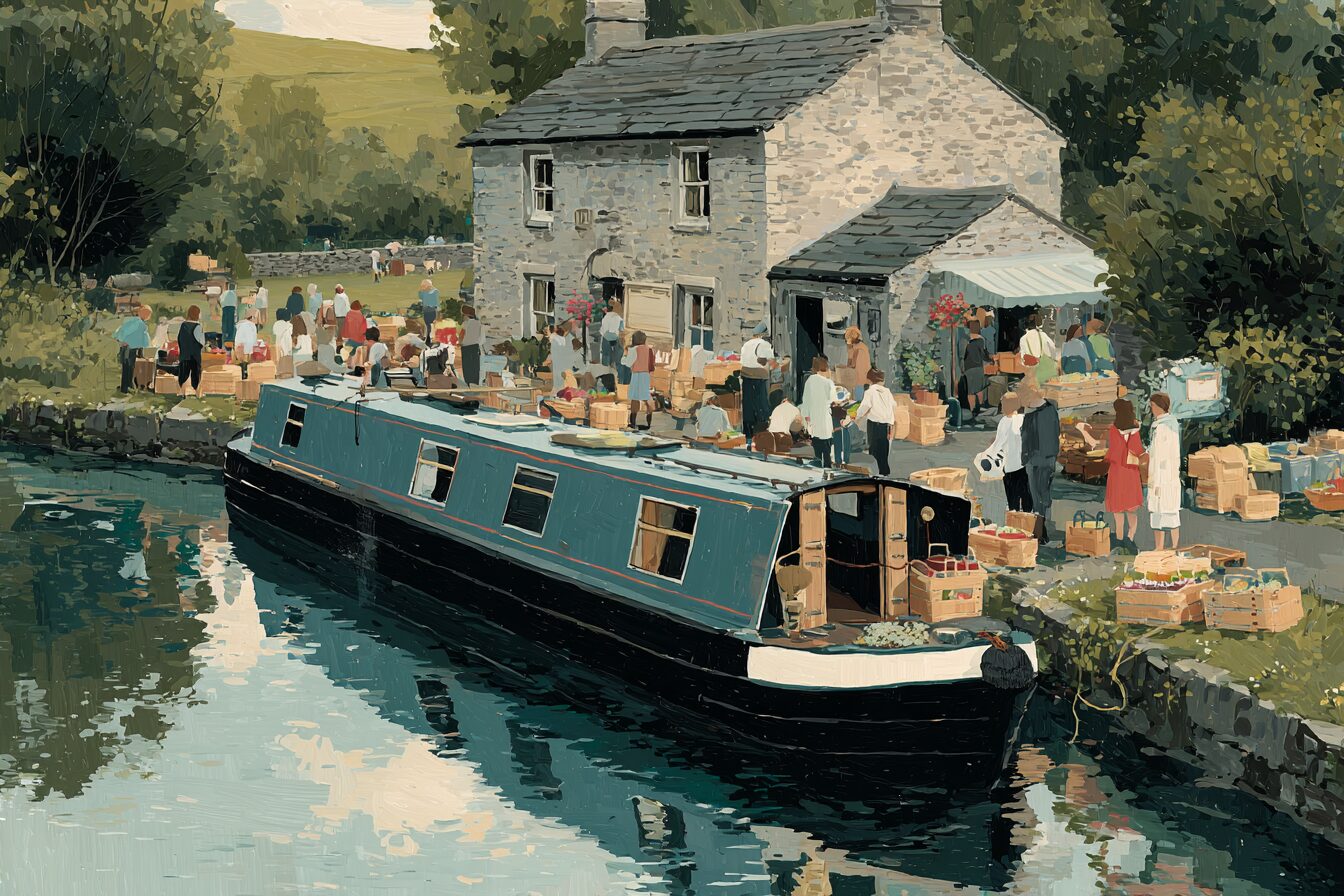
A barge travelling through communities could become a moving marketplace. As products were delivered, new products could be collected. Local food. Local crafts. Local production. Goods could move between communities rather than simply flowing from centralised facilities to passive consumers.
The network became two-way. A platform for participation. Not just consumption. In a world increasingly dominated by concentration, the waterways offered a glimpse of something more distributed — a network where small producers could gain access to larger markets, where communities could contribute as well as receive, where value circulated rather than merely accumulated.
Clean movement
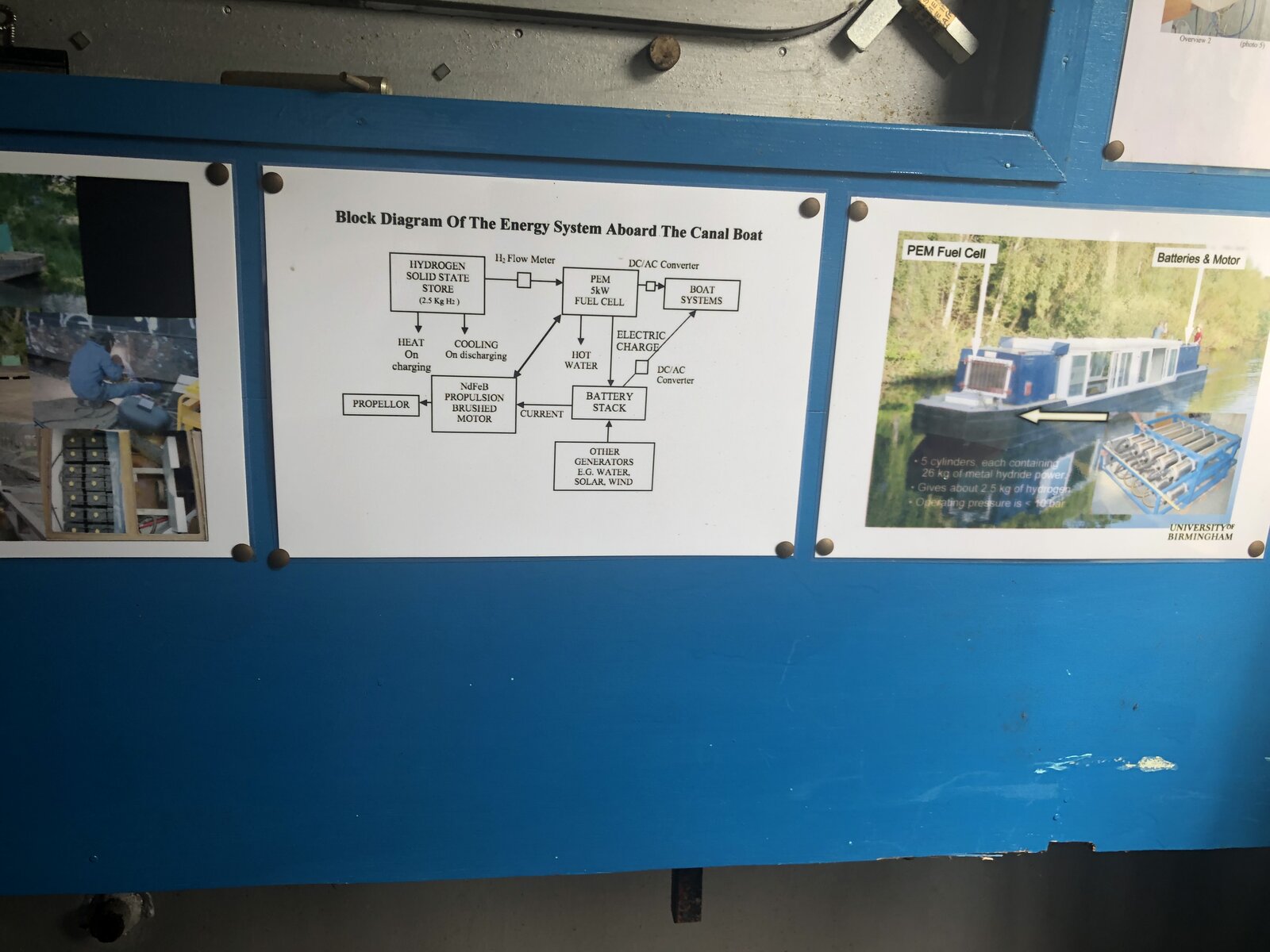
At roughly the same time another development caught my attention. Researchers at the University of Birmingham were experimenting with hydrogen-powered canal boats. The images were striking. Fuel cells. Hydrogen storage. Clean propulsion. An industrial-age transport system powered by a post-carbon energy source.
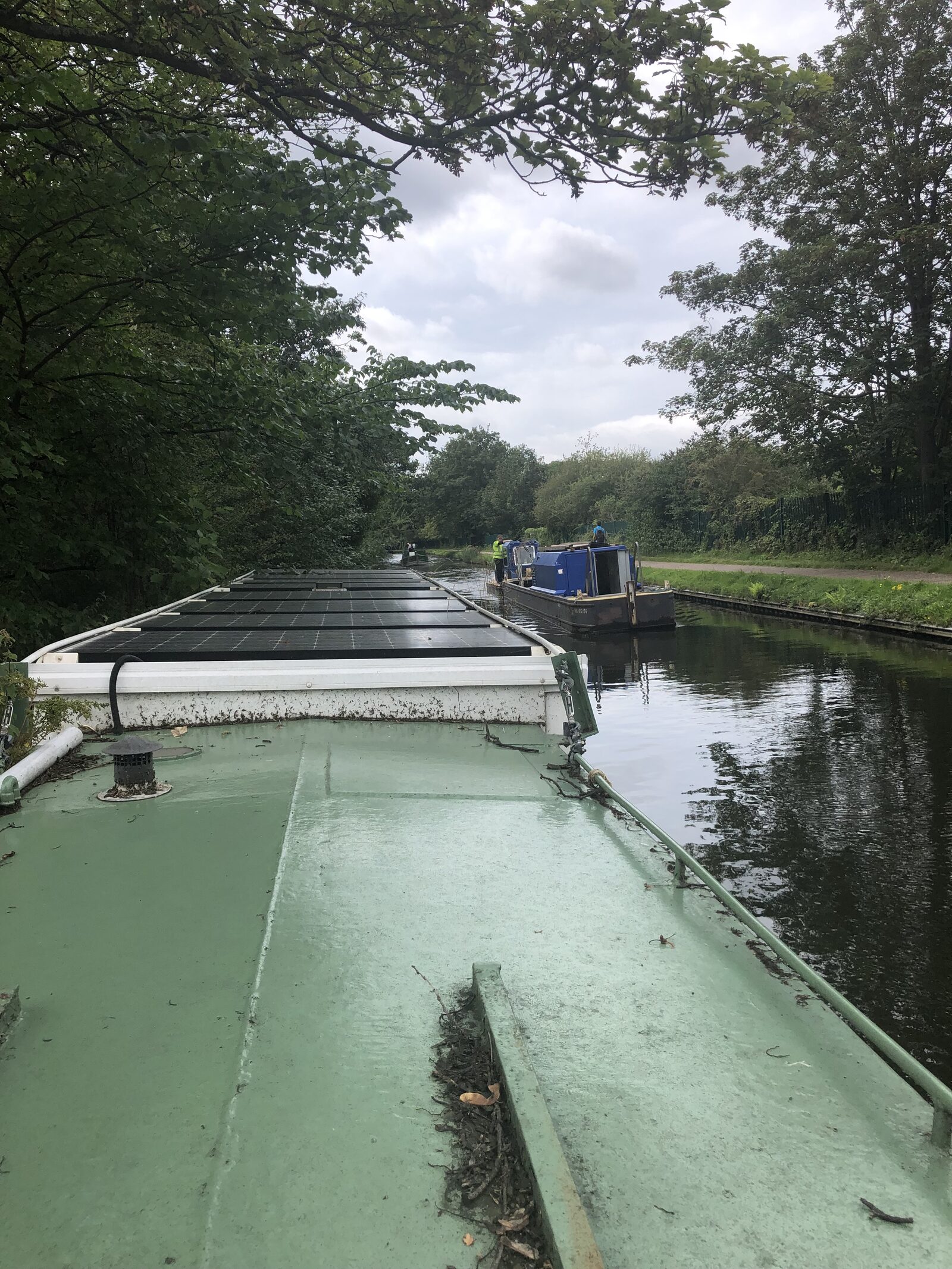
The symbolism felt powerful. The canal network was no longer simply an artefact of the past. It was becoming a testbed for the future. The slow movement of goods suddenly intersected with questions of energy transition, emissions reduction and environmental stewardship. An old network was discovering a new purpose.
The right to be
Yet the most important insight arrived from an entirely different direction. Every major infrastructure project faces the same challenge. The right to exist. Land acquisition. Planning consent. Environmental approvals. Political opposition. Public resistance. The years, often decades, required to create something entirely new.
The canal network has already crossed that threshold. It exists. The routes exist. The crossings exist. The rights of way exist. The communities exist. The legal and cultural legitimacy already exists.
The challenge is not permission. The challenge is purpose.
This changes the conversation completely. Instead of asking what should be built, we can ask what can be reimagined.
A dormant asset
The Canal & River Trust faces a difficult challenge. Maintaining thousands of miles of waterways is expensive. Historically the network generated economic value through commercial traffic. Today much of that activity has disappeared. The canals increasingly depend upon recreation, tourism and heritage. These are important functions. But they are not sufficient on their own.
The danger is that the waterways become viewed solely as historical artefacts. Valued. Protected. Admired. Yet disconnected from contemporary economic life.
The Slow Delivery idea was ultimately an argument against this view. Not because canals should replace roads. Or replace railways. Or replace modern logistics. But because infrastructure remains valuable when society finds new ways to use it. The asset already exists. The question is whether we possess enough imagination to recognise its next role.
When information becomes more valuable than speed
Looking back, I realise the project was never really about canals. It was about information.
For centuries economic success has largely depended upon scale. The largest factories. The largest warehouses. The largest retailers. The fastest delivery systems. Data changes that equation. Artificial intelligence changes it further. The ability to coordinate thousands of small decisions in real time makes distributed systems viable in ways that were previously impossible.
Small producers can participate. Local distribution becomes practical. Dynamic inventory becomes possible. Networks once considered obsolete become useful again.
Not because the infrastructure changes. Because the operating system changes.
The future hidden in plain sight
The canal network is often viewed as a relic of Britain's industrial past. Perhaps it should be viewed differently. As a dormant capability. A national asset waiting for a contemporary purpose.
The Romans built roads that later became highways. Industrial railways became passenger networks. Warehouses became data centres. Infrastructure survives because each generation discovers new uses for old systems. The waterways may yet have another life. Not because they are the fastest option. Not because they are the cheapest option. But because they already exist — and because information increasingly allows us to see possibilities that previous generations could not.
The future is often imagined as something entirely new. Yet some of the most interesting futures emerge when old infrastructures encounter new intelligence. The canals have been quietly waiting for two hundred years.
Perhaps the question is not whether they still matter. Perhaps the question is whether we have learned to see them again.