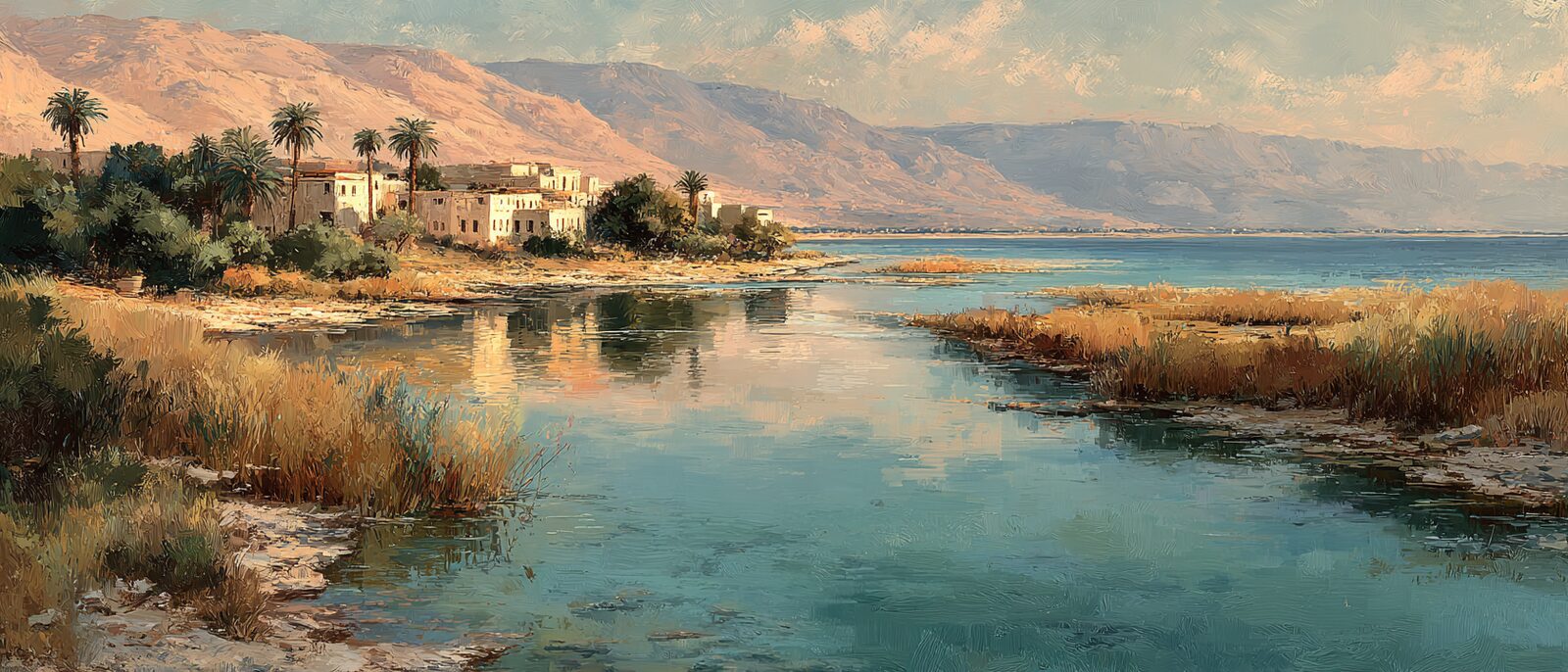
An exploration
The Cooperative Table
From a country of sights to a place that hosts you
These explorations weave memory and present thinking — not records of what happened, but attempts to learn by holding the past and the present in the same frame. Why it reads this way →
Few countries hold as much in so small a space as Jordan. Stand in the Rift Valley and the layers are almost too many to take in at once.
It is an extraordinary inheritance. And yet, for the most part, each of these is seen on its own — a sight, a gate, a ticket, a coach that arrives, empties and leaves. The wonders are managed as separate attractions, and the places and people around them are merely the scenery the visitor passes through on the way.
A country can be a list of sights. Or it can be a table you are invited to sit at.
A note on the layers
Because the history here is sacred to many, it is worth being exact. Jordan's early-Islamic layer is real and resonant — the Battle of Mu'tah was fought near Karak in 629, by an army the Prophet Muhammad sent though did not himself join; the decisive Battle of Yarmouk came later, in 636, after his death; and the land carries the great Umayyad desert castles of the century that followed. The Prophet's own connection to Jerusalem is the Night Journey, a spiritual passage, not a march. The valley's Christian heart, Bethany beyond the Jordan, is recognised by UNESCO as a place long venerated for the baptism of Jesus. Held accurately, these layers are richer than any slogan.
The thing that is missing
What Jordan has never quite had is a way of holding all of this together. The eco trails and the spa trails, the holy sites and the desert camps, the food and the festivals, the castles and the coast — each promoted by a different body, to a different visitor, in a different brochure. The country is rich in wonders and oddly poor in welcome, because the welcome is the one thing no single attraction can sell.
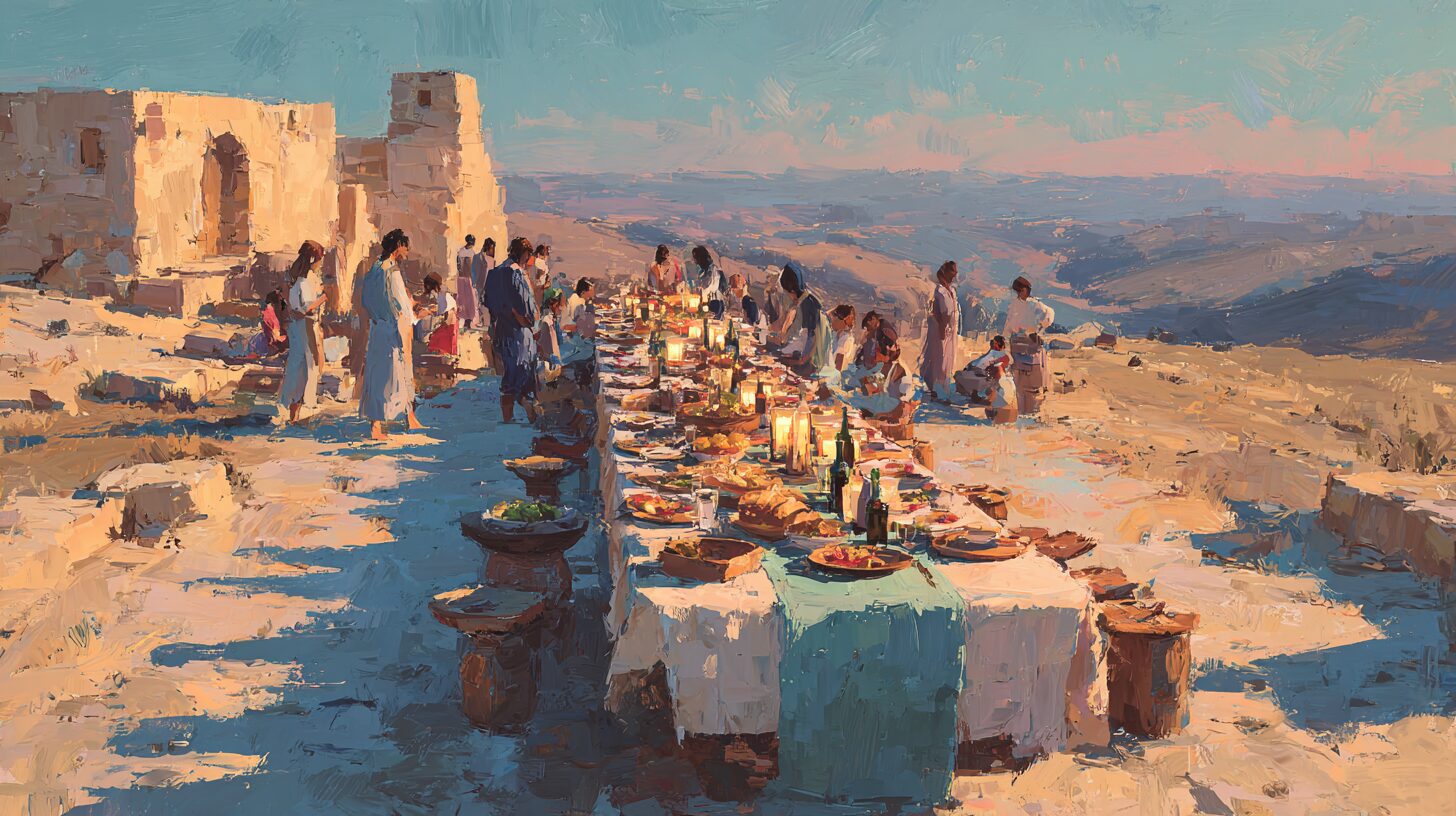
The opportunity was never another attraction. It was to see them holistically — to weave the sights into a single journey, and to embed that journey in the places and communities that hold it. To turn a country you look at into a place that hosts you.
Local hosting
A large part of the thinking was about hosting — and here, as ever, we looked at how others had already done it, in countries that have made sharing their own culture into an economy.
The common thread is that the most valuable thing on offer is not the monument. It is the welcome — and a structure that lets the people who live among the wonders host the visitor, and keep the value of doing so.
The table
Hence the table. A table is not a list of dishes; it is an invitation, a place where things are brought together and shared. A cooperative table is one the community sets and the visitor is asked to join — history and landscape and food served together, hosted by the people of the place, the income circulating among them rather than passing over their heads.
It is the same instinct that runs through the rest of this valley's story: keep the asset with the people, share the function, let the value stay local. Tourism, treated this way, stops being an industry done to a place and becomes something a community does together — and is the richer for.
A country can be a collection of sights to be ticked off, or a table you are invited to sit at. Jordan has the sights. The opportunity was always the table.
From the Studio — sources & confidence
With thanks to Akram Abu Hamdan, who brought the Valley of Opportunity to us from the Royal Court, and The Urban Foundation. The 2008 masterplan was developed with Foster + Partners. Historical and religious references here were fact-checked against published sources and framed with care.