An exploration
The Living Baseline
Noticing change early enough to act
These explorations weave memory and present thinking — not records of what happened, but attempts to learn by holding the past and the present in the same frame. Why it reads this way →
I have been using myself as the guinea pig. Not in a dramatic way. No laboratory, no white coat. Just the ordinary accumulation of signals that many of us now carry around without quite knowing what to do with them: resting heart rate, sleep, blood pressure, running, injury, recovery, oxygen saturation, heart-rate variability, weight, routines, diet, notes, interruptions, holidays, stress.
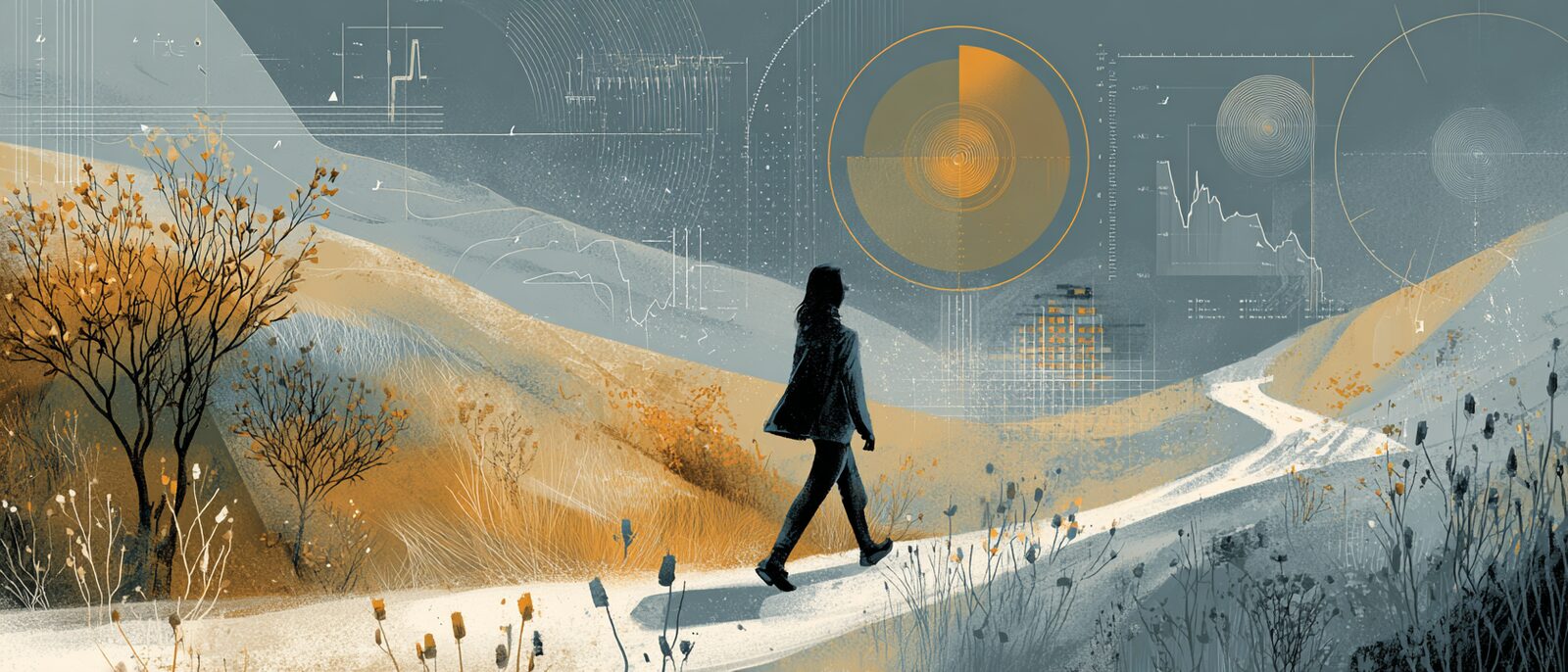
Taken separately, most of these things are almost meaningless. A poor night's sleep. A higher resting pulse. A week of raised blood pressure. A foot injury that stops running. A watch that records something but does not explain it. But taken together, over time, they start to form something more interesting.
They start to form a baseline.
Not a diagnosis. Not a medical record in the formal sense. Not a quantified-self dashboard for people who want to optimise every minute of their lives. A baseline is quieter than that. It is the shape of normal for one person — the long, uneven, changing pattern against which small deviations begin to matter.
Healthcare is good at moments
I have noticed something through this work: healthcare is very good at moments, but much less good at continuity. A consultation is a moment. A blood test is a moment. A blood pressure reading in a surgery is a moment. Even a hospital episode, however intense, is a bounded event. Yet health is lived between those moments — the run that was missed because the foot hurt, the sleep that changed after travel, the blood pressure that rose for a week, the gradual loss of stamina, the recovery that is visible only because there is something to compare it with.
The obvious question is: how do we collect more health data? I think that is the wrong question. The better question is: how do we help a person, their clinicians and their future self understand what is changing?
That is where the baseline becomes important. A personal health baseline is not simply a dataset. It is a living reference point. It says: this is what I am usually like; this is what has changed; this is what may need attention; this is what has improved; this is what I want to discuss with my GP rather than forget by the time I get there.
In my own case, the work began with Apple Health data — running history, resting heart rate, sleep, heart-rate variability. Blood pressure then emerged as a missing but crucial signal, partly because of family history and partly because it was the one thing my doctor had already been concerned about. That matters. The baseline is not built by collecting everything equally. It is built by asking what signals matter for this person.
The person as a bounded system
This connects to a recurring idea in these notebooks: infrastructure is not a project; it is a capability. In Battery Island, an island became a bounded laboratory for energy — small enough to understand, large enough to matter. The health baseline is the same idea brought down to the scale of the person.
The person becomes the bounded system. Not isolated. Not reduced to data. But understandable in context.

This matters because prevention depends on pattern recognition. Most healthcare systems are pulled towards crisis, because crisis is visible. Prevention is harder, because it depends on noticing weak signals early enough to act — a blood pressure trend, a slowing recovery, a fall in activity, a disrupted sleep pattern, a cluster of small changes that might mean nothing, or might be the beginning of something. Today those signals sit in fragments. The watch knows one thing. The cuff knows another. The GP record knows another. The patient remembers some of it, forgets some, and turns up with a vague sense that something has changed.
A coherent playback
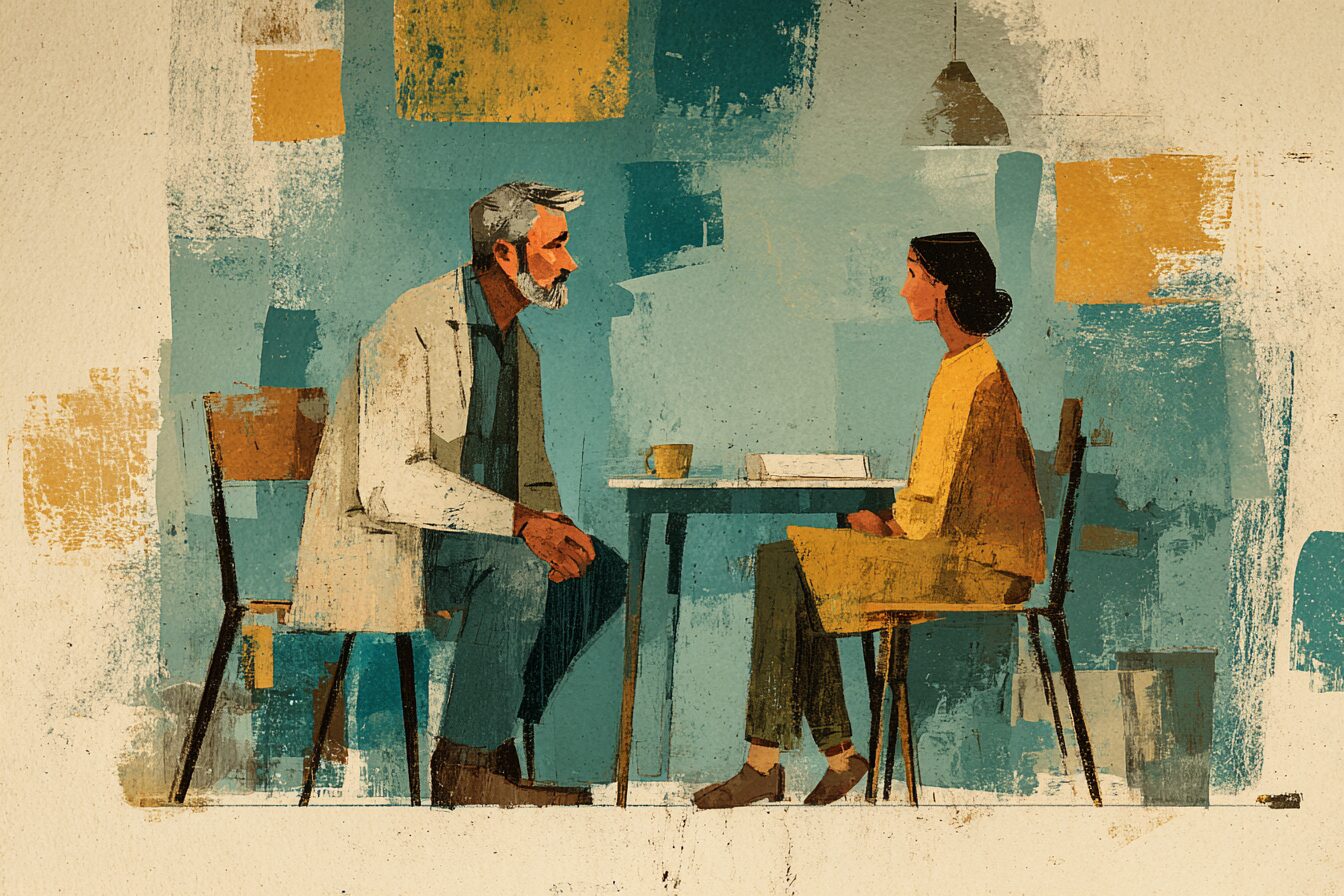
What if the patient arrived with a coherent playback? Not a pile of charts. Not a demand that the GP become a data analyst. A short, intelligible account: over the last six months, this has changed; this is within my usual range; this is outside it; this coincided with injury, travel, medication, stress or diet; these are the questions I would like to discuss. That alone would be useful.
But the more interesting possibility is what happens when this becomes agentic. The NHS App is already becoming a front door for services, records and messages. It is not hard to imagine a next stage in which a patient's own health agent can talk, safely and with permission, to NHS systems and clinical agents. The patient's agent would not replace the GP, and would not diagnose. It would prepare, summarise, remember, question and follow through. The clinical agent would not replace the consultant; it would help interpret the formal record, structure the encounter, check guidelines, and feed back agreed actions. Between them sits the patient's living baseline.
The baseline could help before the appointment, by preparing the story; during it, by making the relevant pattern visible; afterwards, by translating advice into actions the patient actually remembers; and over months, by watching whether the agreed change made any difference.
A trusted architecture of use
This is not a finished system. It is a proposition. But it feels possible because most of the ingredients already exist. People already generate data. Devices already record it. NHS systems already hold formal records. AI can already summarise, compare and explain. What is missing is not technology in the abstract. What is missing is a trusted architecture of use — and that has to answer some hard questions.
The Craidd
This is where the idea of the Craidd — the Welsh word for a core — becomes useful: a bounded, authoritative core of knowledge. In a health setting, each person could have a personal Craidd: a governed health baseline holding the agreed facts, trends, preferences, risks, routines and clinical context that matter for their care. Around it, agents could work. But the core would remain stable, inspectable and owned.
For me, that core might include age, height, family history, long-term resting heart rate, running history, the blood-pressure concern, injury history, usual sleep pattern, diet and current goals. For someone with cancer, it might hold treatment episodes, side effects, fatigue, blood markers, appointments, medication changes and red-flag symptoms. For an older person at risk of frailty: walking speed, falls, weight change, appetite, social contact, sleep, and the confidence to leave the house.
The baseline is not the same for everyone. The method is.
Prevention made personal
This also changes the role of prevention. Prevention is often discussed as a public-health abstraction — screening, campaigns, targets, risk scores. Those matter, but they can feel remote. A living baseline makes prevention personal and practical. It asks: what is the smallest useful change that could improve this person's trajectory? Walk again. Sleep better. Reduce blood pressure. Recover safely from injury. Notice breathlessness earlier. Keep strength through treatment. Avoid the avoidable hospital admission. Return to confidence.
It is a different kind of healthcare conversation. Less 'what is wrong with you today?' More 'what is changing, and what can we do early?'
It must reduce inequality, not increase it
There is a wider social point. Many people are already surrounded by health data but not supported to use it. The confident, technically able person may bring charts to a GP. The anxious person may be overwhelmed. The digitally excluded person may be invisible. The person with multiple conditions may carry the burden of explaining themselves again and again. A good baseline system should reduce inequality, not increase it. That means it cannot be designed only for the already engaged — it needs simple summaries, trusted intermediaries, family permissions, community support, and the ability to work in ordinary language. As useful to someone managing blood pressure in Dolgellau as to someone navigating cancer treatment in Cardiff or London.
Place still matters. In rural areas, distance changes healthcare. Appointments are harder. Transport matters. Small changes may go unnoticed for longer, and community relationships matter more. A local health baseline could connect to community hospitals, GP practices, walking groups, digital-inclusion work, social prescribing and home monitoring — helping people remain capable where they live, rather than only becoming visible when they enter a hospital. The same pattern that runs through these notebooks: relationships matter more than assets. The data is not the asset. The relationship between person, clinician, family, place and system is the asset; the data only matters if it strengthens that relationship.
What could be done next
A first pilot need not be large. It could begin with a small group of volunteers who already have some personal health data and a practical reason to use it — blood pressure monitoring, return to exercise after injury, recovery from treatment, frailty prevention, managing long-term symptoms. Each would build a simple baseline pack: one page of personal context; a few relevant measures; a timeline of notable changes; current concerns; current goals; questions for the clinician; agreed actions afterwards.
The test would not be whether the system produces perfect medical insight. It would be whether it improves the conversation. Does the GP get a clearer picture faster? Does the patient remember advice better? Are changes noticed earlier? Does the person feel more capable, rather than more anxious? A second pilot could connect this to the NHS App as a patient-held companion layer — preparing, summarising and feeding back into formal care with consent. A third could focus on prevention in a town: a walking-for-health group, blood-pressure monitoring, sleep notes, recovery and GP feedback as part of a local resilience model. Not a smart city. Not a surveillance programme. A capable community learning to notice and act earlier.
The aim is attentiveness
There is a danger here, and it should be named. Health data can easily become another pressure — another thing to fail at, another dashboard telling you that you are not sleeping well, not fit enough, not compliant enough, not young enough. That is not the aim. The aim is attentiveness. A living baseline should help us pay attention kindly and intelligently: to see the difference between noise and change, to support action without panic, to help clinicians see the person between appointments, and to help the person carry their own story with more confidence.
Each of us is becoming a small, data-rich, poorly interpreted health system. The opportunity is to turn that into something human, governed and useful — a living baseline that helps people, families and clinicians remain capable together under change. Not medicine by machine. Not self-tracking as obsession. A better conversation, with evidence behind it — and, over time, a quieter shift in healthcare itself: from episodic repair towards shared attentiveness, earlier action, and prevention rooted in the actual life of the person.
A health baseline is not a record of what has happened to us. It is a practical instrument for noticing change early enough to act.