An exploration
The Market That Closed
What actually happened
These explorations weave memory and present thinking — not records of what happened, but attempts to learn by holding the past and the present in the same frame. Why it reads this way →
Most of these notebooks are propositions — ideas worked far enough to argue with, but not yet built. This one is different. This one happened.
When the first farm opened in the Jordan Valley, the workers who turned up were men from the nearby settlements. The work, though, was not what they expected. Close centre planting. Detailed logging of data. Precision spraying. Careful, measured watering. It was exact, patient and unfamiliar.
And it was rejected. This, the men decided, was “woman's work.”
That rejection turned out to be the most important thing that happened.
The opening we didn't expect
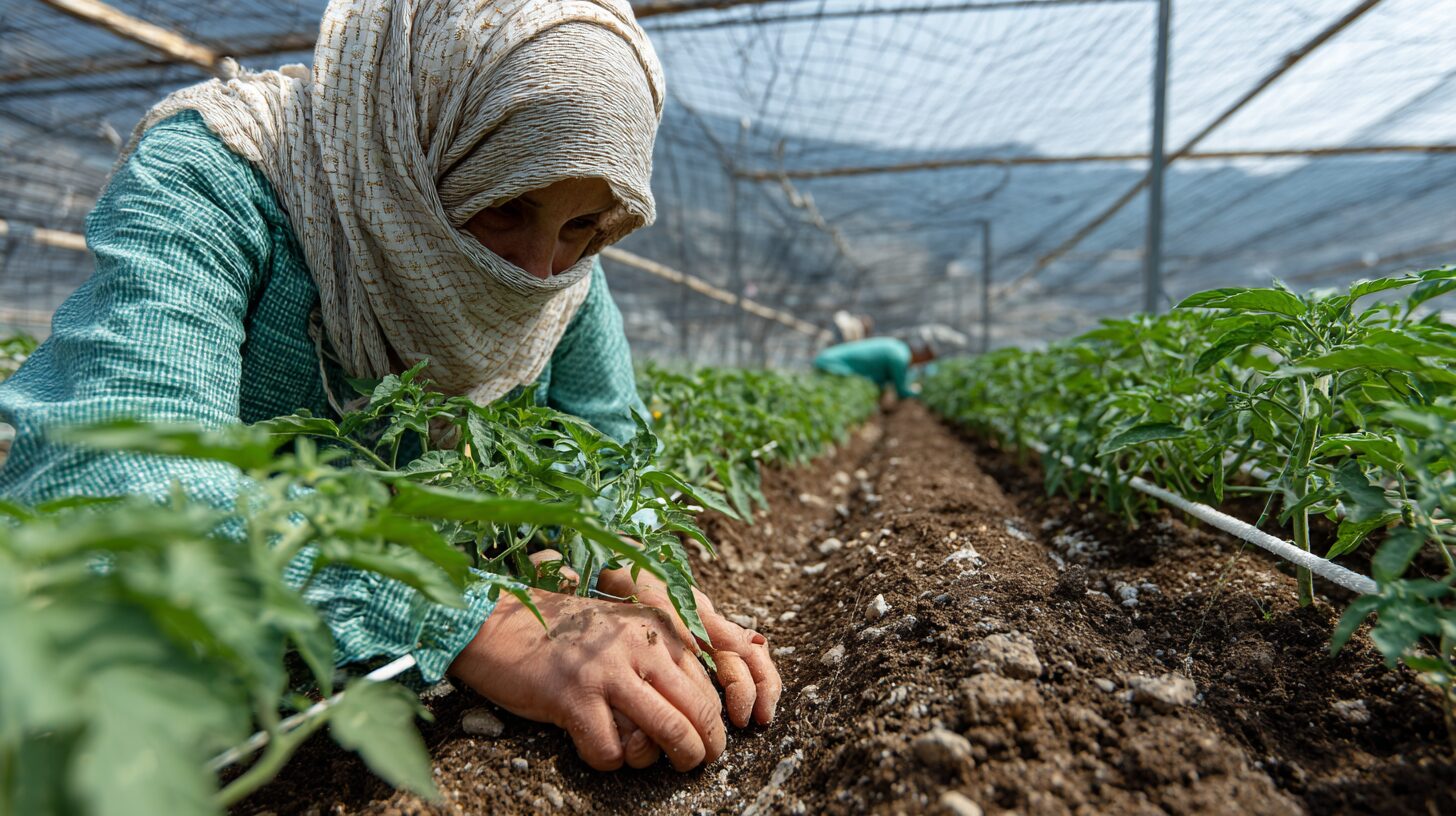
Because women came to do the jobs. And not only were they good at the precise, attentive work the system required — they were eager. Then came the benefit we had not foreseen.
These were jobs where recording things was essential. Yields, doses, volumes, dates. Basic numeracy and literacy were not prerequisites to be screened for; they were skills that had to be used, and could therefore be taught, on the job. Education was embedded in the work itself.
And the wages came with more than money. They came with social protection, and with enrolment into the national systems that most of these women had stood outside of. We had set out to grow vegetables for export. We found we were generating work with a real, tangible impact on people's lives.
Never one farm
The growing itself worked. The net houses gathered technology from several countries, and the valley's climate gave an early growing season — a first-crop lead over other suppliers, reaching the shelves before the competition came online. Sales followed, to supermarkets in the Gulf and in Europe.
But the real design was never a farm. It was a method: train the trainers. The first farm taught people who could open the next farm and train the people who would work there, who could in turn open the one after. The ambition was a network — crops grown to order for export, at multiples of existing production, using a fraction of the water.
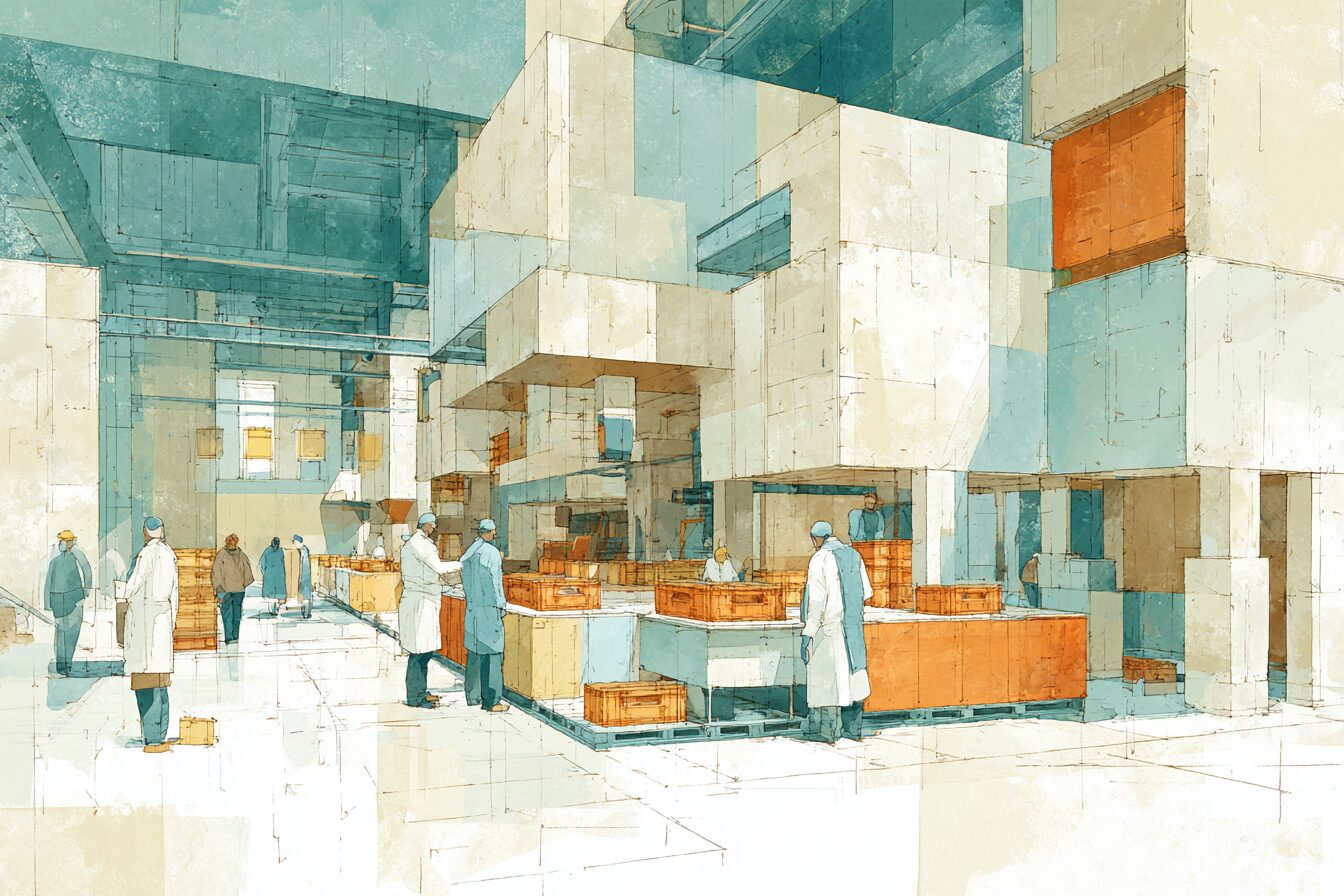
The first washing, packing and cold-store facility was built. The produce was good — each kilogram grown with eighty to ninety per cent less water than traditional farming, and ninety to ninety-five per cent of it reaching export quality. Everything looked good.
Everything looked good. Except one thing.
Except the border
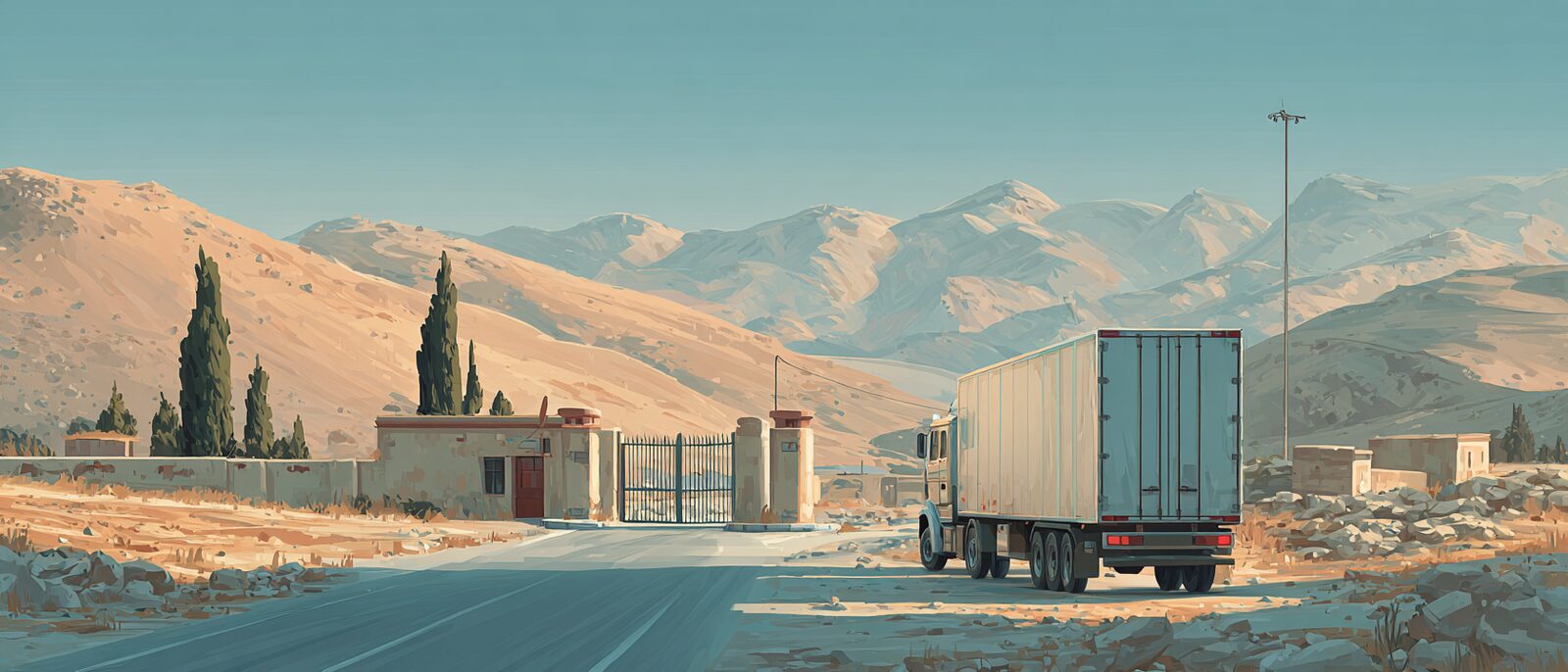
We were working in a volatile region, and a perishable export needs rapid, resilient routes to its overseas markets. That was the one thing the region could not promise. Borders closed — with Israel, with Saudi Arabia, with Syria, with Iraq — unpredictably and often. Trucks were delayed. Produce perished within sight of working perfectly.
The farm did everything we asked of it. The water savings were real. The quality was real. The jobs, the training, the dignity were real. And none of it could survive a border closing between a ripe crop and the shelf it was grown for.
It didn't fail in the field. It failed at the border.
A connection failure, not a capability failure
This is the lesson I have carried into everything since, and it is why this story sits at the centre of these notebooks rather than to one side. The asset worked. The capability was real. What failed was the connection — the route between what we made and the people who wanted it.
That does not contradict everything else in this collection. It confirms it. The recurring claim across these pieces is that value lives in the relationships between things, not in the things themselves. AgriJordan is the proof, written in perished fruit: the best system in the world is worth nothing if the thread between it and its market can be cut at will.
The politics had to be baked in. Not bolted on afterwards, but designed into the system from the first day.
What we asked for next
When the thinking turned to refugees — to whether a productive landscape could give displaced people work, purpose and a stake in a future — that lesson shaped the ask. The technology was no longer the hard part. We could prove the technology. The hard part was the connection, and the connection needed others to help build it.
So the request to donor nations was specific, and it was not really about money for farms. It was two things. First, that their grant funding act as first-loss capital — taking the first risk so that other investment could be unlocked behind it. Second, and harder, that they convene their own domestic buyers — the supermarkets — and work with them to increase imports from Jordan.
If that meant adjusting import controls, it seemed a small thing to ask in exchange for what it might buy: an environment in which a refugee had opportunity, purpose and reason to stay — and in which the desperate pull towards Europe was, even slightly, diminished. A small administrative change, set against a large human one.
The money that waits
It did not come. There were big plans and a great many positive words, but the support for the refugee proposals did not arrive — even though we could show that AgriJordan had worked, show precisely why it had failed, and show how that failure could be overcome.
Earlier, the same wall had stopped the 2014 work — a country-wide mesh model that scanned Jordan to predict where land could best be used. Cutting-edge at the time. It needed five million dollars to build a pilot, and that five million proved impossible to find. In one meeting I was told, in effect: get the pilot done, and we will have hundreds of millions to help you roll it out.
The money is rarely there to start you. It waits, patiently, for the moment you have succeeded and no longer really need it.
What remains
I find I am not bitter about it, because the capability was real and the lessons were worth the cost. The women who learned to read a logbook still learned to read. The water saved was still saved. And the central insight has only grown sharper with every later proposal.
Build the connections first, or bake them in from the start, because the most sophisticated system in the world will perish at a closed border. And if you are asking others to back something new, understand that proof of success is not what unlocks the money — it is what makes the money you no longer need suddenly appear.
The harvest was real. So was the lesson. The thread between them and the world was the part we never managed to secure.