An exploration
The Valley of First Harvest
What remains after the harvest is over
These explorations weave memory and present thinking — not records of what happened, but attempts to learn by holding the past and the present in the same frame. Why it reads this way →
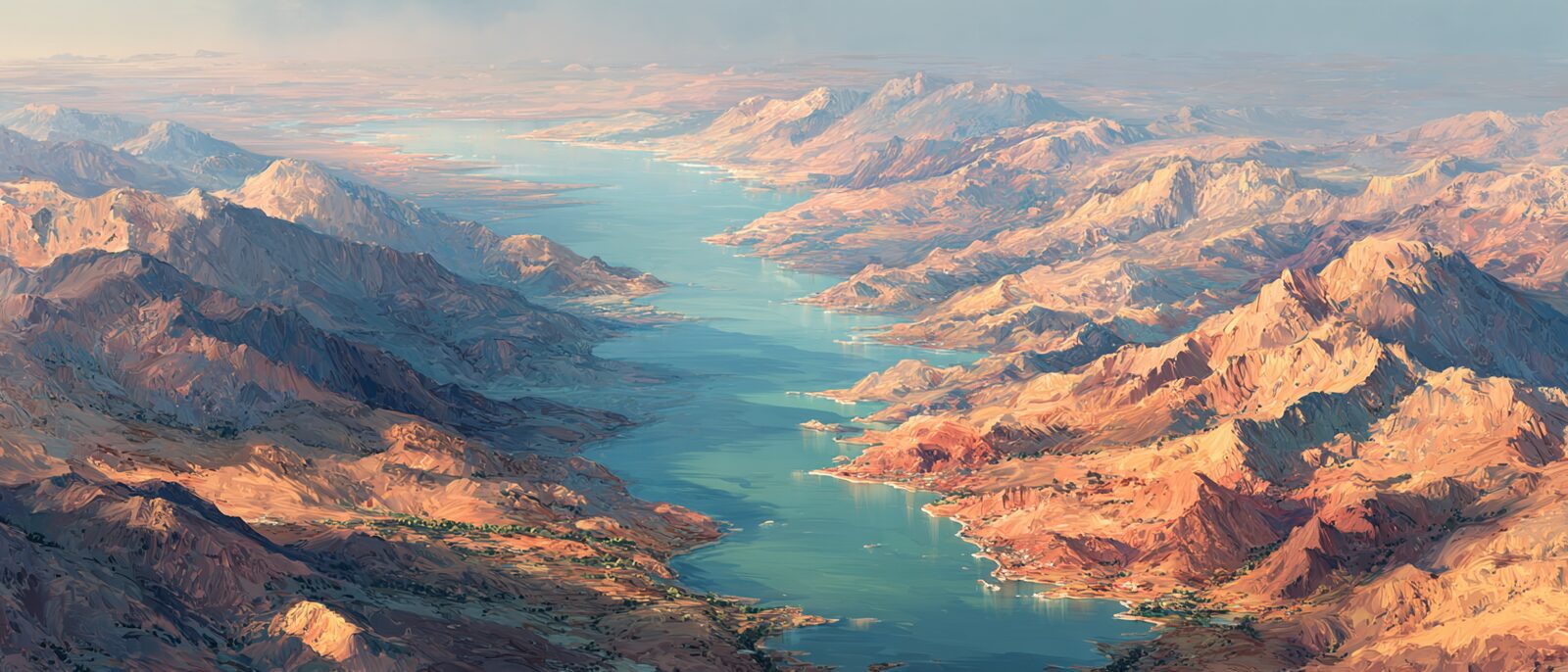
I have been thinking about a valley. Not a metaphorical valley. A real one.
A place of steep slopes, dry soils, uncertain rainfall and long histories of people trying to persuade the landscape to feed them. The sort of landscape that appears difficult until you look more closely and realise people have been making a living there for thousands of years.
The valley first appeared in my thinking through a practical question. What would it take to create meaningful employment for large numbers of refugees? Most discussions begin with housing, welfare, healthcare or education. All important. But there is another question beneath them.
How do people become participants rather than recipients?
Work matters for income, but it also matters for dignity, identity, routine, relationships and belonging. Communities are rarely strengthened by finding ways to support people indefinitely. They are strengthened when people can contribute, build capability and become part of a shared future.
The challenge is that many refugee populations arrive in places where jobs are already scarce. So I found myself asking a different question. What if the work was not waiting to be found? What if it had to be created? And what if the thing being created was not just employment, but an entirely new productive landscape?
Why agriculture
The proposal emerged around agriculture because agriculture has a remarkable property. It creates multiple forms of value simultaneously.
And if designed carefully, it can leave behind productive assets that continue serving a community long after the original investment has gone.
The setting was the Jordan Rift Valley. The valley sits in a remarkable geographical position. Crops can often be grown earlier than in many European locations, creating opportunities to reach markets before seasonal production elsewhere comes online. The climate is challenging, but that challenge can become an advantage when combined with irrigation, protected growing systems and careful crop selection.
Assets or capabilities
The obvious response would be to establish a few large farms. But large farms were never the most interesting part of the idea. The interesting part was the system.
I have noticed that many development projects think in terms of assets. Build a facility. Fund a programme. Provide equipment. Train people. Then move on. The difficulty is that assets on their own rarely create resilience. Relationships do. Capabilities do. The ability of a system to adapt does.
The question became whether agriculture could be organised as a capability-building system rather than simply a collection of farms. That shift changes everything. Instead of asking how many hectares could be cultivated, we begin asking how an entire agricultural economy might be assembled.
Designed to start productive
Imagine arriving at a new settlement. The roads are in place. Water infrastructure is functioning. Power is available from solar arrays and local energy systems. Simple net houses and protected growing structures are already established. The first crops have been selected. Training programmes have begun before people even arrive.
The settlement is not waiting to become productive. It is designed to start productive.
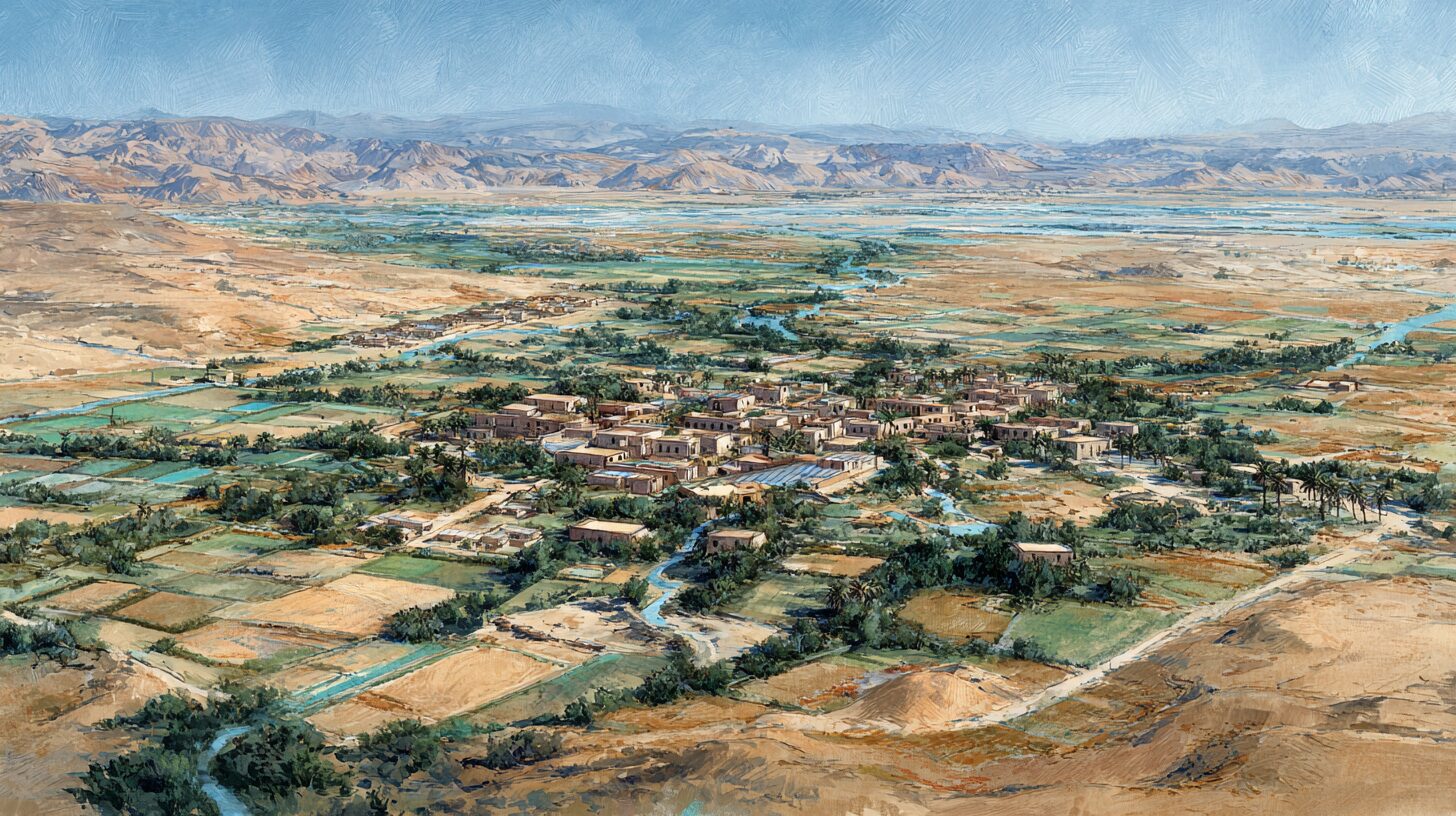
What follows is not merely farming. It is the creation of an agricultural ecosystem.
The farms become the visible expression of a much larger capability.
A distributed operating system
This is where technology enters the story, but not as the central character. Technology appears as infrastructure. A support system. An enabler. One of the recurring ideas across these notebooks is that infrastructure is not a project. It is a capability.
The agricultural system began to look less like farming and more like a distributed operating system for food production. Fields, net houses, packing facilities, wash plants, cold stores, distribution hubs and export terminals became nodes in a connected network. Data flowed continuously — crop growth, water consumption, temperature, harvest forecasts, storage capacity, transport availability, market demand. Instead of relying on estimates and assumptions, a shared picture could emerge almost in real time.
Donor nations supporting the programme would not simply be funding aid. They would be investing in productive capacity. Supermarkets could see crop forecasts months ahead. Importers could understand expected volumes. Logistics providers could plan distribution. The entire chain would become more predictable.
Building demand and supply together
This matters because agricultural development often fails at precisely the point where production succeeds. Farmers grow food. The market cannot absorb it. Prices collapse. The system breaks.
What interested me was the possibility of building demand and supply together. Could donor nations support preferential procurement? Could supermarkets agree long-term purchasing commitments? Could refugee-grown produce become part of mainstream supply chains rather than a niche charitable product? Could we build confidence throughout the system before the first seed is planted?
The bounded laboratory
This begins to resemble another recurring notebook theme. The bounded laboratory. Battery Island explored the Isle of Man as a place where an entire energy system could be observed and understood. This proposal treated the valley in much the same way.
Large enough to matter. Small enough to understand. A place where the whole system could be seen.
Each influencing the others. The more we explored it, the more unexpected opportunities emerged. Agriculture creates industrial capability. A region producing thousands of tonnes of crops requires irrigation equipment, greenhouses, pumps, sensors, packaging systems, cold stores, vehicles and maintenance services. Local manufacturing becomes possible. Training becomes possible. Specialist expertise develops. An agricultural economy begins creating the conditions for a wider economy.
The landscape itself changes too. Terracing reduces erosion. Water systems improve resilience. Trees provide shade and stabilise soils. Renewable energy supports pumping and storage. Waste becomes feedstock. Organic matter returns to the land. The project starts with employment but gradually becomes a form of environmental restoration.
A project about capability
And perhaps that is the deeper pattern. At first glance this appears to be a refugee project. Then it appears to be an agricultural project. Then it appears to be an economic development project. Eventually it becomes something else. A project about capability. A project about creating conditions in which people can act.
One of the most striking aspects of displacement is that it removes agency. People lose homes. They lose routines. They lose work. They lose familiarity. Often they lose confidence that their actions can influence their future. The challenge is not simply providing shelter. It is rebuilding the ability to participate.
Agriculture offers something unusual in that regard. The connection between effort and outcome is visible.
People can see their contribution shaping the future around them. That matters. Not because farming is special. But because participation is.
What remains
This remains a proposition rather than a finished system. Many parts would prove difficult. Markets would fluctuate. Politics would intervene. Climate would surprise us. Some assumptions would be wrong. Others would need adaptation. But the core idea remains compelling.
Perhaps we have spent too long treating refugee populations as a humanitarian challenge to be managed. What if we viewed them instead as a source of capability waiting to be connected to place? What if the question is not how we support displaced people, but how displaced people and places might strengthen one another?
The valley becomes interesting because it suggests an answer. Not through charity. Not through extraction. Not through temporary intervention. But through the deliberate creation of productive systems that leave both people and place more capable than before.
The most valuable harvest may not be the food that leaves the valley, but the capability that remains after the harvest is over.
From the Studio — sources & confidence
With thanks to Akram Abu Hamdan — the award-winning, AA-trained Jordanian architect who brought the Valley of Opportunity to us from the Royal Court, after the Queen Alia International Airport expansion and the Living Wall in Amman, and whose work through The Urban Foundation has shaped urban regeneration across Jordan. The 2008 masterplan was developed with Foster + Partners.